
Why Start a Vegetable Garden at Home
Growing your own vegetables saves money, improves health, and gives you fresher produce. Even a small space like a balcony or a patio can produce reliable yields.
Plan Before You Plant: Key Steps to Start a Vegetable Garden at Home
Planning reduces mistakes and increases success. Spend time on site selection, crop choice, and scheduling before putting plants in the ground.
Choose the Right Location for Your Vegetable Garden at Home
Most vegetables need 6–8 hours of direct sunlight daily. Choose the sunniest spot available and observe light patterns for a few days.
If sunlight is limited, use containers or raised beds and pick shade-tolerant crops like lettuce and spinach.
Test and Improve Soil
Good soil is the foundation of a productive garden. Perform a simple soil test for texture and pH or send a soil sample to a local extension service.
Improve soil with organic matter: compost, well-rotted manure, or leaf mold. Aim for loose, crumbly soil that drains but retains moisture.
Design and Layout Tips to Start a Vegetable Garden at Home
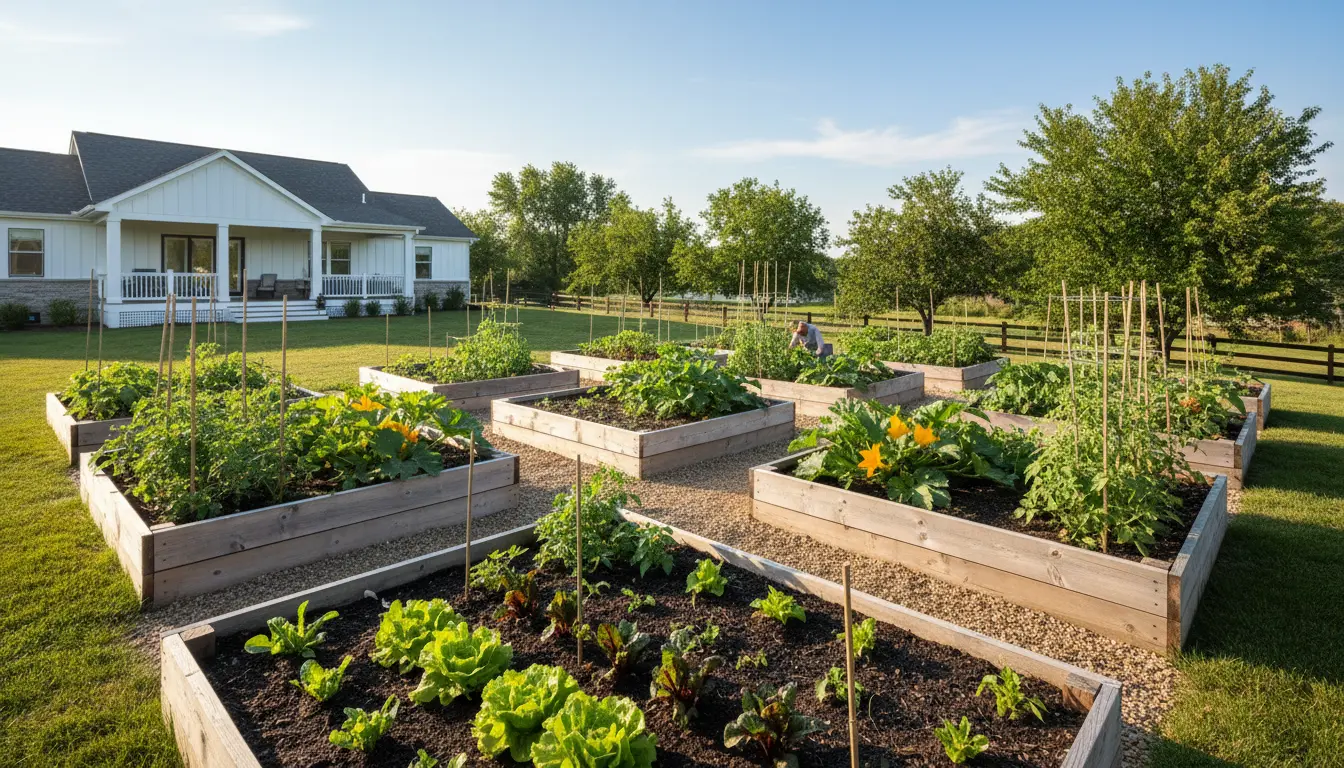
Design with access and maintenance in mind. Narrow beds (3–4 feet wide) allow easy reach without stepping on soil.
Use raised beds or containers if your native soil is poor or drainage is an issue. Raised beds warm faster in spring and reduce compaction.
- Raised bed size: 3–4 feet wide, length as space allows
- Path width: at least 18 inches for comfortable access
- Rotation: avoid planting the same family in the same spot year after year
Choose Vegetables for Your Home Garden
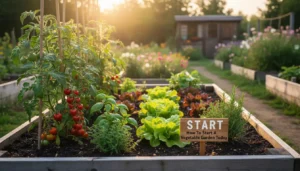
Start with easy, fast-growing vegetables. Tomatoes, peppers, lettuce, radishes, and bush beans are good beginner choices.
Match crops to your season. Cool-season crops (peas, spinach) go in early spring or fall; warm-season crops (tomatoes, cucumbers) need late spring warmth.
Planting and Watering Practices
Follow seed packet or plant tag instructions for spacing and depth. Overcrowding reduces yield and increases disease risk.
Water deeply and less often to encourage deep roots. Aim for consistent moisture; erratic watering causes stress and poor fruit set.
Watering Tips for a Vegetable Garden at Home
- Water in the morning to reduce evaporation and fungal risk
- Use drip irrigation or soaker hoses for efficient delivery
- Mulch with straw or wood chips to conserve moisture and suppress weeds
Pest and Disease Management
Integrated pest management (IPM) prioritizes prevention and monitoring. Start with cultural controls like crop rotation and proper spacing.
Use physical barriers such as row covers for insects and hand-pick larger pests. Introduce beneficial insects and avoid broad-spectrum pesticides when possible.
Common Problems and Quick Fixes
- Yellowing leaves: check watering and soil nutrients
- Holes in leaves: inspect for caterpillars or slugs and remove them
- Blossom end rot on tomatoes: usually calcium deficiency or uneven watering
Bees and other pollinators increase vegetable yields. Planting a small patch of flowers near your vegetable area can boost pollination and harvest size.
Seasonal Care and Harvesting
Stay on a routine for weeding, watering, and harvesting. Regular harvesting encourages continued production for many crops.
Monitor for end-of-season needs like frost protection or clearing spent plants to reduce disease carryover.
Simple Succession Planting Example
Plant a row of radishes in early spring. Two weeks later, plant another row. When the first row is done, the later plantings are maturing and extend your harvest window.
Small Real-World Case Study
Case Study: Sarah’s Balcony Tomato and Herb Garden
Sarah had a 6×4 foot balcony and poor soil access. She used two 4×2 foot raised planters with quality potting mix and compost.
She planted two determinate tomato plants, basil, parsley, and a row of lettuce. After implementing drip watering and weekly feeding, she harvested 24 tomatoes and several basil bouquets in one season.
Key wins: consistent watering, full sun for 6+ hours, and pruning suckers for better air flow.
Checklist to Start a Vegetable Garden at Home
- Choose a sunny site or container location
- Test and amend soil
- Select easy crops for your season
- Plan layout with paths and access points
- Install efficient watering like drip or soaker hose
- Mulch and monitor pests regularly
Final Practical Tips
Start small to build confidence and learn what grows best in your microclimate. Expand beds once you master basic care and timing.
Keep a simple garden journal: planting dates, varieties, and harvest amounts. Small records help you improve each season.
With planning, basic soil care, and regular attention, you can successfully start a vegetable garden at home and enjoy fresh produce all season long.