
Why start a vegetable garden at home
Growing your own vegetables saves money, improves food quality, and gives satisfying outdoor work. A small, well-planned garden can produce most of your salad and cooking herbs through the growing season.
This guide focuses on practical steps to start a vegetable garden at home with simple tools and predictable results. Follow the steps below to reduce mistakes and get plants producing faster.
Planning to start a vegetable garden
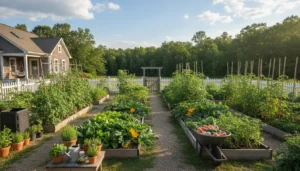
Start by deciding the garden size, location, and main crops. Most beginners do best with one or two raised beds or a few containers.
Key planning questions: How much sun does the spot receive? What soil do you have? Who will care for the garden during vacations?
Choose the right location
Vegetables need at least 6 hours of direct sunlight daily. Pick a spot with good drainage and easy access to water.
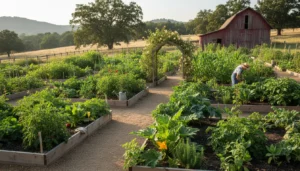
Avoid low spots that stay wet after rain and places shaded by large trees or buildings.
Decide garden type
Options include in-ground beds, raised beds, and containers. Each has trade-offs in soil control, cost, and footprint.
- Raised beds: better drainage and easier soil control.
- In-ground: cheaper but depends on existing soil quality.
- Containers: ideal for patios and small spaces.
How to start a vegetable garden: Step-by-step
This section gives a sequential plan from soil prep to first harvest. Follow each step to reduce delays and plant stress.
1. Test and prepare the soil
Collect a small soil sample from several spots and note texture. A basic pH test kit tells you if amendments are needed.
Mix compost into existing soil at a rate of 2 to 4 inches for raised beds. Compost improves structure, nutrients, and water retention.
2. Plan what to plant
Choose crops that match your climate and season. Beginner-friendly vegetables include lettuce, tomatoes, radishes, beans, and zucchini.
Plant quick crops (lettuce, radish) alongside longer-season crops (tomatoes) to get steady yields.
3. Sow seeds or transplant seedlings
Follow seed packet depth and spacing instructions. Seedlings from a nursery reduce time to harvest for many crops.
Harden off seedlings by placing them outdoors for a few hours each day for a week before planting out permanently.
4. Watering and mulching
Water deeply and less frequently to encourage strong roots. Aim for consistent soil moisture rather than daily shallow watering.
Mulch 2 to 3 inches around plants to suppress weeds, retain moisture, and moderate soil temperature.
5. Feed and maintain
Use a balanced organic fertilizer or regular applications of compost tea during the growing season. Monitor plants for signs of nutrient deficiency.
Remove weeds, prune where needed, and support vining crops with trellises or stakes.
Pest and disease basics when you start a vegetable garden
Prevention is the best strategy. Rotate crops yearly, maintain good garden hygiene, and use physical barriers like row covers for young plants.
Regularly inspect leaves for early signs of pests or disease and treat small problems before they spread.
Organic controls
- Handpick larger pests such as slugs and caterpillars.
- Use insecticidal soap for soft-bodied insects like aphids.
- Encourage beneficial insects by planting flowers nearby.
Harvesting and storage
Harvest vegetables when they are at recommended size for best flavor and continuous production. Frequent picking often encourages more yield.
Store produce properly: leafy greens in cool, damp conditions and root crops in a cool dark place to extend freshness.
Planting marigolds near tomatoes can reduce nematode problems and attract beneficial insects that prey on common pests.
Simple case study: A small urban raised bed
Linda, a city renter, started a 4×4 foot raised bed on her balcony. She filled it with equal parts topsoil and compost and chose cherry tomatoes, basil, lettuce, and bush beans.
After eight weeks she had daily salad greens and two tomato harvests. Regular watering and weekly compost tea applications kept plants productive.
Her main lesson: start small, plan crop placement, and water deeply. That approach produced food and kept maintenance under 15 minutes a day.
Quick checklist to start a vegetable garden
- Choose a sunny location with good drainage.
- Decide between raised bed, in-ground, or containers.
- Improve soil with compost and test pH if possible.
- Pick easy crops suited to your season and space.
- Water deeply, mulch, and monitor pests regularly.
Final tips for success
Start with a realistic plan for time and space. Overcommitting to large plots often leads to neglect and lower yields.
Keep a small journal of planting dates, varieties, and harvest amounts. That record makes each season easier and more productive.
If you follow these steps, you can start a vegetable garden at home that provides fresh produce with manageable effort. Begin small, learn the local conditions, and expand as you gain confidence.