
Vegetable Garden Basics
Starting a vegetable garden at home is achievable with basic planning and consistent care. This guide explains practical steps you can follow this season.
Planning Your Vegetable Garden
Good planning reduces mistakes and saves time. Begin by choosing a location that gets at least six hours of sunlight daily.
Choosing Location for Your Vegetable Garden

Select a flat or gently sloped spot that drains well. Avoid areas under large trees where roots and shade will compete with your plants.
Deciding Between Beds, Containers, or Rows
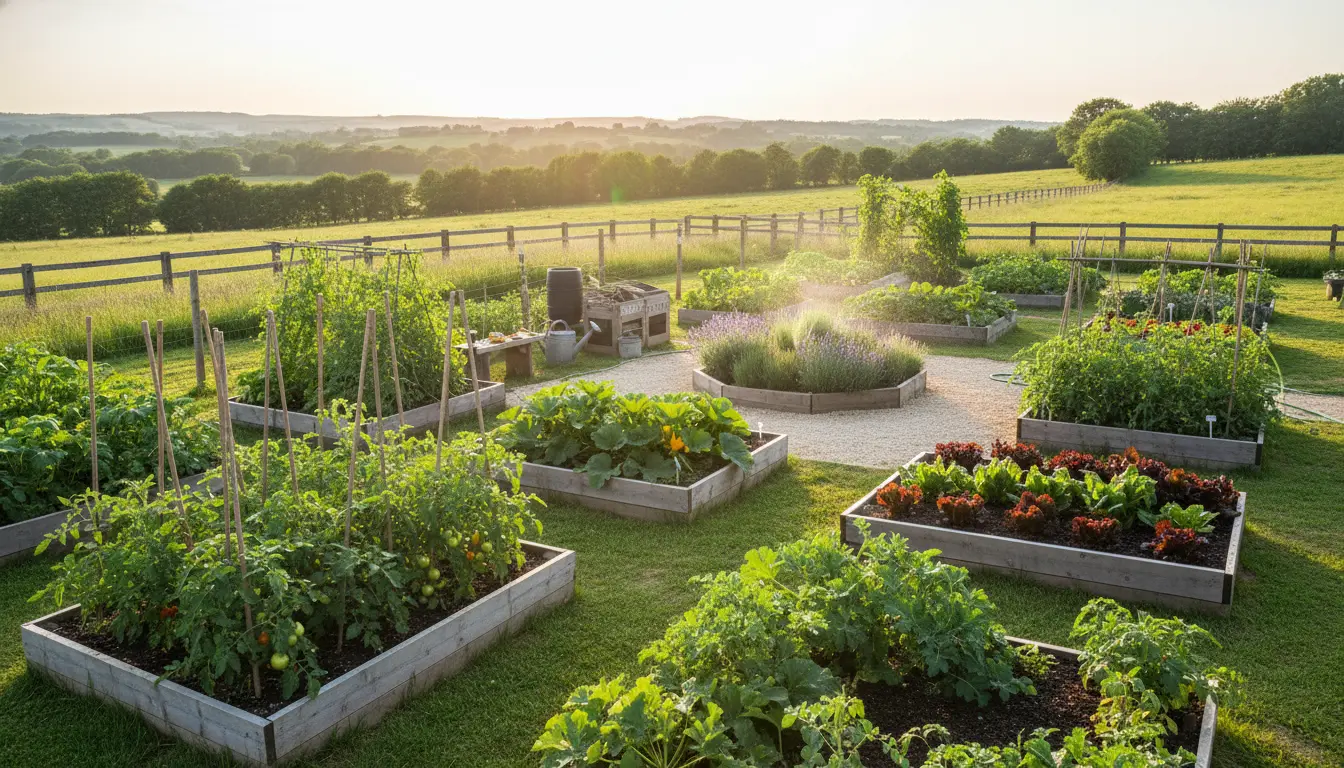
Raised beds offer better soil control and drainage for most beginners. Containers are ideal for small patios or balconies.
- Raised beds: Easier to manage soil and weeds.
- Containers: Good for herbs, lettuce, and cherry tomatoes.
- In-ground rows: Cost-effective for larger plots.
Preparing Soil for a Healthy Vegetable Garden
Soil quality is the most important factor for a productive vegetable garden. Test soil pH and nutrient levels early to know what amendments you need.
Improving Soil Structure
Add compost to increase organic matter and improve water retention. For heavy clay, mix in coarse sand and compost to break up compacted layers.
Soil pH and Nutrients
Most vegetables prefer a pH between 6.0 and 7.0. Use lime to raise pH or sulfur to lower it, based on a soil test.
Choosing Vegetables for Your Garden
Pick crops that match your climate, season, and available space. Start with easy, reliable plants to build confidence.
- Beginner-friendly vegetables: Lettuce, radishes, green beans, zucchini, and tomatoes.
- Succession planting: Stagger plantings for a longer harvest period.
- Companion planting: Use marigolds or basil near tomatoes to deter pests.
Planting and Care for Your Vegetable Garden
Planting depth and spacing are key to healthy growth. Follow seed packet or plant label directions for best results.
Watering Best Practices
Water deeply and less frequently to encourage strong roots. Early morning watering reduces disease risk and evaporation.
Mulching and Weed Control
Apply a 2-3 inch layer of organic mulch to conserve moisture and suppress weeds. Pull weeds when small to prevent root competition.
Pest and Disease Management
Monitor plants regularly to catch problems early. Use physical controls and cultural practices before turning to chemical options.
- Inspect leaves weekly for holes, discoloration, or mildew.
- Use row covers to protect young plants from insects.
- Rotate crops yearly to reduce soil-borne diseases.
Harvesting and Ongoing Care
Harvest vegetables at peak ripeness for best flavor and continued production. Regular harvesting often encourages more fruiting.
Storing and Preserving Your Crops
Plan simple preservation methods like freezing, pickling, or storing root crops in a cool, dry place. Label preserved items with dates for rotation.
Many vegetable varieties mature in 60 to 90 days, so you can plant, harvest, and replant multiple times in a single season in warm climates.
Small Case Study: A Balcony Vegetable Garden
Maria, a first-time gardener, used three 18-inch containers on a sunny balcony to grow cherry tomatoes and herbs. She started from seedlings and followed a weekly watering and feeding schedule.
Within two months she harvested continuous tomatoes by pruning suckers and pinching spent flowers. Adding compost once mid-season kept soil fertile and productive.
Practical Checklist to Start Your Vegetable Garden
- Choose a sunny location with good drainage.
- Decide on raised beds, containers, or in-ground plots.
- Test soil and add compost or amendments as needed.
- Select beginner-friendly crops suited to your season.
- Water deeply, mulch, and monitor for pests.
- Harvest regularly and preserve surplus produce.
Quick Tips for Success
- Start small to avoid becoming overwhelmed.
- Keep a simple calendar for planting, feeding, and harvesting.
- Join a local gardening group or forum for problem-solving and seed swaps.
With these steps, you can build a productive vegetable garden at home that fits your space and schedule. Begin with a simple plan and improve each season by observing what worked and what didn\’t.