
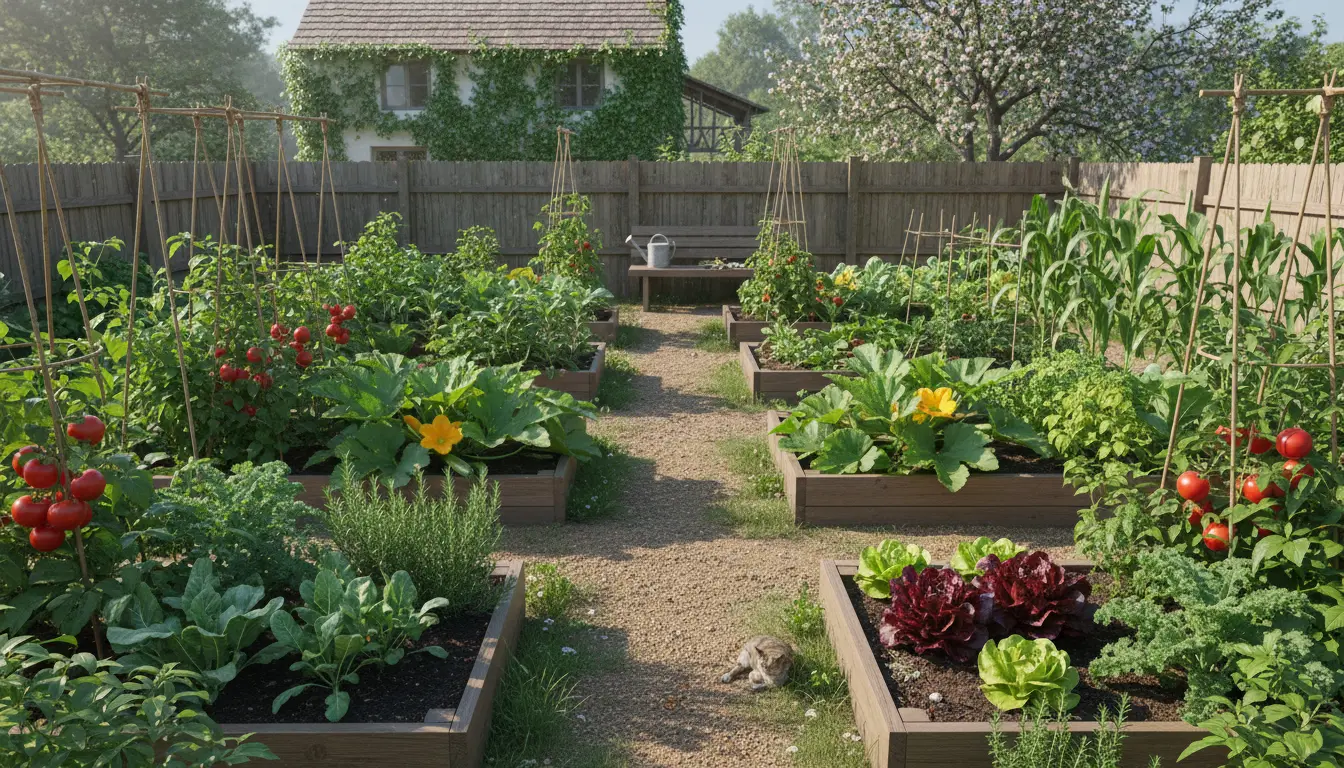
Why Start a Vegetable Garden at Home?
Growing your own vegetables saves money, improves meal quality, and connects you to the season. A vegetable garden also reduces trips to the store and gives you fresh produce on demand.
This guide explains practical steps you can take whether you have a backyard, balcony, or small patio. Follow the sequence: choose a spot, prepare soil, plant deliberately, and maintain with simple care routines.
Choose the Right Location for Your Vegetable Garden
Sunlight and Space
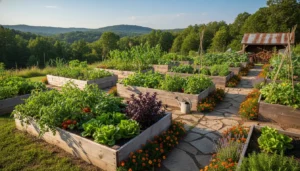
Most vegetables need 6 to 8 hours of direct sunlight each day. Observe sunlight patterns for a week to find the sunniest area.
Consider access to water and how much planting area you actually need. Even a narrow strip or containers can produce a steady supply.
Soil and Drainage
Good soil drains well and feels crumbly. Avoid low spots that hold standing water.
If the soil looks compacted or clayey, raised beds or large containers will help you control drainage and fertility more easily.
- Site checklist: 6+ hours sun, close to water, protected from strong wind, good drainage
- Consider proximity to kitchen for easy harvesting
- Measure the space and plan rows or beds before buying soil or plants
Prepare Soil for Your Vegetable Garden
Healthy soil is the foundation of a productive vegetable garden. Test soil pH if possible; most vegetables prefer pH 6.0 to 7.0.
Add organic matter such as compost to improve structure and feed plants. Work amendments into the top 6 to 8 inches of soil.
- Clear weeds and debris from the area.
- Loosen soil with a fork or tiller to 6–8 inches depth.
- Mix in 2–3 inches of compost and a handful of balanced organic fertilizer if needed.
- Rake smooth and let it settle for a few days before planting.
Adding a one-inch layer of compost annually can increase soil organic matter by up to 20 percent over three years, improving water retention and fertility.
Planting and Care for a Vegetable Garden
Choosing Plants
Start with easy, reliable vegetables to build confidence. Choose varieties labeled ‘disease resistant’ when possible.
- Beginner-friendly vegetables: lettuce, radishes, bush beans, cherry tomatoes, zucchini
- Plan for succession planting to extend harvests across the season
- Check days to maturity on seed packets to schedule planting
Watering and Mulching
Water deeply and less often to encourage strong roots. Aim for the soil to be moist 1 to 2 inches below the surface rather than wet on top.
Mulch with straw, shredded leaves, or wood chips to conserve moisture and suppress weeds. Apply a 2 to 3 inch layer around plants, keeping mulch away from stems.
Common Problems and Solutions for Vegetable Gardens
- Pests: Handpick large pests, use row covers for young plants, and encourage beneficial insects with flowers.
- Diseases: Rotate crops yearly and avoid overhead watering to reduce fungal issues.
- Nutrient issues: Yellowing leaves often indicate nitrogen deficiency; add compost or a balanced fertilizer according to directions.
Small Case Study: Balcony to Table in Six Months
Sarah, a city renter, converted a 4 x 2 foot balcony into a vegetable garden using two 18-inch deep troughs. She filled each trough with a mix of potting soil and compost and planted 3 determinate tomatoes, 6 lettuce heads, and 4 pepper plants.
Within six months she harvested regular lettuce salads, 12 pounds of tomatoes, and peppers for cooking. Her initial investment was about $120 and she reported saving that amount in produce costs within one season.
Practical Tips to Keep Your Vegetable Garden Productive
- Keep a simple schedule: water in the morning, check for pests weekly, harvest frequently to encourage production.
- Record what you plant and where to help with crop rotation next season.
- Use stakes or cages for vining plants to maximize space and airflow.
Starting a vegetable garden at home is a step-by-step process that rewards planning and regular care. Begin small, learn from each season, and expand as you gain confidence.
With basic soil preparation, proper plant choices, and consistent watering, most beginners can expect steady harvests by the end of the first season.