
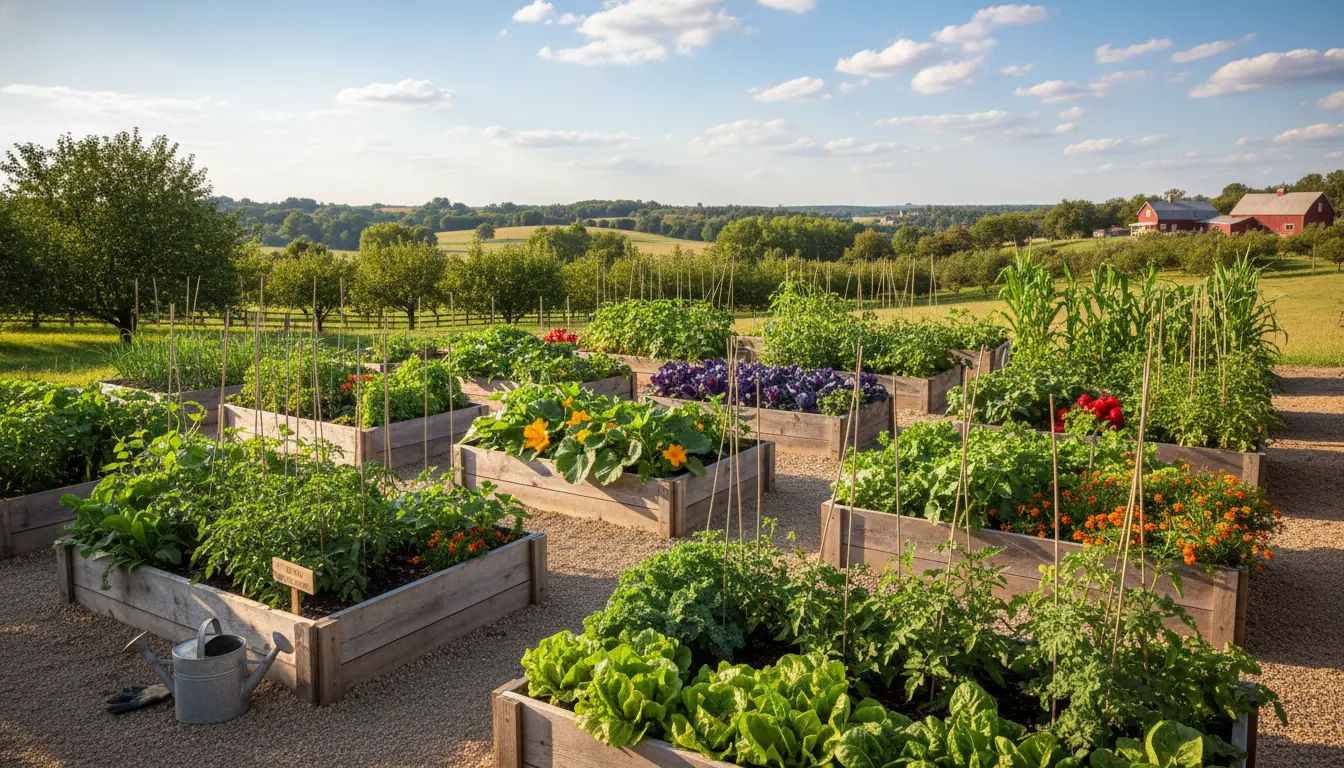
Starting a vegetable garden at home is a practical way to grow fresh food, save money, and enjoy outdoor activity. This guide walks through planning, soil preparation, planting, and basic maintenance so you can get vegetables growing quickly and reliably.
Choose Where to Start Your Vegetable Garden
Pick a spot with at least 6 hours of direct sunlight for most vegetables. Observe the area through the day to confirm sun exposure and note any shade from trees or buildings.
Consider access to water and ease of maintenance. A location near a hose or spigot reduces the effort needed for regular watering.
Assess Sunlight for Your Vegetable Garden
Use a simple method: mark the high-sun spots mid-morning, noon, and late afternoon. Vegetables vary in light needs, so plan to place sun-loving plants like tomatoes and peppers in the brightest area.
Decide Between In-Ground, Raised Beds, or Containers
Each option has pros and cons. In-ground is cheaper but depends on native soil. Raised beds offer better drainage and soil control. Containers are ideal for patios and small spaces.
- In-ground: best for large yards and long-term plots.
- Raised beds: easier on the back, improved soil quality, defined planting areas.
- Containers: flexible, portable, suited for balconies and patios.
Prepare Healthy Soil for Your Vegetable Garden
Soil quality is the most important factor for a productive vegetable garden. Aim for loose, well-draining soil with plenty of organic matter.
Perform a basic soil test or use a home test kit to check pH and nutrient levels. Most vegetables prefer a pH between 6.0 and 7.0.
Improve Soil with Compost and Amendments
Add 2–4 inches of compost and mix into the top 8–12 inches of soil. For heavy clay, incorporate coarse sand and organic matter to improve structure.

Use balanced granular fertilizer if soil tests show nutrient deficiencies. Follow package directions for vegetable beds.
Plan What to Plant in Your Vegetable Garden
Choose vegetables suited to your climate zone and season. Start with easy crops if you are new to gardening: lettuce, radishes, beans, zucchini, and tomatoes are forgiving choices.
Create a planting calendar: list last spring frost date and schedule seeds and transplants accordingly. This prevents wasted seeds and poor starts.
Companion Planting and Crop Rotation
Companion planting can reduce pests and improve yields. For example, plant basil near tomatoes to help flavor and possibly deter insects.
Rotate crops yearly to different bed areas to minimize disease buildup and nutrient depletion.
Watering and Mulching Strategies
Consistent moisture is critical for vegetable growth. Water deeply and less frequently to encourage strong root systems rather than daily shallow watering.
Mulch with straw, leaf mold, or wood chips to retain moisture, suppress weeds, and moderate soil temperature.
Basic Pest and Disease Management for Your Vegetable Garden
Start with prevention: healthy soil and good spacing reduce disease risk. Inspect plants weekly for early signs of pests or disease.
- Handpick large pests like caterpillars and beetles.
- Use row covers to protect seedlings from insects and birds.
- Apply organic options like insecticidal soap or neem oil for soft-bodied pests.
Tomatoes and peppers are both in the nightshade family and prefer similar soil and sun conditions, but avoid planting them in the same spot every year to reduce soil-borne disease risk.
Basic Tools and Supplies for a Vegetable Garden
A short list of essentials keeps setup simple. Start with tools and upgrade as your garden grows.
- Hand trowel and digging fork
- Garden hose with adjustable nozzle
- Pruners and gloves
- Soil test kit and compost
- Mulch and stakes or cages for vining plants
Small Real-World Example: A 10×10 Raised Bed Case Study
Marie, a beginner gardener, converted a 10×10 patio area into two 4×8 raised beds. She filled beds with a mix of topsoil, compost, and peat-free soil conditioner.
She planted tomatoes, basil, lettuce, and bush beans. By rotating lettuce and beans each season and mulching heavily, Marie reduced watering by 25% and harvested fresh salad greens within six weeks.
Seasonal Tasks and Maintenance for Your Vegetable Garden
Follow a simple maintenance routine: weed regularly, monitor moisture, and remove diseased foliage immediately. Keep a notebook or digital log of planting dates and harvests to refine timing year to year.
In autumn, clear spent plants and add crop residues to the compost pile or remove diseased material to avoid overwintering pests.
Next Steps to Start Your Vegetable Garden
1. Select the site and decide on bed type this week. 2. Test and amend soil this month. 3. Plant your first seeds or transplants according to frost dates in your area.
Use local extension services or reputable gardening websites for plant-specific schedules and troubleshooting tips. With basic planning and weekly attention, most beginners see success in the first season.
Happy gardening: small, consistent steps produce steady harvests and more enjoyable time outdoors.