
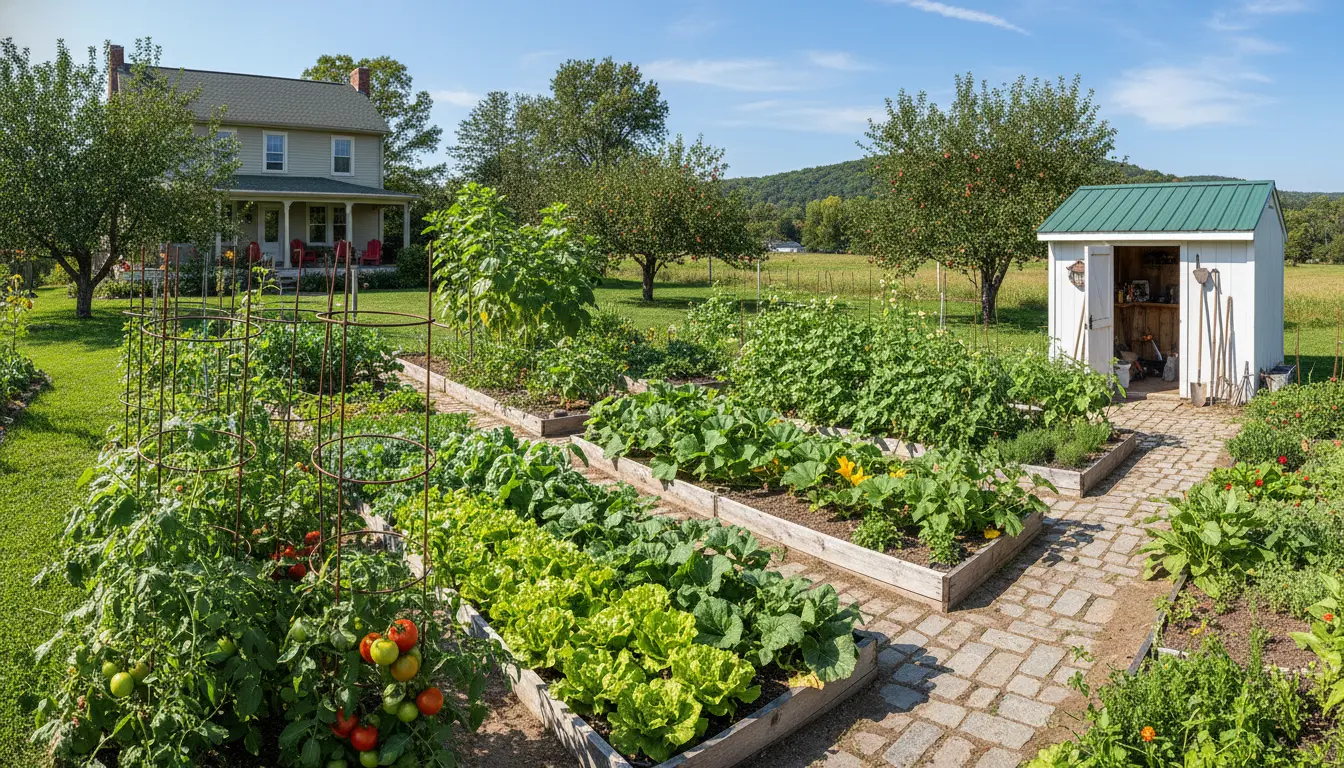
Why Start a Vegetable Garden at Home
Growing vegetables at home saves money, improves food quality, and gives you control over how food is grown. It also reduces food miles and can be a relaxing hobby.
This guide gives practical, step-by-step instructions to plan, plant, and maintain a productive vegetable garden, whether you have a backyard or a small balcony.
Plan Your Vegetable Garden
Start with a simple plan: decide what to grow, where to place it, and how much time you can spend. Matching plants to your space and climate boosts success.
Choose the Right Location
Vegetables generally need 6–8 hours of direct sunlight. Look for a spot with good drainage and easy access to water.
If sunlight is limited, choose shade-tolerant crops or use containers that can be moved.
Select Vegetables for Your Needs
Pick easy, high-yield vegetables for beginners: tomatoes, lettuce, radishes, beans, and herbs. Consider your cooking habits and how often you will harvest.
- Quick harvest: lettuce, radishes, spinach
- High yield: tomatoes, peppers, beans
- Low maintenance: herbs like basil and parsley
Prepare Soil and Beds
Healthy soil is the foundation. Test soil pH if possible; most vegetables prefer pH 6.0–7.0. Amend as needed with compost.
Options for bed types include in-ground beds, raised beds, and containers. Raised beds warm up faster and have better drainage.
Soil Preparation Steps
- Clear weeds and roots from the area.
- Loosen soil to about 12 inches deep using a fork or tiller.
- Mix in 2–4 inches of compost and a balanced organic fertilizer if soil is poor.
- Rake the surface smooth and water to settle.
Planting: Seeds vs. Transplants
Decide whether to sow seeds directly or buy transplants. Fast-growing crops like radishes and lettuce do well from seed. Tomatoes and peppers often perform better when started as transplants.
Planting Tips
- Follow seed packet depth and spacing instructions closely.
- Harden off transplants by gradually exposing them to outdoor conditions for a week before planting.
- Mulch around plants to conserve moisture and suppress weeds.
Watering, Feeding, and Maintenance
Consistent moisture is vital. Water deeply and less frequently to encourage strong roots. Avoid overhead watering in the evening to reduce disease risk.
Fertilize based on plant needs. Use a balanced organic fertilizer for leafy crops and a fertilizer higher in phosphorus for fruiting crops.
Pest and Disease Management
Use integrated pest management: monitor regularly, remove pests by hand, and use barriers or traps. Rotate crops yearly to reduce disease build-up.
- Row covers protect young plants from insects.
- Companion planting can deter pests (e.g., marigolds with tomatoes).
- Remove diseased foliage promptly to prevent spread.
Seasonal Care and Succession Planting
Plan for multiple harvests by planting in succession. After a quick crop like radishes finishes, sow another round in the same space.
Prepare for seasonal changes: use shade cloth in very hot months and cold frames or cloches to extend the season into spring and fall.
Planting beans near corn provides natural support while beans fix nitrogen in the soil, benefiting neighboring plants.
Small Real-World Case Study
Case: Maria, a city renter, converted a 6-foot balcony into a productive garden. She used three 16-inch containers, one raised wooden box, and a vertical trellis for beans.
Her choices: cherry tomatoes in containers, lettuce succession in the box, and pole beans on the trellis. Over one growing season she harvested weekly salads and several kilos of tomatoes, spending about 30 minutes weekly on maintenance.
Key takeaways: proper container size, regular watering, and succession planting produced steady yields in limited space.
Practical Checklist to Start a Vegetable Garden
- Choose location with adequate sun and water access.
- Decide bed type: in-ground, raised bed, or containers.
- Prepare soil with compost and test pH if possible.
- Select beginner-friendly crops and plan spacing.
- Plant seeds or transplants following instructions.
- Water deeply, mulch, and fertilize as needed.
- Monitor for pests and rotate crops each season.
Common Mistakes and How to Avoid Them
Overwatering is a frequent issue. Water less often but more deeply to develop roots. Crowding plants reduces airflow and increases disease risk; follow spacing guidelines.
Another mistake is unrealistic expectations. Start small and scale up as you learn which crops perform best in your space.
Final Tips for Success
Keep a simple garden journal to track planting dates, varieties, and issues. This record will improve decision-making next season.
Enjoy the process. Gardening is iterative—each season teaches what works for your local conditions and lifestyle.
Ready to start? Pick one small area, choose 2–3 easy crops, and plan your first planting this weekend.