
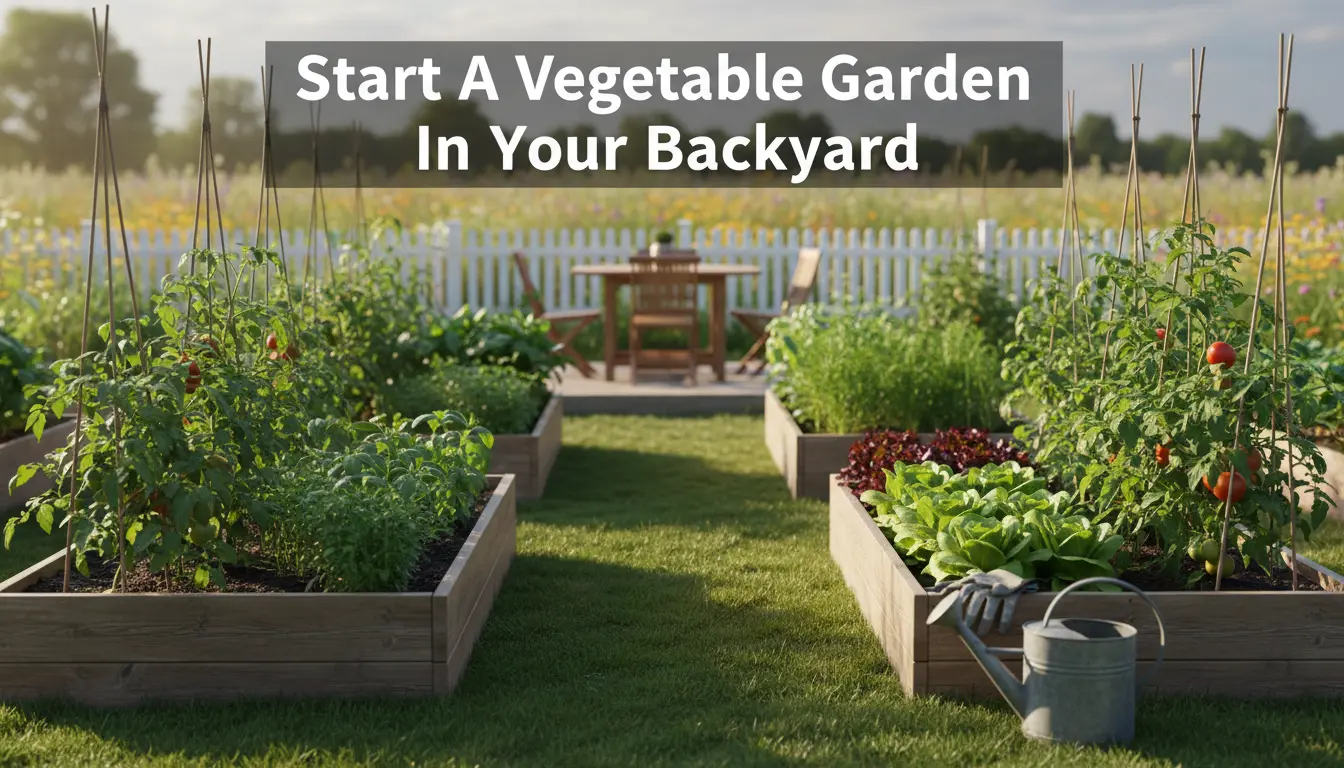
Why Start a Vegetable Garden
Growing your own vegetables saves money and gives you fresher, tastier produce. A small garden can also improve well being and reduce food miles.
This guide explains how to start a vegetable garden with clear, practical steps you can apply whether you have a backyard or just a few containers.
How to Start a Vegetable Garden: Plan Before You Plant
Successful gardens begin with a simple plan. Decide what you want to grow, where to place beds, and how much time you can commit each week.
Use this checklist to begin:
- Assess sunlight: look for 6–8 hours of direct sun for most vegetables.
- Measure space: sketch beds or container layouts and note dimensions.
- Choose vegetables based on climate, season, and your cooking habits.
Choose the Right Location
Pick the sunniest spot you have; most vegetables need 6–8 hours of sun. Avoid low spots that collect cold air or areas under large trees where roots compete for nutrients.
Consider access to water and ease of reaching beds for maintenance.
Pick Your Vegetables and Timing
Select crops that match your hardiness zone and season. Leafy greens, radishes, and peas are cool-season plants. Tomatoes, peppers, and squash prefer warm soil and air.
Start with 3–6 different types to keep management simple while providing variety.
Prepare Soil and Beds

Good soil is the most important factor. Test soil pH and texture or assume a neutral pH and improve structure with organic matter.
Steps to prepare soil:
- Clear the area of weeds and grass.
- Loosen soil to 8–12 inches for beds or use raised beds filled with a loam-compost mix.
- Mix in 2–3 inches of compost to improve fertility and drainage.
Planting and Spacing
Follow seed packet or plant tag instructions for depth and spacing. Overcrowding reduces airflow and increases disease risk.
Use simple planting patterns like rows or blocks; blocks are more water-efficient and easier to mulch.
Watering and Maintenance
Water deeply and less often to encourage strong roots. Aim for 1–1.5 inches of water per week from rain and irrigation.
Mulch with straw, wood chips, or leaf mulch to retain moisture and suppress weeds. Consistent weeding and light feeding with compost tea or balanced fertilizer will support steady growth.
Pest Control and Troubleshooting
Monitor plants weekly for signs of pests and disease. Early detection makes management easier and often saves crops.
Nonchemical controls include:
- Row covers to protect young plants from insects and frost.
- Handpicking larger pests like slugs and caterpillars.
- Encouraging beneficial insects with flowers and habitat.
Harvesting and Storage
Harvest vegetables at peak ripeness for best flavor and to encourage continued production. Leafy greens are often cut-and-come-again, while root crops are pulled when mature.
Store produce properly: cool and dry for most, refrigerated for tomatoes only if overripe.
Tomatoes and peppers will continue ripening off the vine if picked at the breaker stage. Store them at room temperature and avoid the refrigerator for best flavor.
Simple Seasonal Schedule to Start a Vegetable Garden
Use this basic calendar as a planning tool for a temperate climate. Adjust timing for your local frost dates and microclimate.
- Early Spring: Prepare beds, sow cool-season crops like peas and lettuce.
- Late Spring: Transplant tomatoes and peppers after last frost.
- Summer: Maintain watering, control pests, and harvest continuously.
- Fall: Plant cover crops or fall greens; clean up spent plants to reduce disease carryover.
Case Study: Small Urban Garden Success
A two-family home converted a 10×10 ft unused side yard into raised beds. They started with three beds filled with a soil-compost mix and planted tomatoes, lettuce, carrots, and bush beans.
In the first season they harvested enough salad greens for weekly meals and a steady supply of tomatoes for sauces. The family reported spending 2–3 hours per week on watering and weeding.
Key takeaways from their experience were starting small, using mulch to cut maintenance, and sharing harvests with neighbors.
Quick Tips for Beginner Gardeners
- Start small and expand after your first season.
- Choose disease-resistant varieties when possible.
- Keep a garden journal to record planting dates and observations.
- Join a local gardening group for seed swaps and advice.
With a little planning and regular care, learning how to start a vegetable garden is achievable for almost anyone. Begin with easy crops, improve soil gradually, and adjust based on what works in your space.