
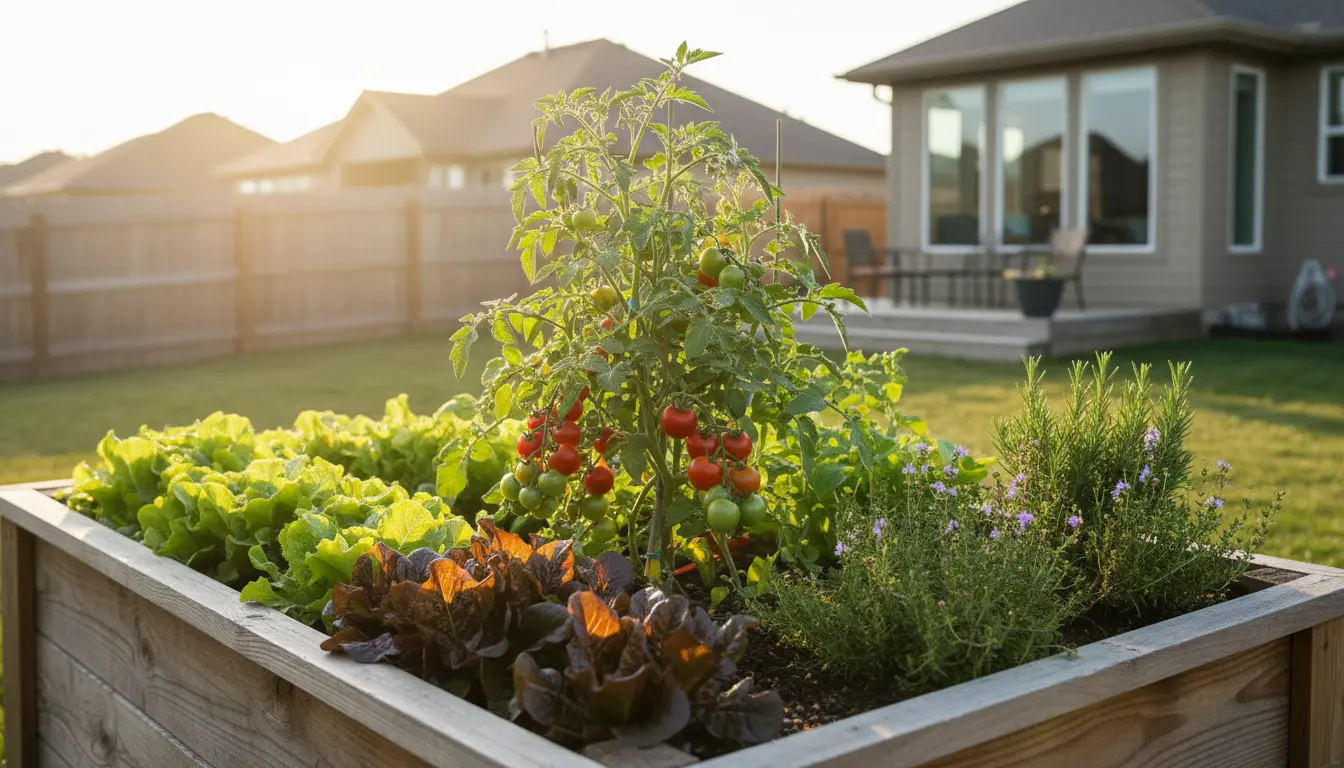
Start a Vegetable Garden: First Steps
Starting a vegetable garden begins with a simple plan. Choose a location with at least six hours of sunlight and good drainage.
Decide whether you will use containers, raised beds, or in-ground rows. Each option affects soil, watering, and plant choices.
Choose the Right Spot to Start a Vegetable Garden

Look for level ground that receives morning and midday sun. Avoid low areas where water pools after rain.
Consider access to water and a path for routine maintenance. Close access saves time and encourages regular care.
Plan What to Grow
Start with easy, high-reward vegetables such as lettuce, radishes, cherry tomatoes, and bush beans. These crops are forgiving and quick to harvest.

Match plant choices to your climate and season. Check your local frost dates and choose varieties meant for your zone.
How to Choose Plants for Beginners
- Pick fast-growing crops for quick results (e.g., radishes, spinach).
- Choose disease-resistant varieties labeled for your region.
- Start with varieties labeled “bushy” or “determinate” for limited space.
Prepare Soil and Beds
Good soil is the foundation of a productive vegetable garden. Most vegetables prefer a loose, fertile loam with good organic matter.
Test your soil pH and nutrient levels with a simple kit. Aim for pH 6.0–7.0 for most vegetables.
Steps to Improve Garden Soil
- Add 2–4 inches of compost to beds and mix into the top 6–8 inches of soil.
- Use compost or well-rotted manure annually to maintain fertility.
- In heavy clay, add coarse sand and organic matter to improve drainage.
Planting: Timing and Spacing
Follow seed packet or plant tag instructions for spacing and planting depth. Crowded plants reduce airflow and increase disease risk.
Sow seeds at the recommended date relative to your last frost. Use succession planting to extend harvests.
Basic Planting Tips
- Direct-sow root crops like carrots and beets in loose soil.
- Start tomatoes and peppers indoors if you have a short growing season.
- Thin seedlings to the strongest plants to reach recommended spacing.
Watering and Fertilizing
Consistent moisture is critical. Water deeply once or twice a week rather than frequent shallow irrigation.
Use a soaker hose or drip irrigation to deliver water to the root zone and reduce foliar disease.
Fertilizer Basics
- Use a balanced granular fertilizer at planting and side-dress with compost mid-season.
- Leafy greens benefit from higher nitrogen; root crops need moderate nitrogen and steady potassium.
- Follow product rates—more fertilizer is not always better.
Pest and Disease Management
Monitor plants weekly for insect damage and disease symptoms. Early detection makes control easier.
Use physical barriers like row covers, hand-pick pests, and encourage beneficial insects with flowers.
Organic Control Options
- Neem oil or insecticidal soap for soft-bodied insects.
- Row covers to protect seedlings from flea beetles and cabbage moths.
- Crop rotation to reduce soil-borne disease buildup.
Harvesting and Storage
Harvest vegetables at peak ripeness for best flavor and nutrition. Check each crop’s recommended stage on seed packets.
Store harvests properly—leafy greens in cool moist conditions, root vegetables in a dark cool place.
Extend Your Season
- Use cold frames or cloches for early and late season crops.
- Succession plant every 2–3 weeks to maintain continuous harvests.
Radishes can be ready to harvest in as little as 21 days, making them one of the fastest crops to grow for beginner gardeners.
Simple Tools and Materials
You do not need many tools to start a vegetable garden. A hand trowel, spade, watering can or hose, and gloves are enough for most beginners.
Optional helpful items include a soil test kit, compost bin, and a garden fork for mixing soil.
Case Study: Sarah’s 10×10 Raised Bed
Sarah started a 10×10 raised bed in her suburban backyard. She used a mix of topsoil and compost and planted tomatoes, bush beans, lettuce, and carrots.
By following a simple watering schedule and rotating crops each season, Sarah harvested enough salad greens for her family through summer. Her tomatoes produced heavily after she added compost midseason.
Key takeaways from her first year: start small, maintain consistent moisture, and keep a simple planting calendar.
Quick Checklist to Start a Vegetable Garden
- Choose sunny, level site with water access.
- Decide container, raised bed, or in-ground planting.
- Test and improve soil with compost.
- Select easy, local-adapted varieties.
- Plant at correct dates and maintain regular watering.
- Monitor pests and harvest at peak ripeness.
Starting a vegetable garden is practical and rewarding. With a clear plan, minimal tools, and regular care, beginners can harvest fresh produce within one season.