
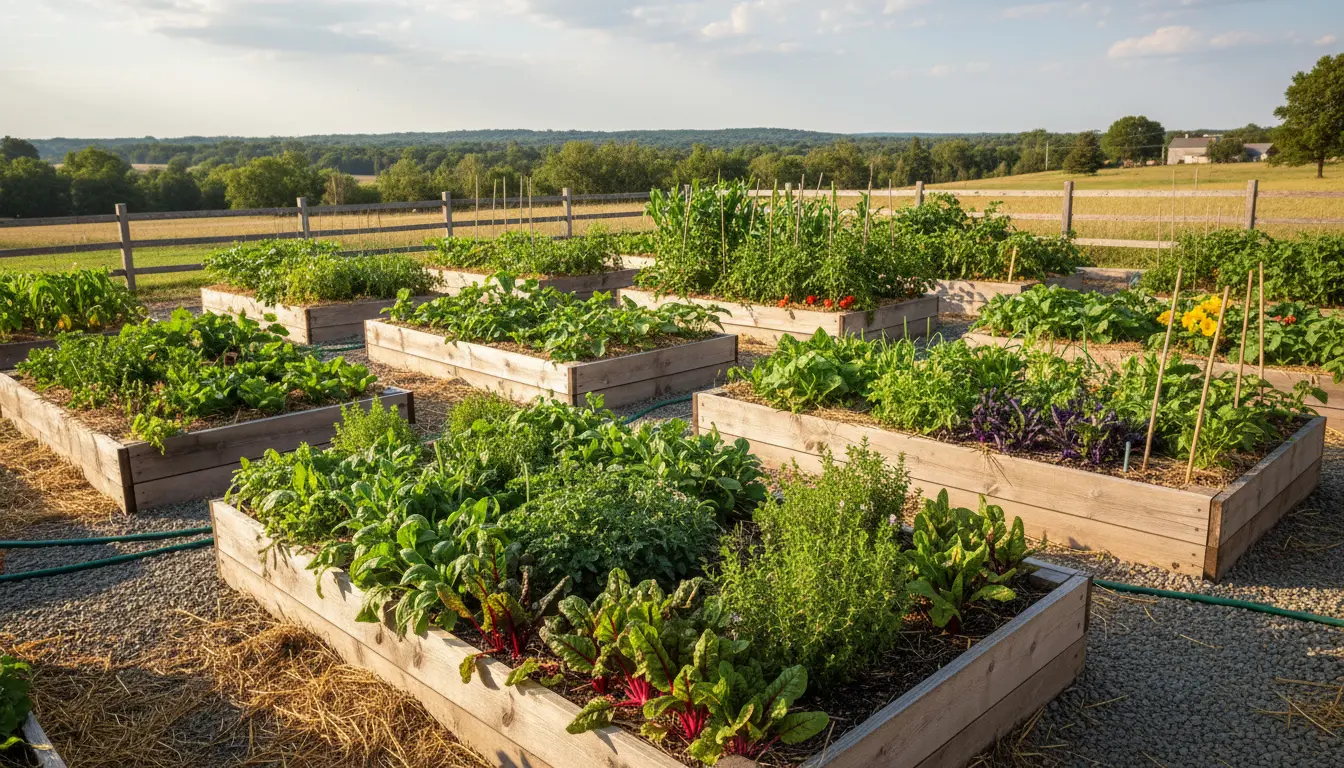
Plan to Start a Vegetable Garden
Before you dig, spend time planning. A simple plan saves time and reduces mistakes for first-time gardeners.
Decide what you want to grow, where the garden will go, and how much time you can commit each week.
Choose the Right Site for a Vegetable Garden
Most vegetables need 6 to 8 hours of direct sun each day. Observe sunlight patterns for a few days to confirm exposure.
Look for a flat or gently sloping area with good drainage and convenient access to water and tools.
Soil and Soil Testing
Good soil is the most important factor when you start a vegetable garden. Test the soil or use a kit to check pH and nutrient levels.

Most vegetables prefer slightly acidic to neutral soil (pH 6.0–7.0). Amend soil with compost to improve structure and nutrients.
Decide Between Beds, Containers, or Rows
Choose the planting method that fits your space: in-ground rows, raised beds, or containers. Each has pros and cons for drainage, soil control, and accessibility.
- Raised beds: Better drainage and soil control; easier to manage weeds.
- Containers: Good for patios or balconies; limited root space.
- In-ground rows: Cost-effective for large yards but may need more weeding.
Choose Vegetables to Grow
Pick vegetables that your household will eat and that suit your climate. Start with a few easy crops to build confidence.
Good beginner vegetables: tomatoes, lettuce, radishes, beans, zucchini, and herbs like basil.
Planting Schedule and Seeds vs. Seedlings
Use a local planting calendar to know frost dates and best sowing times. Some crops are started indoors and transplanted; others are sown directly into the soil.
Beginners often find seedlings easier for tomatoes and peppers, while carrots and radishes grow well from seed sown directly.
Planting and Spacing
Follow seed packet or plant label instructions for depth and spacing. Overcrowding leads to poor airflow and more disease.
Use simple rows or groups and mark planting spots to avoid confusion as plants grow.
Watering and Mulching
Water deeply and less often to encourage deep root growth. Early morning watering reduces evaporation and disease risk.
- Check soil moisture by feeling an inch below the surface.
- Apply 2–3 inches of organic mulch to retain moisture and suppress weeds.
Fertilizing and Soil Care
Start with compost and supplement with a balanced fertilizer if a soil test shows deficiencies. Avoid over-fertilizing leafy greens with too much nitrogen when you want fruiting crops.
Rotate plant families each year to reduce disease and pest build-up.
Pest Management When You Start a Vegetable Garden
Use an integrated approach: cultural practices, physical barriers, and, if needed, targeted organic treatments.
Common tactics include row covers for insects, hand-picking larger pests, and encouraging beneficial insects with flowering plants nearby.
Common Problems and Quick Fixes
- Yellow leaves: Check water and nutrient levels.
- Holes in leaves: Look for caterpillars and slugs; use traps or barriers.
- Wilting plants: Verify root health and soil drainage.
Harvesting and Ongoing Care
Harvest vegetables at the recommended stage for best flavor and to encourage continued production. Keep beds tidy and remove diseased plants promptly.
Record what worked and what did not. A small notebook or phone note helps refine the plan next season.
Planting flowers like marigolds near your vegetable garden can attract beneficial insects and deter some pests without chemicals.
Small Real-World Example
Case study: Maria started a 4×8 foot raised bed with tomatoes, lettuce, and bush beans. She began in spring with purchased seedlings and added 3 inches of compost to the bed.
Maria watered deeply twice a week, used straw mulch, and harvested lettuce within five weeks. By midsummer she had regular tomato harvests and a steady supply of beans.
Her simple routine—weekly checks, mulching, and hand removal of pests—kept upkeep to under two hours per week.
Basic Checklist to Start a Vegetable Garden
- Choose a sunny site and test the soil.
- Decide on beds, containers, or rows.
- Pick easy crops and check planting dates.
- Prepare soil with compost and proper spacing.
- Water deeply, mulch, and monitor pests weekly.
- Keep a garden log to track successes and problems.
Final Tips for New Gardeners
Start small and expand after one season. Small successes keep motivation high and reduce overwhelm.
Use local resources like extension services, seed swap groups, or community garden volunteers for region-specific guidance.
With a simple plan, basic tools, and a little weekly care, anyone can start a productive vegetable garden. Focus on soil, water, and plant choice to set yourself up for steady success.