
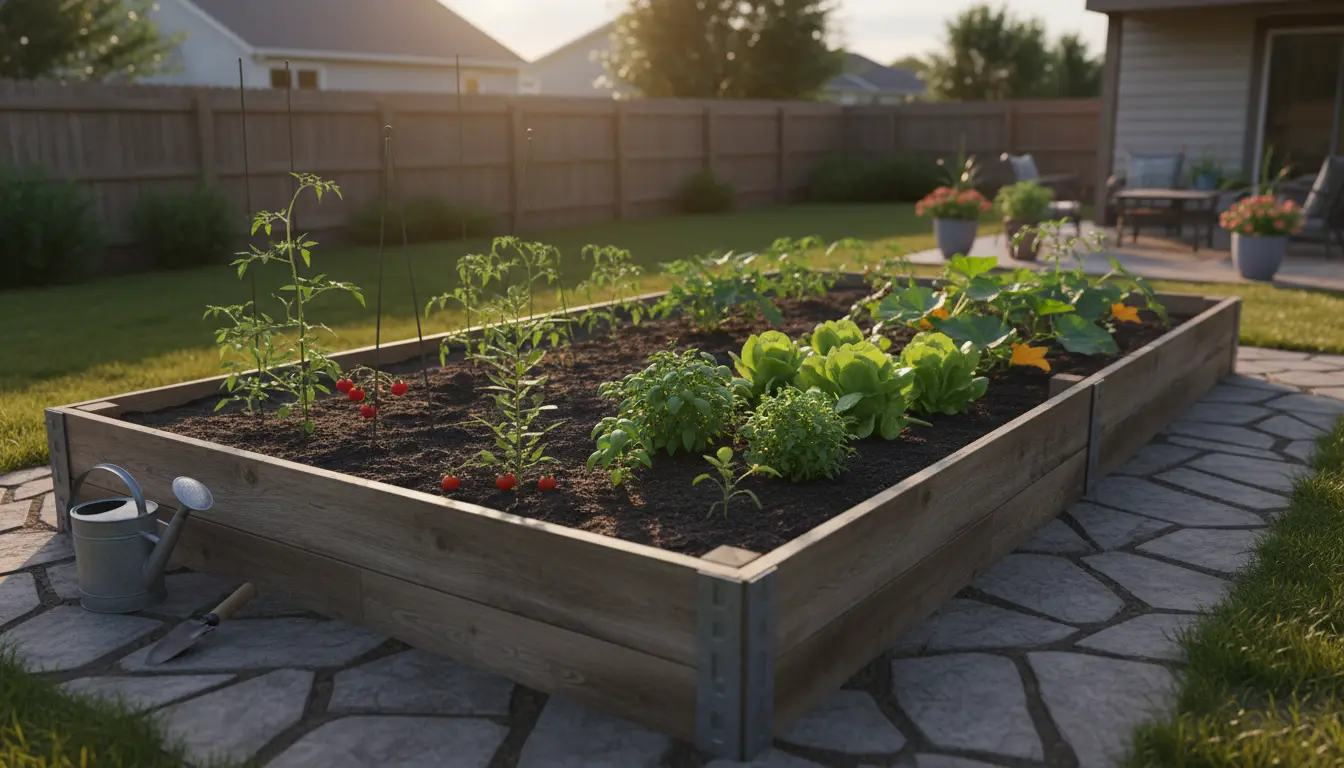
Why Start a Vegetable Garden
Starting a vegetable garden saves money, improves food quality, and gives hands-on control over what you grow. Many beginners find it rewarding and manageable with basic planning.
Choose the Right Site to Start a Vegetable Garden
Site selection is the first practical step when you start a vegetable garden. Pick a spot that receives at least six hours of direct sunlight daily for most vegetables.

Also check for level ground, good drainage, and proximity to a water source. Avoid low areas that collect water or places shaded by tall trees.
Key site considerations
- Sun: 6–8 hours ideal for tomatoes, peppers, and beans.
- Drainage: Soil should not stay waterlogged after rain.
- Access: Place near a hose or water tap to reduce effort.
Preparing Soil When You Start a Vegetable Garden
Good soil is the foundation of a productive garden. Test soil texture and pH if possible; many plants prefer slightly acidic to neutral soil (pH 6.0–7.0).
Improve soil by adding organic matter such as compost or well-rotted manure. Incorporate 2–3 inches of compost into the top 6–8 inches of soil before planting.
Basic soil improvement steps
- Remove weeds and debris from the bed.
- Loosen compacted soil using a fork or tiller.
- Add compost and mix evenly to improve structure and nutrients.
Plan What to Grow in Your Vegetable Garden

Start with vegetables that are easy to grow and suit your climate. Good beginner choices include lettuce, radishes, beans, zucchini, and tomatoes.
Consider space: use raised beds or containers if yard space is limited. Group plants by water needs and harvest times to simplify care.
Example planting plan
- Small space: Tomatoes in large containers, lettuce in shallow trays, herbs in a windowsill box.
- Medium bed: Rows or blocks of lettuce, carrots, bush beans, and a tomato cage area.
Planting and Timing to Start a Vegetable Garden
Know your local last frost date and plant accordingly. Cool-season crops (lettuce, peas) can go out early, while warm-season crops (tomatoes, peppers) need warm soil and air temperatures.

Use seed packets and plant labels to follow depth and spacing instructions. Thin seedlings as they grow to avoid overcrowding.
Watering and Maintenance Practices
Consistent watering is crucial. Water deeply and less frequently to encourage strong root systems. Aim for soil that is moist but not waterlogged.
Mulch around plants to retain moisture, suppress weeds, and moderate soil temperature. Organic mulches like straw or shredded leaves work well.
Routine tasks
- Check plants twice a week for pests or disease.
- Prune and stake as needed to support growth.
- Harvest regularly to encourage production.
Pest and Disease Management When You Start a Vegetable Garden
Start with preventive steps: crop rotation, healthy soil, and clean tools. Identify pests early and use targeted controls like handpicking or row covers for small infestations.
For common diseases, remove affected foliage and avoid overhead watering to reduce spread. Use organic or chemical treatments only when necessary and follow label instructions.
Seasonal Care and Extending the Growing Season
Use simple techniques to extend your season: cloches, row covers, and cold frames add warmth and protect young plants. Plant succession crops every few weeks to keep a steady harvest.
Record planting and harvest dates to refine timing for next year. Small adjustments can increase yields and reduce failures.
Adding a 2–3 inch layer of compost each year can improve soil organic matter by up to 1% annually, boosting fertility and water retention.
Simple Case Study: Neighbor Farm Plot
Mary, a beginner gardener, converted a 10×4 foot unused lawn strip into a raised bed. She tested the soil, added compost, and started with tomatoes, basil, and lettuce.
After a single season of basic care—regular watering, mulching, and weekly checks—she harvested enough tomatoes and lettuce to share with neighbors and save $200 in groceries. The compact plan reduced maintenance time to 20 minutes per day.
Practical Checklist to Start a Vegetable Garden
- Pick a sunny site near water.
- Test and improve soil with compost.
- Choose beginner-friendly crops for your zone.
- Plant after frost risk has passed for warm crops.
- Water deeply, mulch, and monitor pests.
- Harvest regularly and record results.
Final Tips for a Successful Start
Keep expectations realistic and learn from each season. Start small to avoid overwhelm, then expand based on what grew well.
Join local gardening groups or seed exchanges to gain local knowledge and plant varieties adapted to your area.
With a little planning and routine care, you can successfully start a vegetable garden and enjoy fresh homegrown produce all season.