
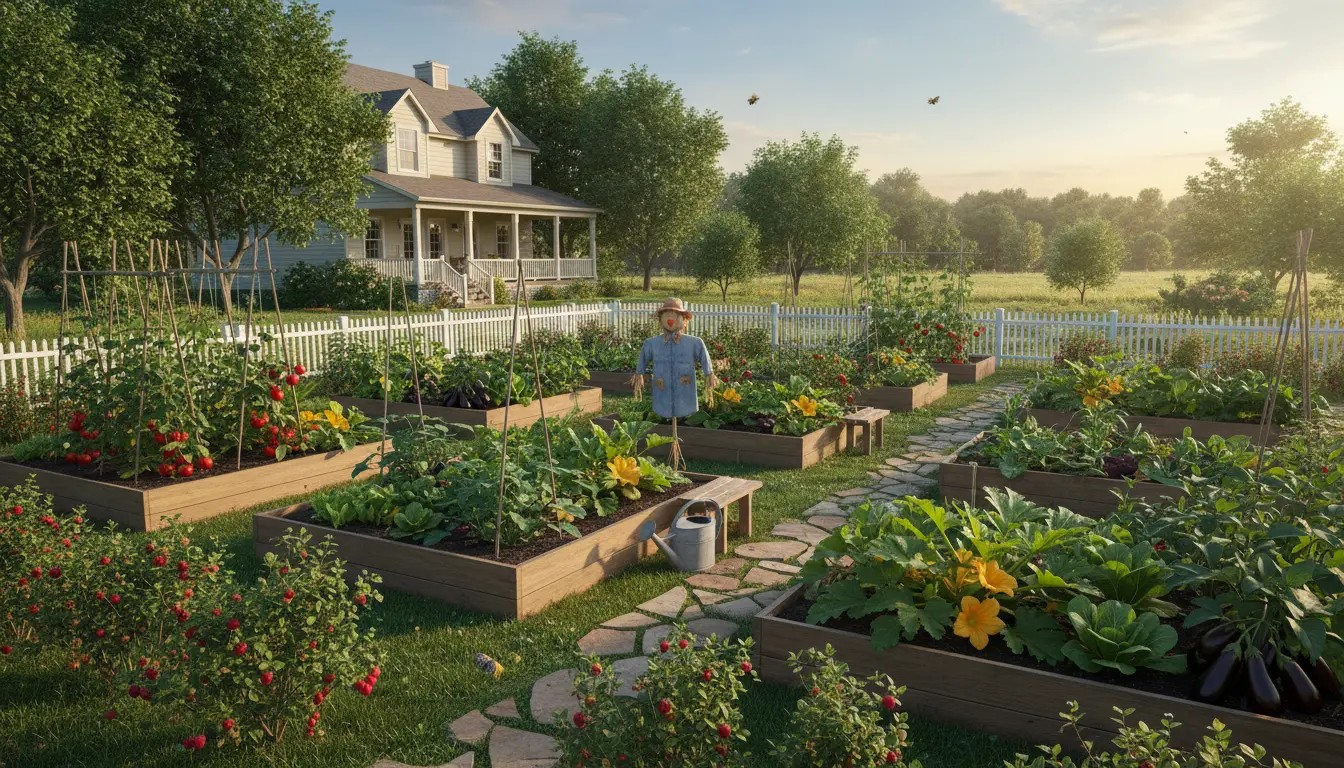
Starting a vegetable garden is a practical way to grow fresh food and learn new skills. This guide breaks the process into clear steps so beginners can plan, plant, and care for a productive garden.
How to Start a Vegetable Garden: Choose a Good Location
Location determines light, drainage, and access. Pick a spot with at least 6 hours of direct sunlight for most vegetables.
Check soil drainage by digging a small hole and filling it with water. If the water drains within a few hours, drainage is good.
Sun, water, and access
- Sunlight: 6–8 hours daily for tomatoes, peppers, and cucumbers.
- Water source: Close to a hose or irrigation system to simplify watering.
- Access: Leave paths for easy harvesting and maintenance.
How to Start a Vegetable Garden: Prepare the Soil
Healthy soil is the foundation of a productive garden. Start by testing soil pH with a kit or local extension service.
Loosen and enrich the top 6–12 inches of soil. Mix in organic matter to improve texture and nutrient content.
Simple soil improvement steps
- Add 2–3 inches of compost and work it into the soil.
- If soil is clayey, mix in coarse sand and compost to improve drainage.
- For sandy soil, add compost and well-rotted manure to increase water retention.
How to Start a Vegetable Garden: Choose Suitable Crops
Pick vegetables suited to your climate, season, and space. Start with easy, reliable crops for beginners.
Consider vertical or container plants if space is limited.
Recommended beginner vegetables
- Leafy greens: lettuce, spinach, and Swiss chard grow quickly and tolerate partial shade.
- Root crops: carrots and radishes are low-maintenance and good for smaller beds.
- Fruiting plants: tomatoes and peppers are rewarding but need full sun and staking.
How to Start a Vegetable Garden: Planting and Layout
Plan your bed layout before planting. Group plants with similar water and light needs together.
Decide between seeds and seedlings. Seeds are cheaper; seedlings give a head start for longer-season crops.
Spacing and companion planting
- Follow seed packet or plant tag spacing to avoid crowding.
- Use companion planting to deter pests and boost growth (e.g., basil near tomatoes).
- Rotate crops yearly to reduce soil-borne diseases.
How to Start a Vegetable Garden: Watering and Maintenance
Consistent watering is crucial. Water deeply and less often to encourage strong roots.
Mulch to retain moisture, suppress weeds, and regulate soil temperature.
Simple maintenance checklist
- Water deeply 2–3 times weekly depending on weather and soil.
- Mulch with straw, wood chips, or leaves to a 2–3 inch layer.
- Weed regularly by hand or with shallow cultivation to avoid root damage.
- Monitor for pests and diseases; remove affected leaves promptly.
How to Start a Vegetable Garden: Feeding and Troubleshooting
Vegetables need nutrients. A balanced organic fertilizer applied as directed supports steady growth.
Observe plants weekly to catch nutrient or pest issues early. Yellowing leaves often indicate nitrogen deficiency or watering issues.
Common problems and quick fixes
- Poor growth: add compost and use a balanced fertilizer.
- Leaf spots: remove infected tissue and improve air circulation.
- Insects: hand-pick pests or use insecticidal soap for soft-bodied insects.
Many common vegetables like lettuce, radishes, and green beans can be harvested in as little as 30–60 days from planting.
How to Start a Vegetable Garden: Harvesting and Season Extension
Harvest at peak ripeness for best flavor. For many crops, regular harvesting encourages more production.
Use row covers, cold frames, or containers to extend the growing season in cooler climates.
Harvest tips
- Pick leafy greens early in the morning for best texture and flavor.
- Harvest tomatoes when they are fully colored and slightly soft to the touch.
- Store or preserve surplus by freezing, canning, or drying.
Real-World Example: Small Balcony to Steady Salad Supply
Case study: A two-person household converted a 6-foot balcony into a container vegetable garden. They used three 10-inch deep planters and vertical trellises.
They planted lettuce, cherry tomatoes, basil, and radishes. Within 8 weeks they had continuous salad greens and monthly tomatoes, reducing store-bought produce by 40%.
Key actions: consistent watering, weekly compost tea feed, and rotating lettuce varieties every 3 weeks.
Final Checklist to Start a Vegetable Garden
- Choose a sunny, well-drained location near water access.
- Test and improve soil with compost and amendments.
- Select beginner-friendly crops and plan spacing.
- Mulch, water deeply, and monitor regularly.
- Harvest often and preserve surplus.
Starting a vegetable garden is manageable with small, consistent steps. Begin with a simple plan, learn from each season, and expand as you gain confidence. Enjoy fresher food and the satisfaction of growing your own vegetables.