
How to Start a Vegetable Garden: First Steps
Starting a vegetable garden begins with planning. Decide what you want to grow, how much time you can spend, and where the garden will go.
Use these quick checks before you start: sunlight, soil access, water source, and space. These factors determine what will thrive in your garden.
Choose the Right Location to Start a Vegetable Garden
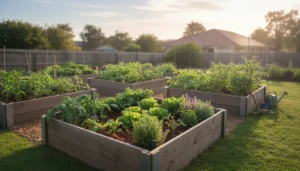
Most vegetables need at least six hours of direct sunlight each day. Observe the site through the day to confirm light levels.
Pick a place close to a water source to make regular watering easier. Avoid low spots that can stay waterlogged.
Soil and Bed Options for Those Who Start a Vegetable Garden
Good soil is the foundation of a productive vegetable patch. If you have compacted or poor soil, raised beds are a simple solution.
- In-ground beds: lower cost, larger area, depends on native soil quality.
- Raised beds: better drainage, easier to control soil mix, reduces back strain.
- Containers: ideal for balconies or small spaces; use large pots for roots.
Prepare Soil and Amendments to Start a Vegetable Garden
Test your soil pH and nutrient levels using a basic kit. Most vegetables prefer a slightly acidic to neutral pH (6.0–7.0).
Amend soil with compost to improve texture and fertility. Mix 2–4 inches of compost into the top 6–12 inches of soil for raised beds.
Simple Soil Mix for Raised Beds
Use a balanced mix to ensure good drainage and nutrients. A common ratio is:
- 40% topsoil
- 40% compost or well-rotted manure
- 20% coarse sand or perlite for drainage
Pick Easy Vegetables for Your First Garden

Start with vegetables that are forgiving and quick to reward. Examples include lettuce, radishes, green beans, cherry tomatoes, and herbs.
Choose varieties labeled “compact” or “bush” for small spaces. Stagger plantings every two weeks to extend harvest time.
Planting Schedule to Start a Vegetable Garden
Follow local frost dates when planning. Use seed packets or plant tags for spacing and depth instructions.
Example schedule items:
- Direct sow radishes and lettuce in early spring
- Transplant tomatoes and peppers after last frost
- Succession sow beans and carrots every 2–3 weeks
Watering and Feeding Tips for a New Vegetable Garden
Water deeply and less often to encourage strong roots. Aim for 1–1.5 inches of water per week, adjusted for rainfall.
Mulch beds with straw or leaves to retain moisture and reduce weeds. Feed with a balanced organic fertilizer every 4–6 weeks during the season.
Common Problems and Easy Fixes
Watch for yellowing leaves, stunted growth, or insect damage. Address issues early for better outcomes.
- Nutrient deficiency: add compost or organic fertilizer
- Pest damage: use row covers or hand-pick pests
- Fungal disease: improve air circulation and avoid overhead watering
Planting flowers like marigolds near vegetables can attract beneficial insects and reduce some pests without chemicals.
Maintain and Harvest: Keep Your Garden Productive
Regular maintenance makes harvesting easier. Remove spent plants, thin seedlings, and keep pathways clear.
Harvest vegetables when ripe to encourage continuous production. Many plants reward you with more crops after early picking.
Season Extension Tips
Use row covers, cloches, or cold frames to extend your growing season. These tools protect plants from cool nights and light frosts.
Start cool-season crops earlier with covers and move warm-season crops under shade in extreme heat.
Small Case Study: How a Beginner Started a Vegetable Garden
Jane, a city renter, used two 4×4 raised beds on her patio. She chose compact tomato, basil, lettuce, and bush beans due to limited space.
After preparing a compost-rich soil mix and placing the beds in a sunny spot, she planted in late spring. Jane watered deeply twice weekly and mulched to conserve moisture.
Results: by week eight she harvested salad greens and beans weekly. The tomatoes produced after midsummer, and she saved time by rotating crops each month.
Quick Checklist to Start a Vegetable Garden
- Choose a sunny site near water
- Decide between in-ground, raised beds, or containers
- Test soil and add compost
- Pick easy vegetables and follow planting dates
- Water deeply, mulch, and monitor pests
- Harvest regularly and rotate crops
Starting a vegetable garden is a practical project that rewards planning and small, consistent efforts. Use the steps above to create a productive, low-stress garden suited to your space and schedule.