
Why Start a Vegetable Garden
Starting a vegetable garden gives you fresh produce, saves money, and connects you to the seasons. It also helps you control what goes into your food by choosing organic methods and avoiding unnecessary chemicals.
This guide shows how to start a vegetable garden for beginners with clear steps you can follow in a weekend or over a season.
How to Start a Vegetable Garden: Quick Overview
Begin by choosing the right location, preparing soil, selecting easy plants, and setting a care routine. Each step reduces common mistakes and increases success on the first try.
Step 1: Choose the Best Location for Your Vegetable Garden
Vegetables need sunlight. Pick a spot that gets at least 6 hours of direct sun daily for most crops.
Consider proximity to water and visibility; a garden near the house is easier to maintain and less likely to be forgotten.
Location Tips
- Sunny, flat area or gentle slope.
- Near a water source to make watering easier.
- Accessible, so you check plants regularly.
Step 2: Prepare Soil to Grow Healthy Vegetables
Good soil is the foundation. Test the soil pH if possible; most vegetables prefer pH 6.0 to 7.0.
Improve soil structure and fertility by adding organic matter like compost or well-rotted manure before planting.
Soil Preparation Steps
- Clear weeds and debris from the area.
- Loosen soil to 8–12 inches with a fork or tiller.
- Mix in 2–4 inches of compost and a balanced organic fertilizer if needed.
Step 3: Choose Vegetables That Are Easy for Beginners
Start with reliable, low-maintenance crops to build confidence. Some quick wins are leafy greens, radishes, bush beans, zucchini, and tomatoes.
Choose varieties labeled ‘disease resistant’ and match plants to your climate and season.
Beginner-Friendly Vegetable List
- Leaf lettuce and spinach — fast, harvest baby leaves early.
- Radishes — mature in 3–4 weeks.
- Bush beans — low maintenance and productive.
- Zucchini — very productive in small space.
- Cherry tomatoes — compact and forgiving.
Step 4: Planting and Layout for a Vegetable Garden
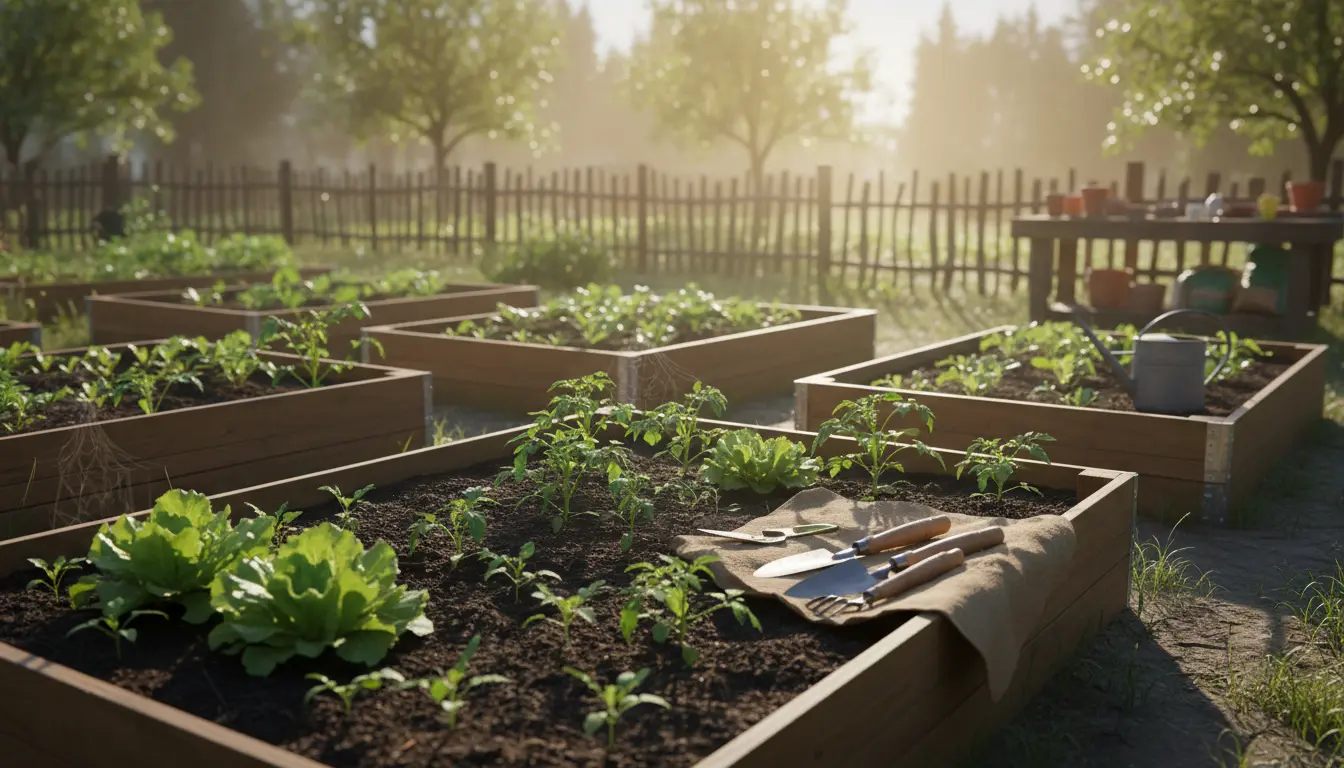
Plan rows, beds, or containers based on available space. Raised beds warm faster and drain well, making them a good option for beginners.
Follow spacing recommendations on seed packets and plant tags to avoid crowding.
Layout Options
- Rows — traditional and easy to sow.
- Raised beds — better drainage, less compaction.
- Containers — great for balconies and patios.
Step 5: Watering, Feeding, and Maintenance
Consistent watering is crucial. Aim for deep, infrequent watering to encourage strong roots.
Feed with compost tea or balanced organic fertilizer during the growing season. Monitor for pests and disease and deal with small problems early.
Basic Care Routine
- Water deeply once or twice a week depending on weather.
- Mulch to retain moisture and suppress weeds.
- Harvest regularly to encourage more production.
Many common vegetables like lettuce and radishes can be harvested in as little as 3 to 6 weeks, giving quick rewards for beginner gardeners.
Common Problems and Simple Solutions
Pests, poor soil, and inconsistent watering are the main challenges. Use row covers to protect seedlings and handpick pests when populations are small.
Improve soil with ongoing compost additions and use drip irrigation or soaker hoses to keep moisture steady.
Quick Troubleshooting
- Yellow leaves — check watering and soil nutrients.
- Slow growth — add compost and ensure full sun exposure.
- Lots of pests — use physical barriers and encourage beneficial insects.
Real-World Example: Balcony to Dinner Plate
Case study: Emma, a first-time gardener, converted a 6-foot balcony box into a vegetable garden. She chose cherry tomatoes, basil, lettuce, and radishes to maximize space.
Within eight weeks she had regular salads. Her key actions were consistent watering, weekly compost tea, and harvesting baby greens early. The small success convinced her to expand into two more containers the next season.
Seasonal Checklist for a Vegetable Garden
- Spring: Prepare soil, start seeds indoors, plant cool-season crops.
- Summer: Water deeply, stake tomatoes, harvest regularly.
- Fall: Plant cover crops or remove spent plants and add compost.
Final Tips to Start a Vegetable Garden for Beginners
Keep expectations realistic and focus on easy successes. Gardening skills grow each season, and mistakes are useful lessons.
Start small, plan your garden layout, feed the soil, and enjoy the process of growing your own vegetables.