
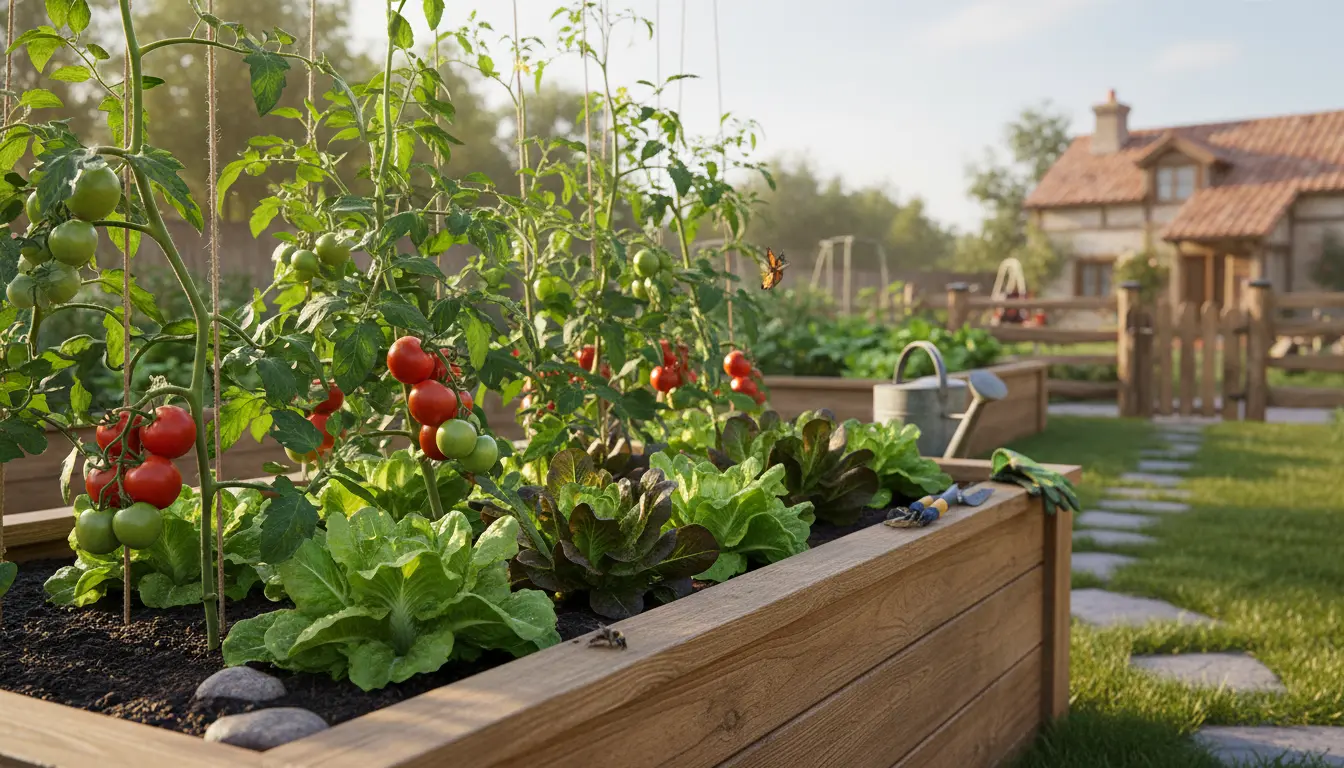
Starting a vegetable garden is a practical way to grow fresh food, save money, and enjoy time outdoors. This guide gives clear steps to start a vegetable garden for beginners, from choosing the site to harvesting your first crops.
Plan Where to Start a Vegetable Garden
Location is the first decision when you start a vegetable garden. Pick a spot that gets at least six hours of direct sunlight daily, near a water source and with good drainage.

Consider accessibility and visibility so you can tend the garden regularly. If space is limited, plan raised beds or containers instead of a traditional in-ground plot.
Checklist Before You Start a Vegetable Garden
- Sunlight: 6–8 hours daily for most vegetables.
- Water access: hose or irrigation within reach.
- Soil drainage: avoid low spots that collect water.
- Space: plan bed sizes and pathways for easy care.
Prepare Soil to Start a Vegetable Garden
Healthy soil is the foundation when you start a vegetable garden. Test the soil pH and nutrient levels using a simple kit or local extension service.
Amend soil with compost to improve texture and fertility. For heavy clay, add coarse sand and compost; for very sandy soil, add organic matter to retain moisture.
Basic Soil Mix for Raised Beds
- 40% topsoil
- 40% compost
- 20% coconut coir or peat moss for moisture retention
Choose Vegetables to Start a Vegetable Garden
Select easy-to-grow vegetables suited to your climate for the best success when you start a vegetable garden. Consider your taste preferences and how much time you can commit.
Beginner-friendly crops include tomatoes, lettuce, radishes, green beans, and herbs like basil and parsley. Stagger plantings to spread harvests through the season.
Planting Tips When You Start a Vegetable Garden
- Follow seed packet dates for sowing depth and spacing.
- Start seeds indoors 4–8 weeks before last frost for warm-season crops.
- Harden off seedlings before moving them outside to reduce shock.
Watering and Fertilizing
Consistent watering helps plants establish roots and produce well. Most vegetables need about 1–1.5 inches of water per week, supplied evenly rather than in short bursts.

Use mulch around plants to reduce evaporation and suppress weeds. Apply a balanced, slow-release fertilizer or side-dress with compost during the growing season.
Simple Watering Methods
- Soaker hoses or drip irrigation deliver water to the root zone efficiently.
- Water early in the morning to reduce disease risk and evaporation.
- Check soil moisture by digging a small hole near roots; adjust watering if soil is soggy or bone dry.
Pest and Disease Management
Prevent problems by using crop rotation, good spacing, and healthy soil. Inspect plants weekly for signs of pests or disease and act early to limit spread.
Use row covers for insect protection, hand-pick pests when possible, and choose resistant varieties. Save chemical controls as a last resort and follow label directions carefully.
Harvesting and Ongoing Care
Harvest vegetables at peak ripeness for the best flavor and to encourage continued production. Regular harvesting of crops like beans and zucchini keeps plants productive.
Keep beds tidy by removing spent plants, adding compost, and preparing for the next planting. Fall clean-up and soil enrichment help you start a vegetable garden successfully the next season.
Including flowers such as marigolds or nasturtiums near vegetable beds can attract beneficial insects and deter some pests naturally.
Case Study: Small Urban Garden Success
A renter in a city started a 4×8 foot raised bed on a balcony and grew tomatoes, lettuce, and herbs. They used a mix of purchased topsoil and homemade compost, installed a drip line, and planted lettuce in partial shade.
In the first season they harvested enough salad greens for two people weekly and fresh herbs through summer. Their key steps were regular watering, mulching, and planting fast-growing crops between slower ones.
Quick Start Checklist to Start a Vegetable Garden
- Choose a sunny, accessible site.
- Test and amend soil with compost.
- Select beginner-friendly plants for your climate.
- Set up watering (soaker hose or drip) and mulch beds.
- Monitor for pests and harvest regularly.
Starting a vegetable garden is a manageable project with planning and small, consistent efforts. Focus on healthy soil, water management, and crops that match your conditions to build confidence and enjoy fresh produce at home.