
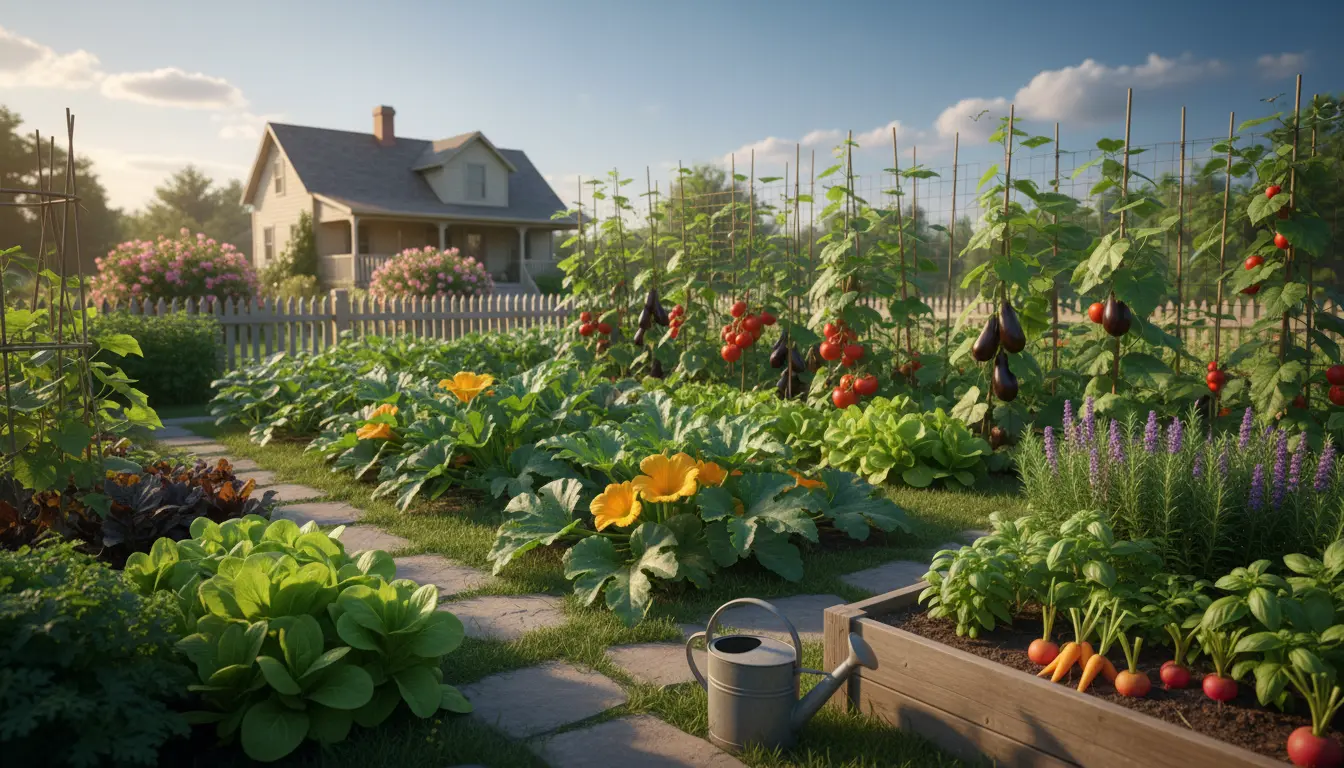
Starting a vegetable garden is a practical way to grow fresh food, save money, and learn a new skill. This guide covers the essential steps to plan, prepare, plant, and maintain a productive vegetable garden for beginners.
Planning Your Vegetable Garden
Good planning sets the foundation for success. Decide on goals: continuous salad greens, a few tomato plants, or year-round vegetables.
Choose the Right Location for Your Vegetable Garden
Select a spot that gets at least 6 hours of direct sun for most vegetables. Look for flat or gently sloped ground with good drainage.
- Sunny exposure: 6–8 hours a day for tomatoes, peppers, and cucurbits.
- Partial shade: leafy greens and herbs tolerate 3–5 hours of sun.
- Access to water: place beds near a hose or irrigation source.
Decide What to Grow in Your Vegetable Garden
Start with 4–8 easy crops to keep maintenance manageable. Choose varieties suited to your climate and season.
- Easy starters: lettuce, radishes, bush beans, cherry tomatoes, zucchini, basil.
- Consider succession planting to extend harvests.
Soil and Preparation for a Vegetable Garden
Healthy soil is the most important factor for a productive vegetable garden. Test and improve the soil before planting.
Test and Improve Soil for Your Vegetable Garden
Use a home soil test kit or send a sample to an extension service. Aim for loamy soil with a pH between 6.0 and 7.0 for most vegetables.
Amendments to consider:
- Compost: adds nutrients and improves structure.
- Well-rotted manure: boosts nitrogen and organic matter.
- Sand or gypsum: improves drainage in clay soils.
Layout, Beds, and Spacing in a Vegetable Garden
Decide between in-ground rows, raised beds, or containers. Raised beds warm faster and drain better.
Spacing and Crop Arrangement
Follow seed packet spacing to avoid overcrowding. Leave paths for easy access and harvesting.
- Small garden idea: two 4×8 raised beds support a family of two with careful planning.
- Companion planting example: basil near tomatoes can improve flavor and deter pests.
Planting, Watering, and Fertilizing Your Vegetable Garden
Plant at the correct time for your zone. Use local planting calendars or extension service recommendations.
Seed vs Seedlings for a Vegetable Garden
Start seeds for a wider variety and lower cost. Buy seedlings for instant results and less early care. Harden off seedlings before transplanting.
Watering and Fertilizer Basics
Water deeply and less often to encourage strong roots. Aim for about 1 inch of water per week, adjusting for rain and soil type.
- Morning watering reduces disease risk.
- Use slow-release or balanced fertilizers based on soil test results.
Pest and Disease Management in a Vegetable Garden
Prevention is the best control. Rotate crops and remove diseased plants promptly to limit spread.
Safe Pest Control Strategies
Use a combination of physical barriers, beneficial insects, and targeted organic sprays when needed.
- Row covers protect young plants from insects.
- Hand-pick slugs and caterpillars in the evening.
- Introduce ladybugs or lacewings for aphid control.
Crop rotation every 2–3 years reduces soil-borne diseases and pest buildup. Avoid planting the same family of vegetables in the same bed year after year.
Seasonal Care and Harvesting Your Vegetable Garden
Monitor plants weekly for signs of stress, pests, or nutrient deficiencies. Mulch to conserve moisture and suppress weeds.
When to Harvest
Harvest leafy greens young for tenderness. Pick tomatoes and peppers when they reach full color and firmness for best flavor.
Keep a simple harvest log to track varieties, planting dates, and yields. This helps plan future seasons and improve results.
Simple Case Study: A First-Year 4×8 Raised Bed Vegetable Garden
Emily, a beginner, built a 4×8 raised bed and planted tomatoes, lettuce, bush beans, and basil. She prepared soil with two wheelbarrows of compost and planted in early spring.
Results after one season:
- Tomatoes: 10–12 pounds total from three plants.
- Lettuce: continuous harvest for 12 weeks through succession planting.
- Bush beans: three pickings over six weeks.
Lessons learned: watering twice weekly during dry spells produced steady growth, and adding mulch reduced time spent weeding by half.
Quick Checklist to Start a Vegetable Garden
- Pick a sunny location and measure available space.
- Test soil and add compost or amendments.
- Decide between seeds or seedlings and plant at correct times.
- Set a watering schedule and mulch beds.
- Monitor for pests, rotate crops, and keep records.
Starting a vegetable garden is a step-by-step process that rewards patience and observation. Follow these basic practices, adapt to your local climate, and expand gradually each season for reliable results.