
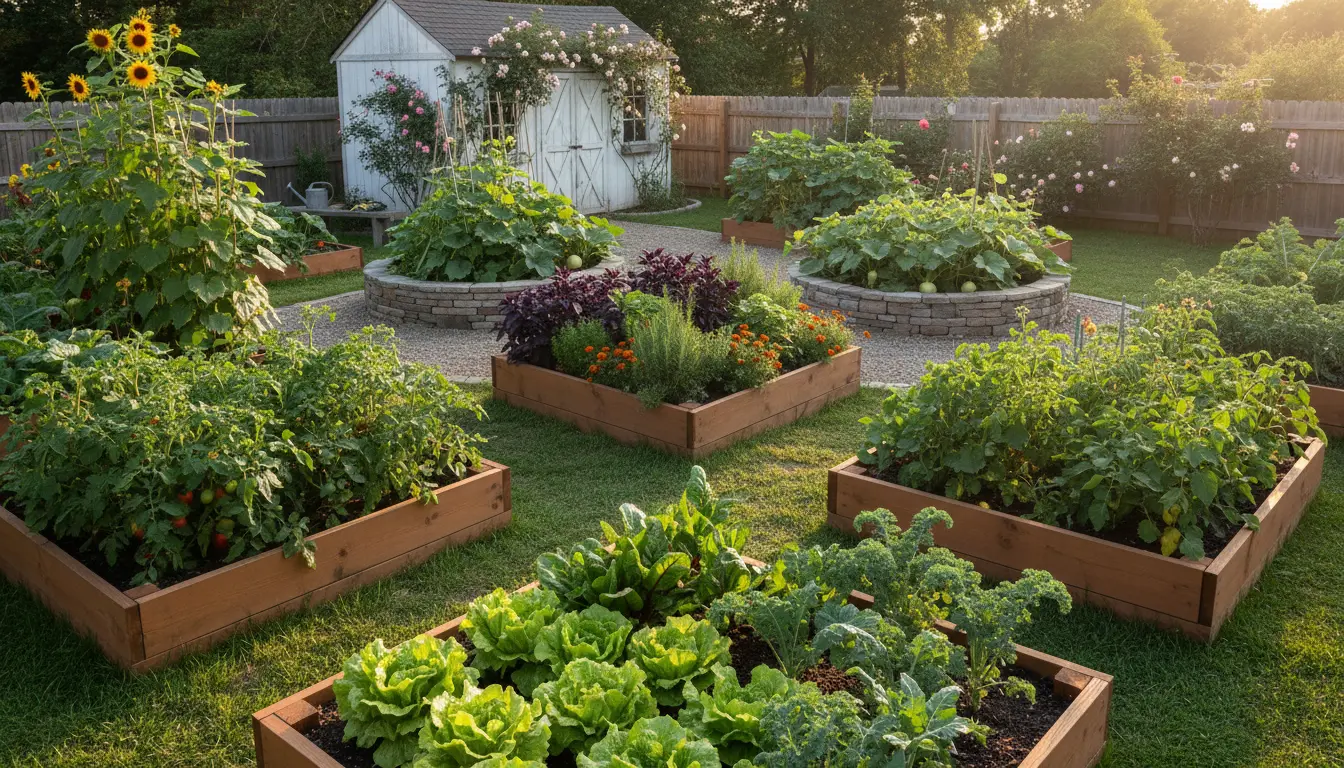
Starting a vegetable garden at home is practical and rewarding. With a little planning and regular care, you can grow fresh produce even in small spaces.
Why start a vegetable garden at home?
Growing your own vegetables saves money and improves food freshness. It also gives control over pesticides and soil quality.
Beginner gardens can be simple: a few containers, raised beds, or a small patch in the yard.
Planning your vegetable garden at home
Good planning reduces wasted time and effort. Consider climate, available sunlight, space, and how much time you can commit.
- Climate and season: Know your first and last frost dates.
- Sun exposure: Most vegetables need 6–8 hours of direct sun.
- Space: Measure the area and plan bed sizes or container placements.
- Water access: Position beds near a hose or irrigation source.
Choosing the right spot for your vegetable garden at home
Pick a level area with the best sun exposure you have. Avoid places with heavy shade or poor drainage.
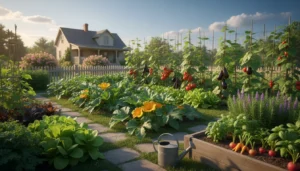
If yard space is limited, consider containers on a balcony or vertical planters against a sunny wall.
Preparing soil to start a vegetable garden
Healthy soil is the most important factor in a productive garden. Aim for loose, well-draining soil rich in organic matter.
Simple soil steps:
- Test soil pH with a kit; most vegetables prefer pH 6.0–7.0.
- Amend heavy clay with compost and coarse sand for drainage.
- Add 2–4 inches of compost on top and mix into the top 6–8 inches of soil.
- Consider raised beds if soil is poor or compacted.
Soil mix for containers

Use a commercial potting mix or blend peat-free compost, coconut coir, and perlite for good drainage and nutrient retention.
Choosing plants to start a vegetable garden at home
Start with easy, fast-growing vegetables that fit your climate and space. For beginners, pick a few reliable varieties.
- Leafy greens: Lettuce, spinach, and chard are quick and forgiving.
- Root vegetables: Radishes and carrots work well in deeper containers or loose soil.
- Fruit-bearing plants: Cherry tomatoes, bush beans, and peppers are great for small spaces.
- Herbs: Basil, parsley, and cilantro add flavor and are low-maintenance.
Planting schedule and seed vs. transplants
Decide whether to sow seeds or buy transplants. Seeds are cheaper but take longer; transplants give you a head start.
Follow a planting calendar based on your frost dates. Stagger plantings to extend harvests over several weeks.
Example planting plan
- Early spring: Peas and spinach from seed.
- Late spring: Transplant tomatoes and peppers after last frost.
- Summer: Plant successive rows of lettuce every 2–3 weeks.
Watering and maintenance for a vegetable garden at home
Consistent watering is critical. Most vegetables need about 1 inch of water per week, adjusted for heat and soil type.
Practical watering tips:
- Water in the morning to reduce evaporation and disease risk.
- Use a soaker hose or drip irrigation for steady, deep moisture.
- Mulch beds with straw or shredded bark to keep soil cool and moist.
Pest and disease basics
Watch for pests and signs of disease early. Use physical barriers, hand-picking, and companion planting before chemical controls.
Rotate crops each season to reduce soil-borne disease build-up.
Harvesting and ongoing care
Harvest vegetables when they are young and tender for best flavor and to encourage more production.
Keep beds tidy by removing dead leaves, checking for nutrient deficiencies, and adding compost annually.
Planting basil next to tomatoes can improve tomato flavor and may deter some pests. Companion planting is a low-tech way to support plant health.
Small case study: A balcony vegetable garden
Case study: Jamie had a 6-foot-wide balcony and wanted fresh salad greens and herbs. They used four 12-inch containers and two rail planters.
Within three months, Jamie harvested multiple salads a week. Key actions: chose compact basil and leaf lettuce varieties, used potting mix with compost, watered twice weekly, and placed containers where they got 6 hours of sun.
Outcome: Low cost, steady harvests, and increased cooking with fresh herbs.
Common beginner mistakes and how to avoid them
- Overcrowding: Follow spacing recommendations to avoid poor air circulation.
- Overwatering: Check soil moisture before watering; soggy soil causes root rot.
- Neglecting soil: Regularly add compost and consider a simple soil test every few years.
Final checklist to start a vegetable garden at home
- Choose a sunny site or suitable containers.
- Prepare or buy good soil and add compost.
- Select 3–6 starter plants or seed types suited to your climate.
- Set up simple watering and mulching systems.
- Monitor for pests and harvest regularly.
Starting a vegetable garden at home is a step-by-step process. By planning, preparing soil, selecting appropriate plants, and committing to basic maintenance, even beginners can grow a successful, productive garden.