
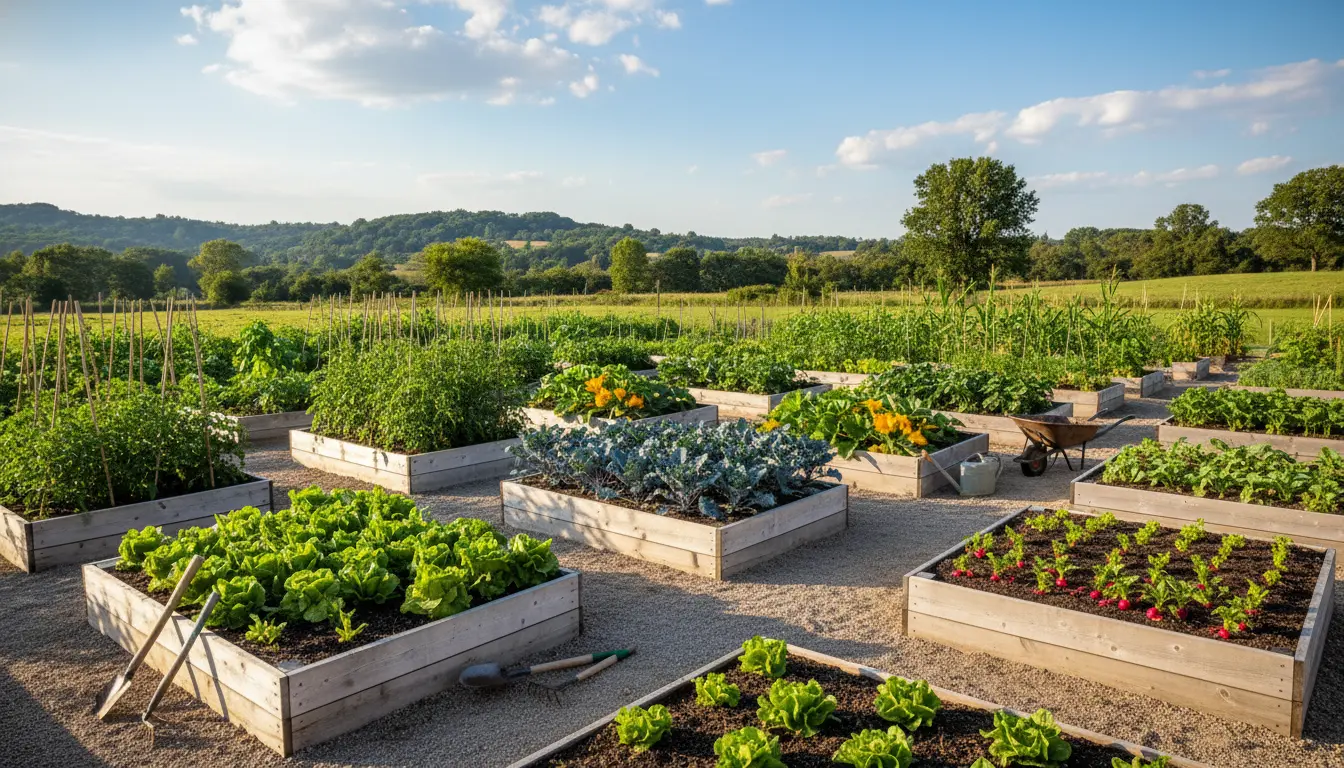
Starting a vegetable garden is a practical way to grow fresh food, save money, and enjoy time outdoors. This guide walks you through simple, actionable steps to plan, prepare, plant, and maintain a productive vegetable garden.
Plan Your Vegetable Garden Location
Choose a sunny spot that gets at least 6 hours of direct sunlight daily for most vegetables. Assess access to water, wind exposure, and nearby structures that may cast shadows.
Decide on garden type: in-ground beds, raised beds, or containers. Each option affects soil, drainage, and ease of maintenance.
Vegetable garden size and layout
Start small. A 4×8 foot raised bed is manageable for one person and fits popular vegetable choices. Sketch a simple layout to visualize paths and spacing.
- Measure the area and mark shape with string or spray paint.
- Plan paths of at least 18 inches for access without compacting soil.
- Group vegetables with similar light and water needs together.
Prepare Soil for a Healthy Vegetable Garden
Good soil is the foundation of a successful vegetable garden. Most new gardeners find the best results by improving native soil or filling raised beds with a quality mix.

Test soil pH using a simple kit; most vegetables prefer pH 6.0 to 7.0. Amend soil based on the test results.
Soil improvement steps
- Add 2–4 inches of compost and work it into the top 6–8 inches of soil.
- Use coarse sand or grit only if drainage is a problem.
- Mix in well-rotted manure or a balanced organic fertilizer as needed.
Choose Vegetables for Your Climate and Skill Level
Select vegetables suited to your USDA hardiness zone or local climate. Beginners should start with easy, forgiving crops.
- Easy starters: tomatoes, lettuce, radishes, green beans, and zucchinis.
- Consider planting a mix of quick crops (lettuce, radish) and longer-season crops (tomato, pepper).
- Use seedlings for quick starts or direct-sow seeds when appropriate.
Planting Techniques for a Productive Vegetable Garden
Follow seed packet or plant tag instructions for planting depth and spacing. Avoid crowding; vegetables need airflow to reduce disease risk.
Use succession planting to maximize yield: sow small amounts of quick crops every 2–3 weeks.
Companion planting tips
- Plant basil near tomatoes to potentially improve flavor and deter pests.
- Avoid planting onions next to beans; they do not pair well in tight spaces.
- Use marigolds or nasturtiums to attract beneficial insects and repel pests.
Watering and Maintenance
Consistent watering supports steady growth. Aim for deep, infrequent watering rather than shallow daily sprays.
Install a soaker hose or drip irrigation for efficiency and to keep foliage dry. Mulch with straw or wood chips to retain moisture and suppress weeds.
Pest and disease management
Monitor plants weekly and act early. Handpick larger pests, use row covers for protection, and apply organic controls like neem oil when necessary.
- Rotate crops yearly to reduce soil-borne disease build-up.
- Remove diseased foliage promptly to prevent spread.
Many common vegetables like lettuce, spinach, and radishes can be harvested in as little as 30 days from sowing, giving you quick rewards while longer-season crops mature.
Harvesting and Storage
Harvest vegetables at peak ripeness for best flavor and nutrition. Regular harvesting often encourages more production, especially for crops like beans and zucchinis.
Store produce properly: cool leafy greens quickly, and keep root vegetables in cool, dark places to extend freshness.
Small Real-World Example: One Raised Bed Case Study
Case study: Sara, a beginner gardener in zone 6, started a single 4×8 raised bed filled with a mix of compost, topsoil, and coconut coir. She planted tomatoes, lettuce, radishes, and bush beans.
Results after one season: Sara harvested salad greens weekly for three months, picked six tomato plants through late summer, and collected multiple radish harvests every three weeks. Her minimal initial investment paid off in fresh produce and reduced grocery trips.
Key takeaways from Sara’s garden: start small, use quality soil, water consistently, and stagger plantings for continuous harvests.
Seasonal Checklist for a Vegetable Garden
- Spring: Test soil, amend, start seeds indoors, and prepare beds.
- Summer: Water deeply, mulch, and harvest regularly.
- Fall: Remove spent plants, compost healthy trimmings, and plant cover crops if possible.
Final Tips for New Vegetable Gardeners
Keep a simple garden journal to track planting dates, varieties, and yields. This record helps you make better decisions each year.
Be patient and experiment. Gardening is seasonal and site-specific, so small adjustments often lead to better results over time.
If you follow the steps above, you can establish a productive vegetable garden that fits your space and schedule. Start small, learn as you go, and enjoy fresh homegrown produce.