
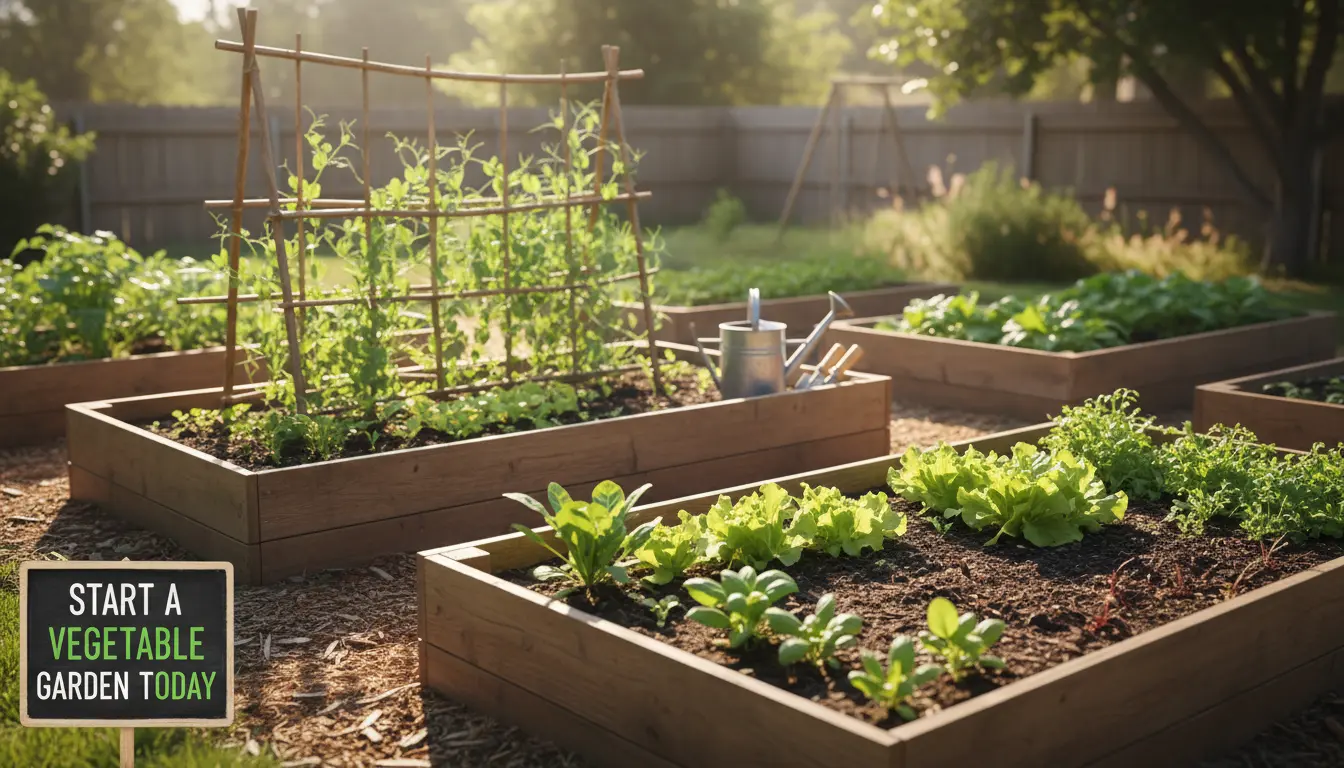
How to Start a Vegetable Garden: Quick Overview
Starting a vegetable garden is achievable for any backyard or balcony. This guide breaks the process into clear, practical steps so you can grow food successfully in your space.
Choose the Right Location to Start a Vegetable Garden
Location determines how well vegetables will grow. Pick a spot with at least 6 hours of direct sun for most vegetables.
Consider access to water, drainage, and protection from strong wind. If ground soil is poor, use raised beds or containers.
Site checklist
- Sun exposure: 6+ hours of direct sun
- Water access: hose or watering can nearby
- Level ground with good drainage
- Space for rows, beds, or containers
Prepare Soil Before You Plant
Healthy soil is the foundation of a productive vegetable garden. Test the soil pH and texture to know what to improve.
Mix in organic matter like compost to improve structure and nutrients. For heavy clay, add compost and coarse sand; for sandy soil, add compost and leaf mold.
Basic soil preparation steps
- Remove weeds and grass from the planting area.
- Loosen soil to 8–12 inches for vegetables with shallow roots.
- Work in 2–3 inches of compost across the bed.
- Rake level and water to settle before planting.
Decide What to Plant
Choose vegetables that match your climate, season, and skill level. Start with easy crops if you are a beginner.
Good starter vegetables include tomatoes, lettuce, radishes, beans, and zucchini. Mix fast growers with longer-season crops to extend harvests.
Choosing varieties
- Read seed packets for days to maturity and spacing.
- Pick disease-resistant varieties for your region when possible.
- Buy seedlings for a faster start, or sow seeds directly for many crops.
Planting: Timing and Techniques
Proper timing ensures plants avoid frost or extreme heat. Check your local frost dates and planting calendars.
Follow spacing guidelines so plants have room to develop. Plant deeper or shallower according to each crop’s needs.
Planting methods
- Direct sow seeds for carrots, radishes, and beans.
- Transplant seedlings for tomatoes, peppers, and cabbage.
- Succession plant every 2–3 weeks to keep a steady harvest.
Watering and Feeding Your Vegetable Garden
Consistent moisture is key. Water deeply at the base of plants instead of light surface watering.
Mulch helps retain moisture and suppress weeds. Apply 2–3 inches of organic mulch like straw or wood chips.
Fertilizing tips
- Use a balanced organic fertilizer at planting if your soil test shows low nutrients.
- Side-dress heavy feeders (corn, tomatoes) with compost or balanced fertilizer mid-season.
- Avoid over-fertilizing leafy greens if you want more flavor; excess nitrogen can reduce taste.
Pest and Disease Management
Preventive practices reduce problems. Rotate crops, clean up plant debris, and choose resistant varieties.
Physical barriers like row covers and hand-picking pests often solve issues without chemicals.
Integrated approach
- Encourage beneficial insects with flowers like marigolds and alyssum.
- Inspect plants regularly and remove diseased leaves immediately.
- Use targeted organic controls only when necessary.
Harvesting and Storing Vegetables
Harvest vegetables at peak maturity for best flavor and storage life. Regular harvesting encourages more production.
Store crops according to type: leafy greens in the fridge, root crops in cool, dark storage, and tomatoes at room temperature away from direct sun.
Case Study: Small Urban Raised Bed
Example: A 4×8 foot raised bed produced reliable food for one person in a season. The gardener used a mix of compost and topsoil, planted tomatoes, lettuce, bush beans, and herbs.
By watering twice a week, mulching, and rotating beans with lettuce, the bed yielded fresh salad greens for months and 8–10 pounds of tomatoes in late summer.
Most vegetables prefer slightly acidic soil with a pH between 6.0 and 7.0. A simple soil test kit gives quick answers so you can adjust with lime or sulfur if needed.
Quick Checklist to Start a Vegetable Garden
- Choose a sunny spot and mark your bed or container area.
- Test and improve soil with compost.
- Select easy vegetables and check planting times.
- Plant, mulch, and water deeply and consistently.
- Monitor pests, harvest regularly, and enjoy fresh produce.
Starting a vegetable garden is a series of small, repeatable steps. With basic planning and weekly care, most people see success in the first season. Begin small, learn from each crop, and expand as you gain confidence.