
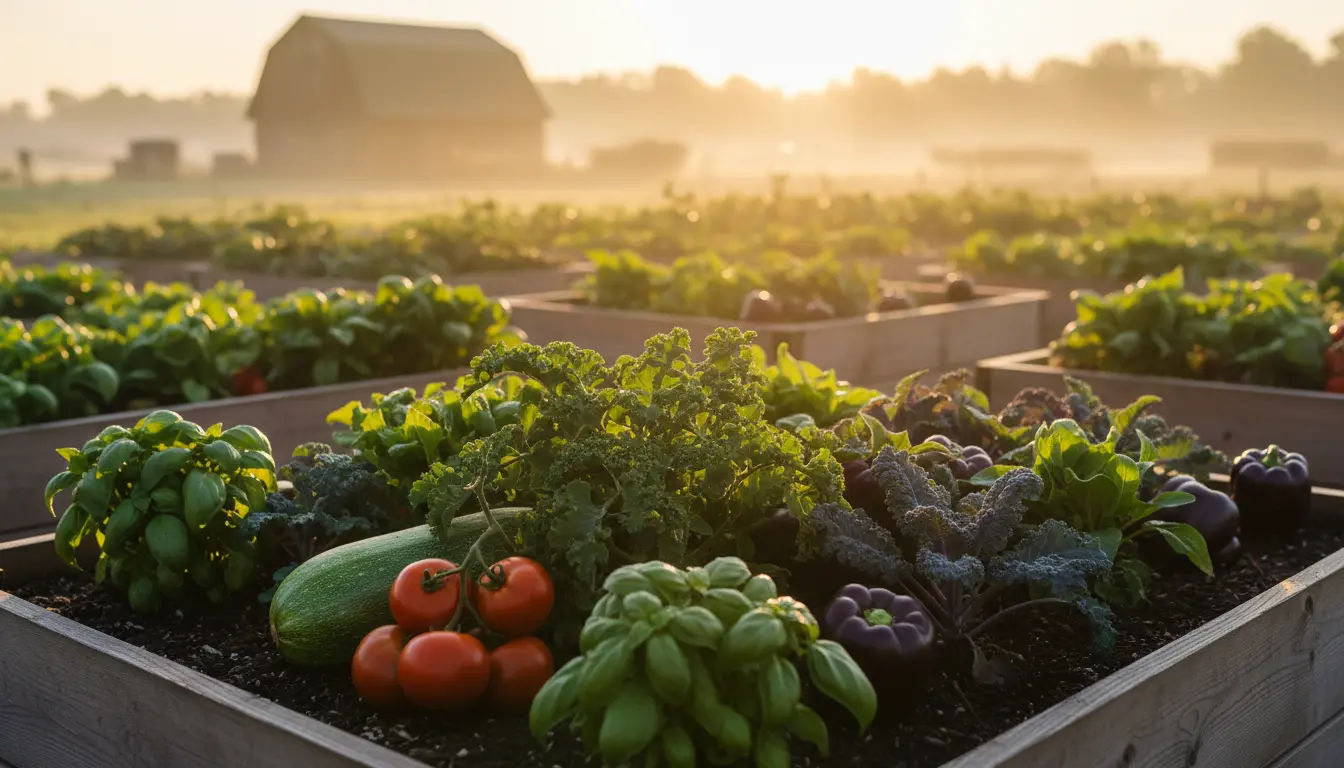
Why Start a Vegetable Garden Now
Starting a vegetable garden is a practical way to save money, eat fresher food, and get gentle exercise. Even small spaces like balconies or a 4×4 foot bed can produce useful yields.
This guide shows clear steps to start a vegetable garden with low risk and steady results. Follow these basics and adapt them to your climate and space.
Plan Before You Start a Vegetable Garden
Good planning reduces wasted time and plants. Begin by choosing a location with good sun, water access, and reasonable soil or an option for raised beds.
Consider these simple criteria:
- Sun: 6–8 hours of direct sunlight for most vegetables.
- Water: Nearby hose or rainfall capture to make watering efficient.
- Space: Start small—one or two 4×4 or 3×6 beds for beginners.
- Soil access: Ground soil or bagged soil for raised beds.
Prepare Soil to Start a Vegetable Garden
Soil determines success. Test or assess soil texture and drainage before planting. If soil is compacted or clay-heavy, consider raised beds filled with a loose mix.
Basic soil mix for raised beds:
- 40% topsoil or screened garden soil
- 30% compost (well-rotted)
- 30% organic matter such as coconut coir or peat-free compost
Add 1–2 inches of compost to in-ground beds each season to improve fertility and structure.
Choose Vegetables to Start a Vegetable Garden
Pick vegetables suited to your climate and season. For fast results, start with easy crops that offer high yield for low care.
Beginner-friendly choices:
- Leafy greens: lettuce, spinach, arugula
- Fast roots: radishes, carrots (short varieties)
- Nightshades: cherry tomatoes, peppers (in warm climates)
- Vining crops: bush beans, bush zucchini for small spaces
Use Seedlings or Seeds?
Seeds are cheaper but take longer. Seedlings (transplants) give a reliable head start for tomatoes, peppers, and brassicas. Use seeds for quick crops like radishes and lettuces.
Planting and Spacing to Start a Vegetable Garden
Follow seed packet or plant tag spacing recommendations. Crowded plants compete for nutrients and light and reduce yields.
Simple planting tips:
- Stagger planting dates for continuous harvest—plant lettuce every 2–3 weeks.
- Use companion planting: basil near tomatoes can improve flavor and help deter pests.
- Keep tall plants on the north side of beds to avoid shading smaller crops.
Watering and Feeding Your Vegetable Garden
Consistent watering encourages steady growth and reduces stress-related problems. Water deeply and less often rather than frequent shallow sprays.
Basic feeding approach:
- Start with compost at planting to supply slow-release nutrients.
- Use a balanced organic fertilizer mid-season if plants show deficiency (yellowing or slow growth).
- Mulch with straw or wood chips to retain moisture and suppress weeds.
Pest and Disease Basics for Your Vegetable Garden
Observe plants regularly and act early. Many problems are easier to manage when small.
Non-chemical strategies:
- Hand-pick larger pests like slugs and caterpillars.
- Use row covers to protect young plants from insects and birds.
- Rotate crop families each year to reduce soil-borne diseases.
Many studies show home-grown tomatoes can contain higher levels of certain antioxidants than store-bought varieties because they are harvested riper.
Harvesting and Storing from Your Vegetable Garden
Harvest early in the morning when leaves and fruits are cool. This helps shelf life and flavor for many crops.
Storage tips:
- Leafy greens: store wrapped in a damp towel in the fridge for up to a week.
- Tomatoes: keep at room temperature until fully ripe, then refrigerate only if needed.
- Root vegetables: store in a cool, dark place with moderate humidity.
Real-World Example: Small Raised Bed Case Study
Case: A beginner used a 4×8 raised bed in zone 6. They planted two rows of cherry tomatoes, one row of bush beans, and interplanted lettuce.
Results: First season yielded roughly 30–40 pounds of tomatoes and continuous lettuce harvest for four months. Minimal pest issues occurred after using floating row covers early in the season.
Lessons learned: Start small, use sturdy supports for tomatoes, and stagger lettuce plantings for uninterrupted salads.
Seasonal Calendar to Start a Vegetable Garden
Use a simple seasonal plan to time sowing and harvest. Adjust dates to your hardiness zone.
- Early spring: start onions and peas; prepare beds and add compost.
- Late spring: transplant tomatoes and peppers after last frost.
- Summer: direct-sow beans and quick greens in partial shade.
- Fall: plant cover crops or autumn lettuces; add compost for next season.
Final Tips to Start a Vegetable Garden
Keep a simple garden journal to track planting dates, varieties, and yields. Small notes help you improve each season.
Start with realistic goals, learn from one season, and expand as you gain confidence. A small, well-managed garden outperforms a large, neglected one.