
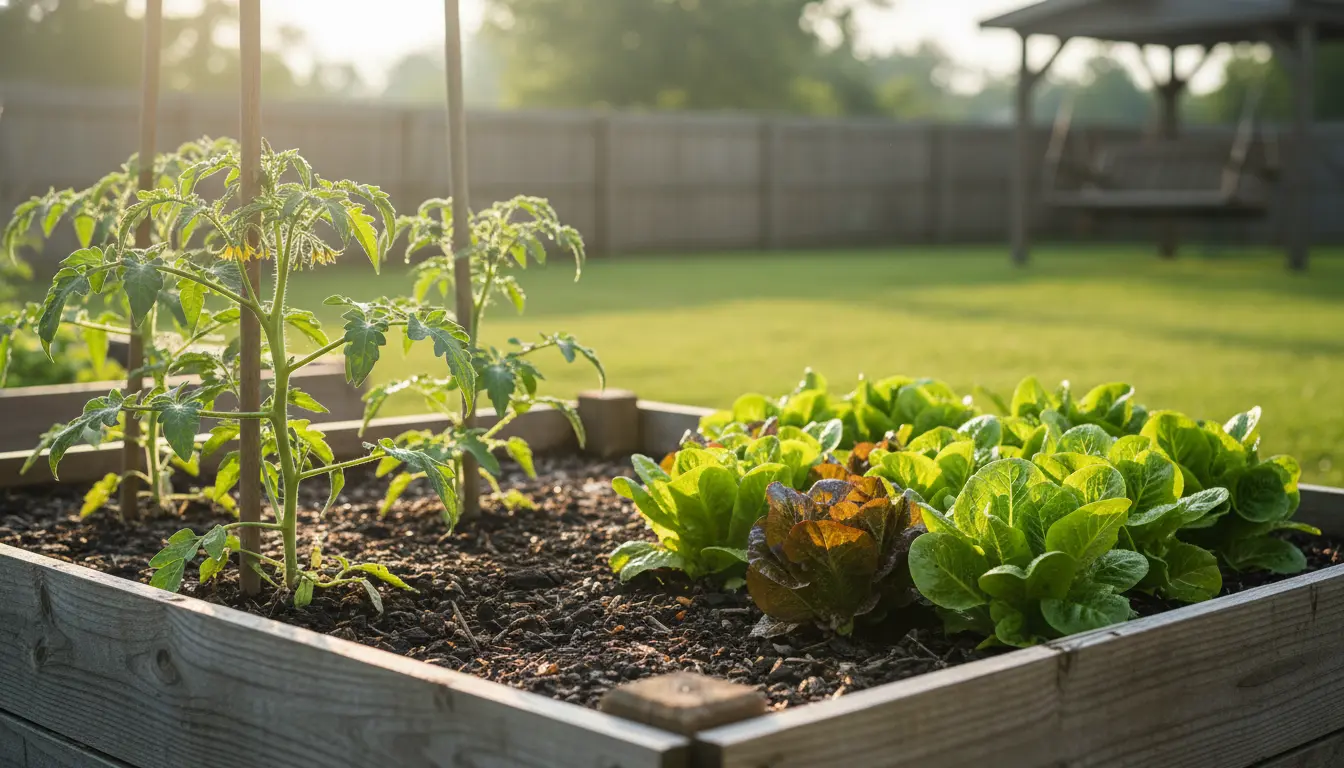
Why Start a Vegetable Garden
Starting a vegetable garden gives you fresh food, reduces grocery costs, and connects you with nature. The process is straightforward when you follow clear steps and pick plants suited to your climate.
Planning to Start a Vegetable Garden
Good planning makes the difference between a garden that thrives and one that struggles. Choose a size you can manage and pick vegetables you and your family will eat.
Choose the Right Location
Most vegetables need at least six hours of sunlight. Look for a flat area with good drainage away from large shade trees.
- Full sun: tomatoes, peppers, cucumbers
- Partial shade: lettuce, spinach, some herbs
Decide Between Beds, Containers, or Rows
Raised beds warm faster and drain well. Containers are great for small patios. Rows work for larger yards and mechanized tools.
Prepare Soil to Start a Vegetable Garden
Soil quality is the foundation of a productive garden. Test soil pH and texture before planting. Most vegetables prefer pH 6.0 to 7.0.
Improve Soil Structure
Add organic matter like compost or well-rotted manure to improve drainage, aeration, and nutrient supply. Work compost into the top 6–12 inches of soil.
Quick Soil Checklist
- Test pH with a kit or local extension service.
- Add lime if pH is below 6.0, or sulfur if above 7.5.
- Mix in 2–3 inches of compost and fork into topsoil.
Planting: How to Start a Vegetable Garden Properly
Plant at the right time for your zone. Use local planting calendars or seed packet dates as guides. Start with easy crops if you are a beginner.
Easy Vegetables for Beginners
- Leafy greens: lettuce, spinach
- Root crops: radishes, carrots
- Fast fruiting: bush beans, cherry tomatoes
Seed vs. Transplants
Seeds save money but take longer. Transplants give a head start for tomatoes, peppers, and brassicas. Follow spacing instructions to avoid crowding.
Watering and Fertilizing Your Garden
Consistent moisture is crucial, especially during germination and fruit development. Use drip irrigation or a soaker hose to reduce evaporation.
Watering Tips
- Water early in the morning when possible.
- Aim for 1–1.5 inches of water per week, more in hot weather.
- Mulch around plants to retain moisture and suppress weeds.
Fertilizing Basics
Balanced fertilizers support steady growth. Use a slow-release granular fertilizer at planting, and side-dress with compost or fish emulsion mid-season.
Pest and Disease Management When You Start a Vegetable Garden
Healthy plants resist pests and disease. Use integrated pest management (IPM): monitor, identify problems early, and use targeted controls.
Practical IPM Steps
- Inspect plants weekly for unusual spots, holes, or pests.
- Handpick large pests like caterpillars and slugs.
- Use row covers for early-season insect protection.
- Rotate crops yearly to reduce soil-borne diseases.
Harvesting and Extending the Season
Harvest regularly to encourage production. Know when each crop is ripe to get the best flavor and storage life.
Ways to Extend the Growing Season
- Use cold frames or cloches for early spring and late fall.
- Plant successive sowings of lettuce and radishes every 2–3 weeks.
- Choose cold-hardy varieties for autumn harvesting.
Well-composted kitchen scraps can provide most of the nutrients a small vegetable garden needs and reduce household waste by up to 30 percent.
Small Real-World Case Study
Case study: Sarah, a homeowner in zone 6, converted a 10×10 ft patch of lawn into a raised bed garden. She prepared soil with 6 inches of compost and planted tomatoes, bush beans, lettuce, and carrots.
By midsummer, Sarah harvested enough lettuce weekly for her family and canned 20 pints of tomato sauce. She spent about 6 hours per week on maintenance and reduced grocery spending for produce by roughly 40 percent that season.
Quick Checklist to Start a Vegetable Garden
- Pick a sunny location and determine garden size.
- Test and amend the soil with compost.
- Select beginner-friendly vegetables for your zone.
- Plant at recommended spacing and time for your area.
- Water consistently, mulch, and monitor for pests.
Final Tips for New Gardeners
Start small to avoid overwhelm. Keep a simple journal of planting and harvest dates to learn what works in your yard. Most problems can be solved with early detection and modest changes.
With steady care and realistic expectations, you can successfully start a vegetable garden and enjoy fresh food from your own yard.