
Why Start a Small Vegetable Garden at Home
Starting a small vegetable garden at home gives you fresh produce, saves money, and improves well-being. Even a balcony or a small backyard can grow useful quantities of herbs and vegetables.
This guide walks through practical steps to plan, plant, and maintain a compact, productive garden you can manage easily.
Start a Small Vegetable Garden at Home: Plan Your Space
First, evaluate the available space and sunlight. Most vegetables need 4–6 hours of direct sun; leafy greens tolerate less light.
Decide between containers, raised beds, or in-ground plots based on space, soil quality, and mobility needs.
- Balcony or patio: use containers or railing planters.
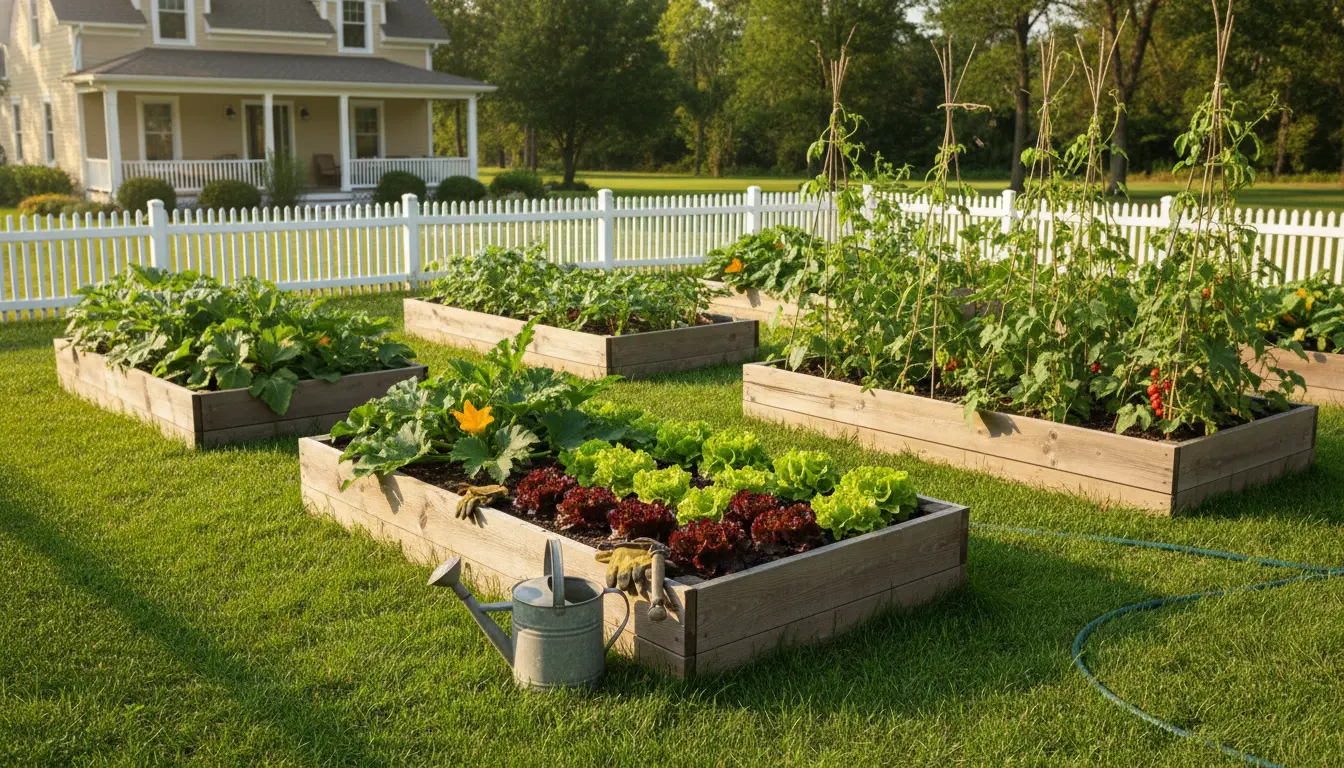
- Small yard: consider one or two raised beds (4×4 ft or 4×8 ft).
- Windowsill or indoor: choose herbs and microgreens with grow lights.
Choose Plants for a Small Vegetable Garden at Home
Pick vegetables that match your climate, space, and eating habits. Choose fast-growing or compact varieties to maximize output.
- Leafy greens: lettuce, spinach, arugula.
- Compact fruiting plants: cherry tomatoes, dwarf peppers, bush beans.
- Herbs: basil, parsley, chives, cilantro.
- Root crops: radishes, baby carrots (in deeper containers).
Start a Small Vegetable Garden at Home: Soil and Containers
Good soil is the foundation. For containers and raised beds use a mix of quality potting soil and compost to ensure drainage and nutrients.
Choose container sizes based on plant needs: 1–3 gallons for herbs, 5+ gallons for tomatoes and larger roots.
Soil Mix and Amendments
Use a well-draining potting mix with 20–30% compost. Add slow-release organic fertilizer at planting time and side-dress with compost mid-season.
Test soil pH if possible; most vegetables prefer pH 6.0–7.0. Lime or sulfur can adjust pH slowly if needed.
Sunlight, Watering, and Basic Care
Map sunlight through the day to place each container or bed where plants will get adequate light. Rotate containers if light distribution changes by season.
Water consistently. Small containers dry quickly; aim for even moisture rather than letting soil dry out completely between waterings.
- Morning watering reduces disease risk.
- Use mulch in beds to retain moisture and cool roots.
- Consider a simple drip irrigation or soaker hose for hands-off care.
Feeding and Pruning
Feed fruiting plants with a balanced fertilizer every 3–4 weeks during the growing season. Leafy greens need less fertilizer but benefit from regular compost top-ups.
Pinch or prune as needed to encourage productivity: remove lower leaves, snip suckers on indeterminate tomatoes, and harvest herbs regularly to promote new growth.
Pest and Disease Management in a Small Vegetable Garden at Home
Inspect plants weekly to catch pests early. Small gardens are easier to manage but can still attract aphids, slugs, or fungal problems.
- Use physical barriers like row covers for seedlings.
- Handpick larger pests and use organic sprays sparingly.
- Improve air circulation and avoid overhead watering to reduce fungal issues.
Integrated Practices
Rotate crops if you use beds and avoid planting closely related species in the same spot year after year. Companion planting can deter pests and improve pollination.
Many compact vegetable varieties are bred specifically for containers and small spaces, delivering the same flavor with smaller plants and shorter harvest times.
Harvesting and Extending the Season
Harvest regularly to encourage continued production. Many crops taste best when picked young: baby carrots, pea shoots, and salad greens.
Use succession planting: sow small batches every 2–3 weeks for a steady supply. Extend the season with cloches, cold frames, or simple row covers for early spring and late fall crops.
Small Real-World Example
Case study: Maria transformed a 6×6 ft balcony into a productive garden. She used two 20-gallon containers for tomatoes, three 5-gallon pots for peppers and basil, and two railing planters for lettuce and herbs.
In her first season she harvested about 20 lbs of tomatoes, weekly salads from lettuce, and continuous basil for pesto. Her maintenance averaged 15–20 minutes a day, with watering automated using a simple drip timer.
Quick Checklist to Start a Small Vegetable Garden at Home
- Measure sunlight and select a sunny spot with 4–6 hours of sun.
- Choose appropriate containers or a raised bed and buy quality potting mix.
- Select compact or container-friendly plant varieties.
- Plan planting dates and use succession planting for steady harvests.
- Set up simple irrigation and inspect plants weekly for pests.
Final Tips
Start small and expand as you learn what works for your microclimate and schedule. Focus on a few favorite crops and grow what you will actually eat.
Keep a simple journal of planting dates, varieties, and yields to improve planning each year. Small gardens are rewarding, productive, and easier to manage than you might think.