
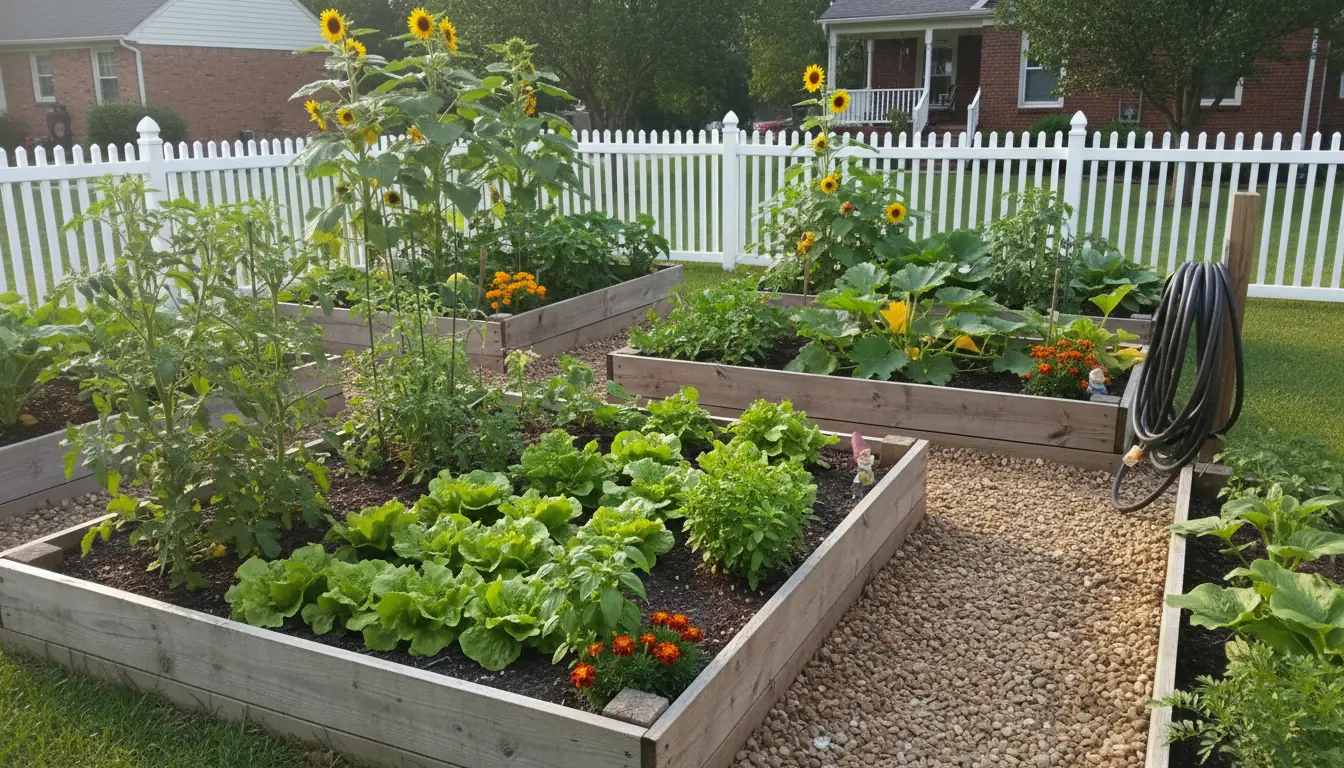
Starting a small vegetable garden is a practical way to grow fresh produce at home. This guide offers clear steps for planning, planting, and maintaining a productive small vegetable garden that fits limited space.
Plan Your Small Vegetable Garden
Good planning saves time and improves yields. Decide where the garden will go, how much space you have, and which vegetables you want to grow.
Choose the Right Spot for Your Small Vegetable Garden

Most vegetables need 6 to 8 hours of direct sunlight. Observe sunlight patterns for several days before deciding the location. Choose a spot with good drainage to avoid waterlogged soil.
Decide Between Ground Beds and Containers
Containers suit balconies and patios. Raised beds and in-ground plots work well in yards. Consider these trade-offs:
- Containers: Good for mobility and soil control, but need more frequent watering.
- Raised beds: Easier access and better soil depth without heavy digging.
- In-ground: Often cheaper and holds moisture longer, but soil quality may vary.
Prepare Soil and Containers
Healthy soil is the foundation of a productive small vegetable garden. Focus on soil structure, nutrients, and pH.
Mix a Good Growing Medium

For containers use a commercial potting mix or a custom blend with compost, peat or coir, and perlite. For raised beds and in-ground plots, add plenty of well-rotted compost and a balanced organic fertilizer.
Test and Amend Soil
Test soil pH to ensure it suits your crops; most vegetables prefer pH 6.0 to 7.0. Adjust with lime to raise pH or sulfur to lower it. Amend poor soil with compost and aged manure to improve fertility and structure.
Choose Vegetables for a Small Vegetable Garden
Pick crops that match your space, climate, and skill level. Focus on high-yield, space-efficient choices to maximize harvests.
Best Vegetables for Small Spaces
- Leafy greens (lettuce, spinach, Swiss chard) — quick harvest and low space needs.
- Tomatoes (determinate varieties) — stake or use cages to save ground space.
- Peppers and bush beans — productive in containers or small beds.
- Radishes and carrots — good for narrow rows and container pockets.
- Herbs (basil, parsley, cilantro) — compact and useful in cooking.
Planting and Spacing Tips
Follow seed packet or plant tag spacing recommendations. Overcrowding reduces airflow and increases disease risk. Use vertical supports to expand growing area upward.
Succession Planting for Continuous Harvest
Stagger plantings every 2–3 weeks for quick crops like lettuce and radishes. Replace harvested plants with new seedlings to keep beds productive all season.
Watering and Fertilizing a Small Vegetable Garden
Consistent moisture helps vegetables grow evenly. Water deeply and infrequently rather than shallow daily watering to encourage strong roots.
Efficient Watering Methods
- Soaker hoses or drip irrigation deliver water to roots and reduce evaporation.
- Water early in the morning to limit disease and evaporation.
- Use mulch to retain soil moisture and reduce weeds.
Feeding Vegetables
Apply a balanced organic fertilizer at planting and side-dress with compost or liquid feed during the season. Heavy feeders like tomatoes and peppers benefit from extra nitrogen early and more phosphorus and potassium during fruiting.
Pest and Disease Management in a Small Vegetable Garden
Small gardens can still face pests and diseases. Focus on prevention, monitoring, and targeted action when needed.
Integrated Pest Management Tips
- Encourage beneficial insects by planting flowers and herbs.
- Rotate crops to reduce soil-borne diseases.
- Inspect plants regularly and remove affected leaves early.
- Use row covers for young plants to block insects without chemicals.
Planting marigolds near vegetable beds can reduce certain nematode populations and attract pollinators, improving both plant health and yields.
Small Vegetable Garden Maintenance
Regular maintenance keeps the garden productive and reduces problems. Spend a few minutes several times a week on basic tasks.
Weekly Tasks
- Check soil moisture and water as needed.
- Inspect plants for pests, diseases, and nutrient deficiencies.
- Harvest ripe crops to encourage continued production.
Case Study: A Small Balcony Vegetable Garden
Sarah used a 6-foot-long railing planter and three 12-inch pots to grow vegetables on her apartment balcony. She chose a mix of lettuces, cherry tomatoes, basil, and radishes suited to containers.
Within 10 weeks she harvested continuous salad greens and weekly cherry tomato pickings. Using drip tubing and weekly compost tea, she achieved steady growth with minimal space and effort.
Final Tips for a Successful Small Vegetable Garden
- Start small and expand as you learn what works in your space.
- Keep a garden journal to note planting dates, varieties, and yields.
- Use compact or dwarf varieties designed for containers and small beds.
- Enjoy the process—fresh food and gardening skills improve with experience.
With basic planning, good soil, and consistent care, a small vegetable garden can produce flavorful vegetables all season. Use the steps above to design a garden that fits your space and lifestyle.