
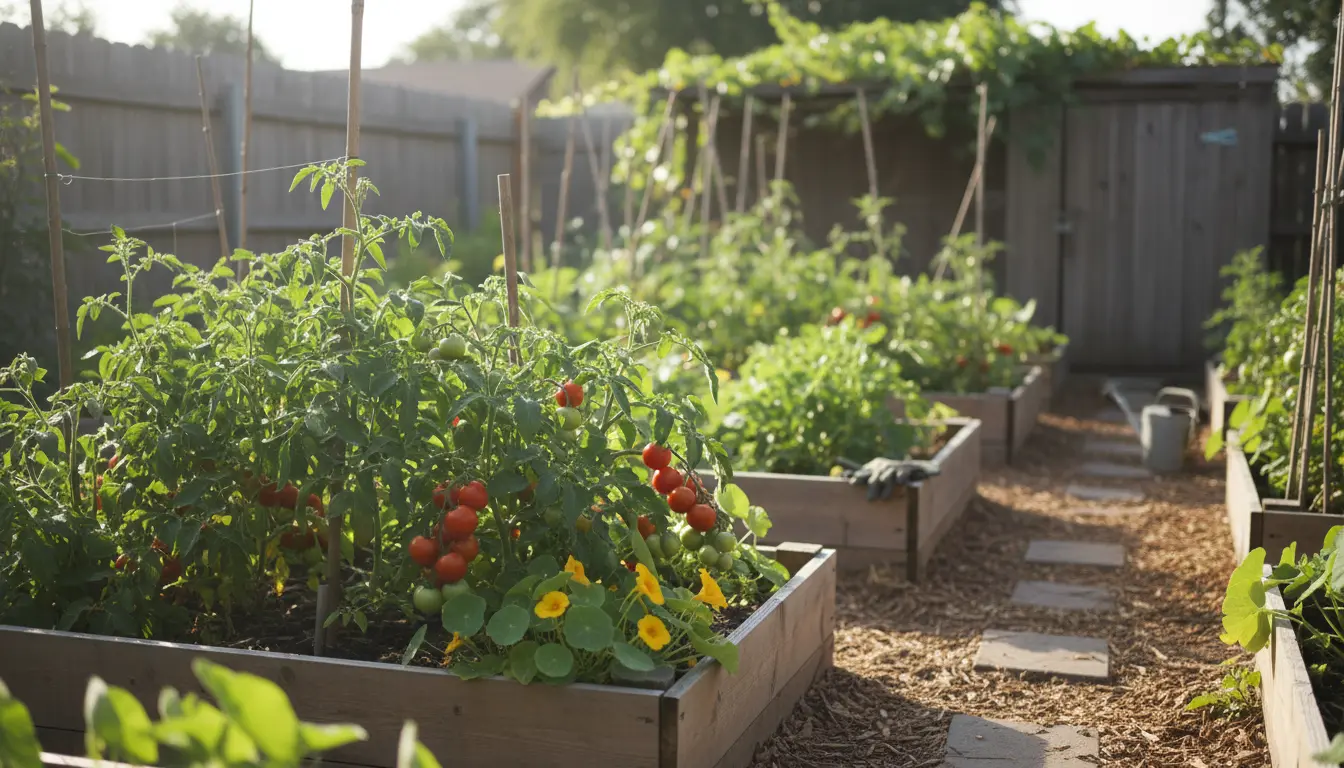
Starting a small vegetable garden is an achievable project for any homeowner or renter with a little outdoor space. This guide walks through planning, soil preparation, plant selection, and simple maintenance to help you get reliable results in your first season.
Plan Your Small Vegetable Garden
Good planning saves time and prevents common mistakes. Begin by choosing a sunny spot that receives at least six hours of direct sunlight daily.

Consider access to water, the space available, and how visible the area will be for regular care. Sketch a simple layout to decide where beds, paths, and containers will go.
Decide Garden Type and Size
Choose one of these common formats based on space and mobility:
- Raised beds: Good drainage and soil control in small yards.
- Container gardening: Ideal for balconies or patios.
- In-ground rows: Use if you have a larger lawn area.
Crop Selection for Small Spaces
Pick plants that match your climate, season, and daily cooking habits. Favor varieties labeled compact, container-friendly, or quick-maturing.
- Leafy greens: Lettuce, spinach, and Swiss chard for frequent harvests.
- Root crops: Radishes and carrots in loose soil or deep containers.
- Vining crops: Cherry tomatoes and bush beans in cages or stakes.
Prepare Soil and Planting Beds

Soil quality determines most of your garden’s success. Test soil pH with an inexpensive kit and amend accordingly for best results.
For raised beds or containers, use a mix of topsoil, compost, and a light amendment like coconut coir or peat to retain moisture and improve structure.
Steps to Prepare Soil
- Clear weeds and turf from the planting area.
- Loosen soil to a depth of 8–12 inches; add 2–3 inches of compost and mix thoroughly.
- Level the bed and water once to settle the mix before planting.
Planting: Timing and Techniques
Follow local planting dates for frost-free periods and heat windows. Start seeds indoors or buy seedlings if you want faster results.
Space plants according to package directions, but in small gardens, consider more intensive spacing with succession planting to maximize yield.
Succession and Companion Planting
Succession planting means sowing small amounts of seed every 2–3 weeks to extend harvests. Companion planting places plants that benefit each other nearby, such as basil with tomatoes to potentially reduce pests.
Watering and Fertilizing Your Small Vegetable Garden
Consistent moisture is essential, especially for young plants. Water deeply and less often to encourage strong roots rather than shallow frequent watering.
Use a balanced, slow-release fertilizer at planting and supplement with liquid feed during active growth for heavy feeders like tomatoes.
Practical Watering Tips
- Water in the morning to reduce disease risk and evaporation.
- Mulch with straw or wood chips to retain moisture and suppress weeds.
- Consider a simple drip irrigation or soaker hose for efficient water use.
Pest and Disease Management
Prevent problems by keeping plants healthy and monitoring regularly. Early detection makes organic controls effective and reduces crop loss.
Remove diseased leaves, rotate crops yearly, and encourage beneficial insects with flowering herbs and native plants.
Low-Impact Controls
- Handpick large pests like caterpillars and slugs in the morning.
- Use row covers for early-season protection against flying insects.
- Apply biological controls such as Bacillus thuringiensis for specific pests.
Raised beds warm faster in spring, allowing earlier planting and typically producing higher yields per square foot than traditional rows.
Harvesting and Seasonal Care
Harvest crops regularly to encourage further production and to enjoy peak flavor. Many vegetables taste best when picked young and tender.
Prepare beds for the next planting by adding compost after the main harvest and mulching to protect soil through winter.
Short Case Study: A 10×10 Backyard Success
Sarah converted a 10×10 patch behind her townhouse into three raised beds. She planted lettuce, radishes, cherry tomatoes, and bush beans using succession planting.
With weekly maintenance—two deep waterings and light feeding—she harvested fresh salad greens for four months. The compact layout produced enough to share with neighbors and reduced her grocery spending on vegetables.
Quick Checklist to Start a Small Vegetable Garden
- Choose a sunny spot and sketch a layout.
- Decide between raised beds, containers, or in-ground planting.
- Test and amend soil; add compost.
- Select compact, season-appropriate crops.
- Water consistently, mulch, and monitor for pests.
- Harvest regularly and replenish soil after the season.
Starting a small vegetable garden is a step-by-step process that rewards planning and regular care. With simple tools, good soil, and appropriate plant choices, even a small patch can supply fresh, flavorful produce throughout the season.