
Planning Your Small Vegetable Garden
Starting a small vegetable garden begins with a basic plan. Decide whether you will use ground beds, raised beds, or containers based on space and sunlight.
Assess available sunlight, water access, and how much time you can spend each week. These factors will guide your plant choices and layout.
Choose the Right Location for a Small Vegetable Garden
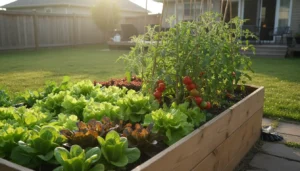
Most vegetables need 6–8 hours of direct sun. Observe your space across a full day to find the sunniest spot.
Consider proximity to a water source and ease of access for daily checks and harvesting. Avoid low spots that stay soggy after rain.
Select Vegetables for Small Spaces
Pick crops that perform well in limited space: tomatoes, peppers, lettuce, radishes, herbs, and dwarf beans are good choices.
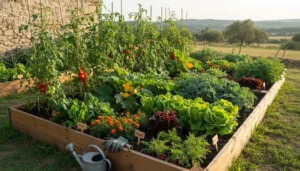
Use succession planting to get more yield from the same space by following early crops with quick-growing ones.
Preparing Soil and Containers for a Small Vegetable Garden
Healthy soil is the most important factor. If you use containers, choose a high-quality potting mix rather than garden soil.
For in-ground or raised beds, improve the soil with compost and a balanced organic fertilizer to support steady growth.
Soil Mix and Fertilizer
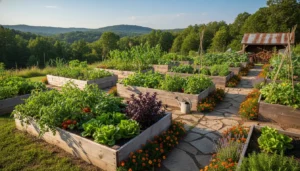
Mix equal parts compost, loam, and well-draining material like perlite or coarse sand for containers. This gives nutrients and prevents compaction.
Use a slow-release fertilizer at planting time and switch to liquid feed every 2–4 weeks for heavy feeders like tomatoes.
Container Choices for a Small Vegetable Garden
Choose containers with drainage holes and a minimum volume based on the crop. For example, tomatoes need 10–20 gallons, lettuce does well in 1–3 gallon pots.
Consider vertical options: hanging baskets, stacked planters, and trellises multiply space for vining crops like beans and cucumbers.
Planting and Care in a Small Vegetable Garden
Plant at the right time for your climate. Use local planting calendars or seed packet directions to avoid frost or heat stress.
Group plants with similar water needs to reduce waste and stress. This also simplifies watering schedules.
Watering and Mulching
Water deeply and less frequently to encourage strong roots. Check container moisture daily in hot weather and every few days in cool weather.
Mulch with straw or compost on soil beds to retain moisture and suppress weeds. In containers, a thin organic mulch layer helps reduce evaporation.
Pest Control and Pruning
Inspect plants weekly for pests and diseases. Handpick large pests and use insecticidal soap or neem oil for soft-bodied insects when necessary.
Prune indeterminate tomatoes and remove yellowing leaves to improve air circulation and reduce disease risk.
Example Case Study: A 3-Month Balcony Garden
Jane, an apartment dweller, used six 5-gallon containers on a south-facing balcony. She grew two determinate tomato plants, three pots of mixed lettuce, and a pot each of basil and peppers.
Over three months she harvested weekly salads and two rounds of cherry tomatoes, with total time commitment around 30 minutes per week for watering, pruning, and harvesting.
Key results: continuous lettuce harvest, basil for cooking, and 10–15 pounds of tomatoes—proving a small space can be productive with consistent care.
Quick Checklist for Starting a Small Vegetable Garden
- Pick a sunny location and measure available light.
- Choose crops suited to space and season.
- Select containers or build a raised bed with good drainage.
- Use quality potting mix or amended soil with compost.
- Set up a simple watering routine and mulching plan.
- Inspect plants weekly for pests and disease.
- Harvest regularly to encourage continued production.
Practical Tips and Final Notes
Start small and expand after your first season. It is better to manage a few healthy pots than many neglected ones.
Keep a simple journal: planting dates, varieties, and harvest notes. This helps refine choices and timing for the next season.
With basic planning and steady care, a small vegetable garden can supply fresh produce, save money, and fit into urban lifestyles.