
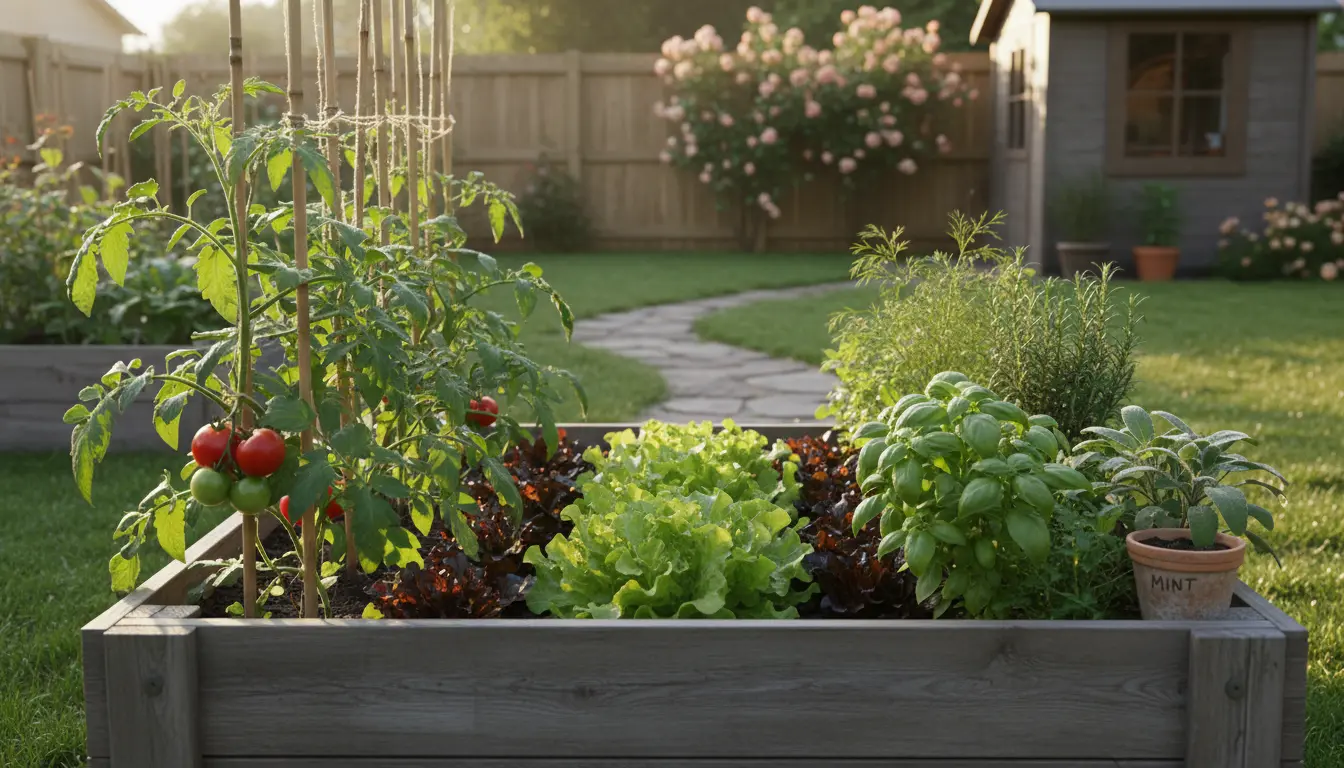
Why a Small Vegetable Garden Works
Starting a small vegetable garden is practical for beginners and busy homeowners. It reduces grocery costs, improves food quality, and fits into small yards or balconies.
This guide shows step-by-step how to plan, build, and maintain a productive small vegetable garden with simple tools and common plants.
Step 1: Choose the Right Spot for a Small Vegetable Garden
Pick a location that gets at least 6 hours of sunlight daily for most vegetables. Observe the space across a week to confirm light patterns.
Consider proximity to water, soil drainage, and accessibility for daily care. If ground space is limited, use containers or raised beds.
Sun and Shade Tips for a Small Vegetable Garden
- Full sun: tomatoes, peppers, cucumbers.
- Partial shade: leafy greens, herbs, root vegetables.
- Morning sun is better than late-day heat for sensitive crops.
Step 2: Plan Layout and Size
Decide on bed size—4×4 or 4×8 raised beds are common and manageable. Containers can be grouped on a patio for intensive planting.
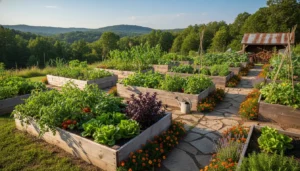
Sketch a simple layout showing paths, beds, and a watering source. Leave 18–24 inches for walkways in ground gardens.
What to Plant First in a Small Vegetable Garden
- Fast growers: lettuce, radishes, spinach.
- High yield: tomatoes, peppers.
- Container-friendly: herbs, dwarf beans, compact tomato varieties.
Step 3: Prepare Soil and Containers
Good soil is the foundation. For beds, mix native soil with compost and a loose material like composted bark or perlite for drainage.
For containers use a quality potting mix with added compost. Avoid garden soil alone in pots because it compacts and drains poorly.
Soil Checklist for a Small Vegetable Garden
- pH around 6.0–7.0 for most vegetables.
- High organic matter improves moisture retention and nutrition.
- Well-draining mix prevents root rot.
Step 4: Planting and Spacing
Follow seed packet or plant tag spacing to avoid overcrowding. Use succession planting to maximize a small area—plant new seeds every 2–3 weeks for continuous harvest.
Interplant fast crops (radishes) with slower ones (carrots) to use space efficiently.
Planting Example for a 4×4 Bed
- Corner 1: 1 tomato plant (stake or cage)
- Corner 2: 6 lettuce plants (succession every 2 weeks)
- Corner 3: 8 radishes in rows
- Corner 4: 3 basil plants near tomatoes
Step 5: Watering and Maintenance
Water deeply and less often to encourage strong roots. Aim for consistent moisture—morning watering is best to reduce evaporation and disease risk.
Mulch beds with straw or shredded leaves to conserve moisture and suppress weeds. Check plants weekly for signs of pests or nutrient deficiencies.
Routine Tasks for a Small Vegetable Garden
- Daily: quick visual check for pests or stress.
- Weekly: water deeply, pinch dead leaves, harvest mature crops.
- Monthly: add compost or slow-release fertilizer if needed.
Step 6: Pest and Disease Management
Use prevention first: healthy soil, proper spacing, and good air circulation reduce many problems. Handpick large pests and use row covers for young plants.
Introduce beneficial insects and use organic sprays like neem oil for common issues. Rotate crops each season to limit soil-borne diseases.
Real-World Example: A 10×4 Raised Bed Case Study
Jane, an apartment garden in a small yard, built a 10×4 raised bed and planted determinate tomatoes, bush beans, lettuce, and chard. She added compost and a drip irrigation line.
By staggering lettuce plantings and using vertical supports for beans, Jane harvested greens nearly every week and 20 pounds of tomatoes over the season, proving productivity in limited space.
One properly managed square meter can yield enough salad greens to feed one person for a week, making small gardens surprisingly productive.
Quick Start Checklist for Your Small Vegetable Garden
- Choose a sunny spot and decide on beds or containers.
- Test soil or purchase quality potting mix.
- Plan layout and plant list by season.
- Plant, water deeply, mulch, and monitor regularly.
Final Tips for Success with a Small Vegetable Garden
Start small and expand after you gain confidence. Keep a simple journal noting planting dates and varieties to improve next season’s planning.
Enjoy the process—gardening is part planning and part observation. Small, consistent efforts yield steady harvests and satisfaction.