
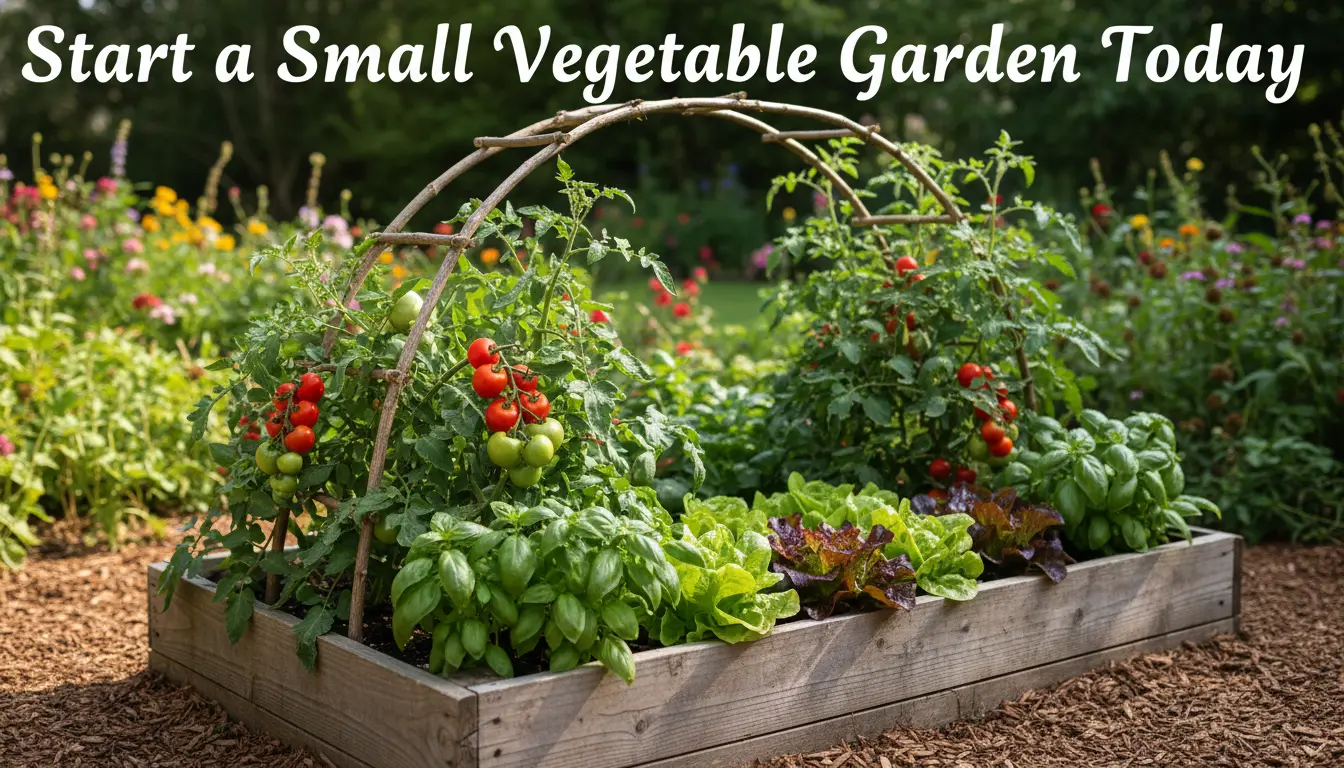
Starting a small vegetable garden is a practical way to grow fresh produce at home. This guide covers planning, soil preparation, planting, and simple maintenance so you get steady harvests from limited space.
Plan Your Small Vegetable Garden
Decide where to place your garden based on sunlight and access. Most vegetables need at least six hours of direct sun, so choose a spot that receives morning and midday light.
Consider the size and type of garden you want: in-ground beds, raised beds, or containers. Each option has pros and cons for space, cost, and soil control.
Choose the Right Location
- Full sun: tomatoes, peppers, cucumbers.
- Partial shade: leafy greens like spinach and lettuce.
- Near water: makes regular watering easier.
Decide on Garden Type
- Raised beds: good drainage and soil control, easier on the back.
- Containers: ideal for balconies and patios; very space efficient.
- In-ground: larger harvest potential if you have soil already in good condition.
Prepare Soil for a Small Vegetable Garden
Healthy soil is the foundation of a productive small vegetable garden. Test your soil or assess container mix to ensure a balanced growing medium.
For raised beds and containers, use a mix of compost, topsoil, and a light soilless material to improve drainage and nutrient levels.
Soil Preparation Steps
- Remove weeds and debris from the area or container.
- Add 2–3 inches of compost and mix into top 6–8 inches of soil.
- For containers, use a premium potting mix with added compost and a slow-release organic fertilizer.
Plant Selection for a Small Vegetable Garden
Pick vegetables that match your space and climate. Dwarf or bush varieties save space and often produce nearly as much as full-size plants.
Think about continuous harvest crops and succession planting to maximize limited space.
Best Vegetables for Small Spaces
- Leafy greens: lettuce, kale, spinach — quick to harvest and fit well in containers.
- Bush beans and dwarf peas: compact and high-yielding.
- Compact tomatoes and peppers: choose determinate or patio varieties.
- Herbs: basil, parsley, chives — useful and space-efficient.
Planting and Spacing in a Small Vegetable Garden
Follow seed packet or plant tag spacing, but use intensive planting methods to increase yield. Square-foot gardening or closer spacing works well when soil is fertile.
Consider vertical supports for vining crops to free ground space for other plants.
Practical Planting Tips
- Stagger plantings of lettuce and radishes every 2–3 weeks for continuous harvests.
- Use trellises for cucumbers and pole beans to save ground space.
- Mulch to retain moisture and suppress weeds in small beds and containers.
Watering and Maintenance for a Small Vegetable Garden
Efficient watering is essential because limited soil in containers and small beds dries quickly. Water deeply but less frequently to encourage strong roots.
Regular maintenance tasks include weeding, checking for pests, and removing spent plants to make room for new ones.
Watering Guidelines
- Early morning watering reduces disease risk and evaporation loss.
- Use drip irrigation or soaker hoses for consistency and water savings.
- Check soil moisture a few inches down; irrigate when it feels dry at root level.
Common Problems and Simple Solutions
Pest and disease issues are manageable in a small vegetable garden. Use physical barriers, hand-picking, and organic controls when possible.
Rotate crops each season if you have multiple beds to reduce disease pressure and nutrient depletion.
Quick Fixes
- Aphids: spray with water or use insecticidal soap.
- Fungal disease: improve airflow, remove affected leaves, avoid overhead watering.
- Poor growth: add compost or a balanced organic fertilizer midseason.
A 4×4 foot raised bed can produce more than 100 heads of lettuce in a single season with succession planting and proper care.
Small Real-World Case Study
Case: Emma, apartment balcony gardener. She used two 12-inch deep 3-foot containers and one 4×2 foot raised tray to grow tomatoes, basil, and salad greens.
In one season she harvested enough tomatoes for fresh salads and preserved several jars of tomato sauce. Her key steps were choosing compact varieties, using a high-quality potting mix, and installing a simple drip line for consistent watering.
Harvesting and Seasonal Care
Harvest regularly to encourage more production. Pick leafy greens before they bolt and harvest tomatoes when fully colored for best flavor.
At season end, clean beds and refresh soil with compost. In colder climates, plan for winter protection or indoor container moves for herbs.
Summary: Start a Small Vegetable Garden with Confidence
A small vegetable garden can fit any space and budget. Focus on sun, soil, and plant choices, and use simple maintenance routines to harvest fresh food all season.
With a bit of planning and regular care, even tight spaces can deliver satisfying yields and help you learn what works best for your site.