
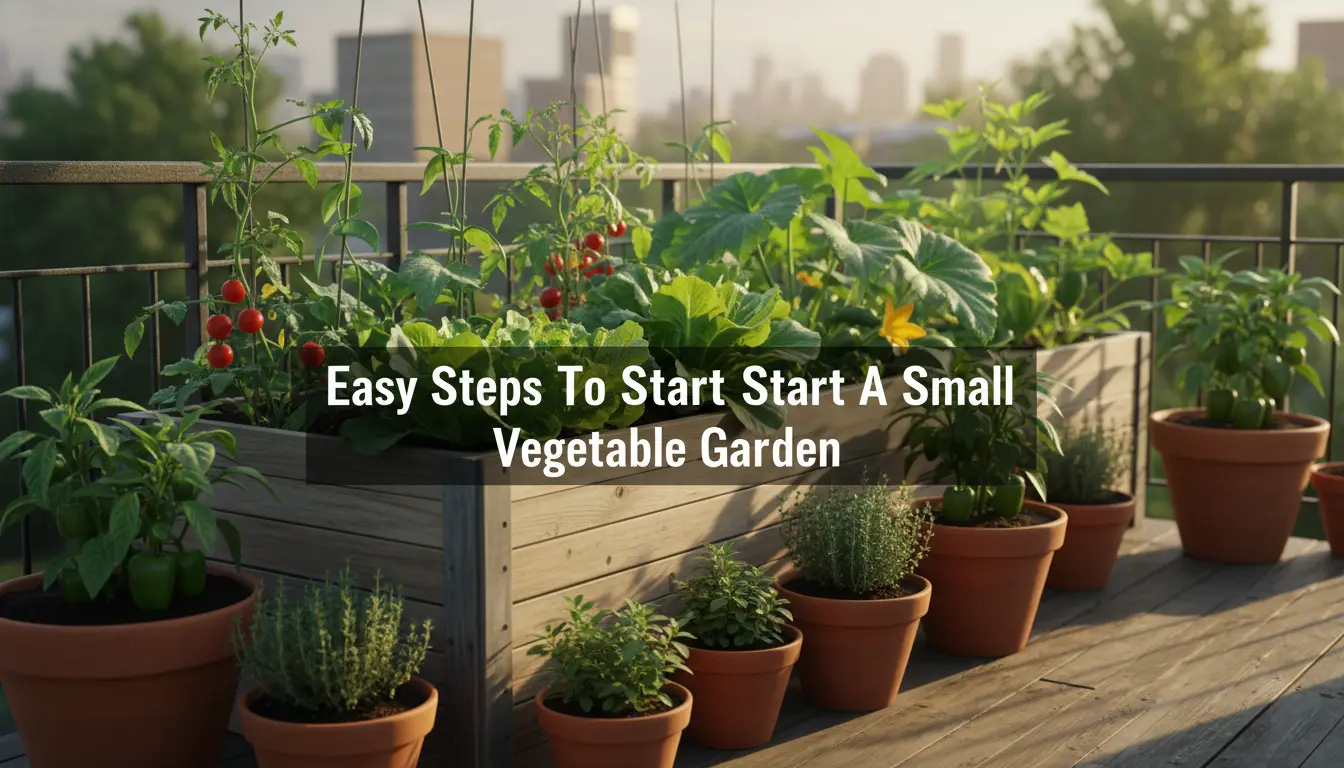
Why a Small Vegetable Garden Works
Starting a small vegetable garden is a realistic way to grow fresh food, even with limited space. Small gardens use less time and money but can produce consistent, nutritious harvests.
Whether you have a balcony, patio, or a tiny backyard, a small vegetable garden can be scaled to fit your needs and schedule.
Plan Your Small Vegetable Garden
Good planning sets up a small vegetable garden for success. Begin by assessing light, space, and how much time you can commit each week.
Sketch a simple layout and list the vegetables you want to grow based on your climate and cooking habits.
Choose a Location for Your Small Vegetable Garden
Most vegetables need 6–8 hours of direct sunlight per day. Observe potential spots at different times to find the sunniest area.
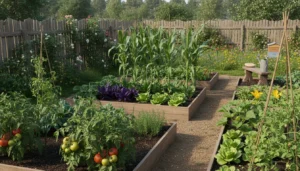
Consider accessibility for watering and harvesting when picking a location.
Select Containers or Raised Beds
Containers, raised beds, and small in-ground plots all work for a small vegetable garden. Choose containers with good drainage and enough depth for root crops.
- Small balcony: use 12–16 inch deep containers or window boxes.
- Patio or yard: a 2×4 or 4×4 raised bed fits many small spaces.
- Indoor seed starting: use seed trays and move seedlings outdoors gradually.
Soil and Fertility for a Small Vegetable Garden
Healthy soil is the foundation of a productive small vegetable garden. Aim for loose, well-draining soil rich in organic matter.
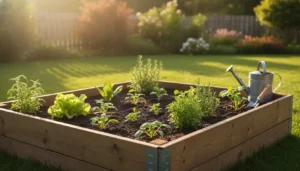
Use a mix of compost, quality topsoil, and a little garden soil or coconut coir for containers.
Simple Soil Mix Example
Mix equal parts compost, screened topsoil, and coconut coir for containers. Add a tablespoon of balanced slow-release fertilizer per gallon of mix if needed.
Test soil drainage by watering and checking how quickly water passes through the pot or bed.
Choosing Vegetables for a Small Vegetable Garden
Select fast-growing, space-efficient crops for the best results. Focus on what you eat and on varieties labeled compact or bush-type.
- Lettuce and salad greens — quick harvests, multiple sowings.
- Radishes and baby carrots — small root crops for shallow containers.
- Cherry tomatoes and compact peppers — use cages or supports.
- Herbs like basil, parsley, and cilantro — great for pots.
Succession Planting
Use succession planting to keep a steady supply. Sow small amounts every 2–3 weeks for continuous harvests.
This approach maximizes yield from limited space and spreads out harvest labor.
Planting and Watering
Plant at the right time for your climate and follow depth and spacing guidelines on seed packets. For transplants, firm soil gently around the roots.
Water consistently; small containers dry out faster than raised beds. Aim for deep, infrequent watering rather than light, frequent sprays.
Watering Tips for a Small Vegetable Garden
- Early morning watering reduces evaporation and disease risk.
- Use a drip hose or soaker line for even moisture and water savings.
- Mulch with straw or leaves to retain moisture and suppress weeds.
Pest and Disease Management
Monitor plants weekly for pests and disease. Early detection makes control easier and reduces crop loss in a small vegetable garden.
Use physical controls first: hand-pick pests, install row covers, and keep plants well spaced for air circulation.
Organic Remedies
- Neem oil or insecticidal soap for soft-bodied insects.
- Floating row covers to protect seedlings from beetles and moths.
- Rotate crops each season to reduce soil-borne diseases.
Harvesting and Maintenance
Harvest frequently to encourage continued production. Many vegetables, like lettuce and herbs, do best with repeated light harvests.
Regular maintenance—weeding, staking, and feeding—keeps a small vegetable garden productive without requiring excessive time.
Simple Case Study: Balcony Garden Success
Sara, a city renter, used two 16-inch pots and a 4-foot window box to start her small vegetable garden. She chose cherry tomatoes, basil, and leaf lettuce for quick results.
Within six weeks, Sara harvested the first lettuce heads and several cherry tomatoes. Weekly 20-minute maintenance kept pests low and production steady.
Her small vegetable garden supplied fresh salad ingredients through the season and required about 20–30 minutes per week on average.
Quick Checklist to Start Your Small Vegetable Garden
- Pick a sunny location and suitable containers or a raised bed.
- Prepare a quality soil mix with compost and good drainage.
- Choose compact, fast-growing vegetable varieties.
- Set up a simple watering routine and mulch to retain moisture.
- Monitor for pests and harvest regularly.
Starting a small vegetable garden is practical with a little planning and consistent care. Follow these steps, start small, and scale up as you learn what grows best for your space and taste.