
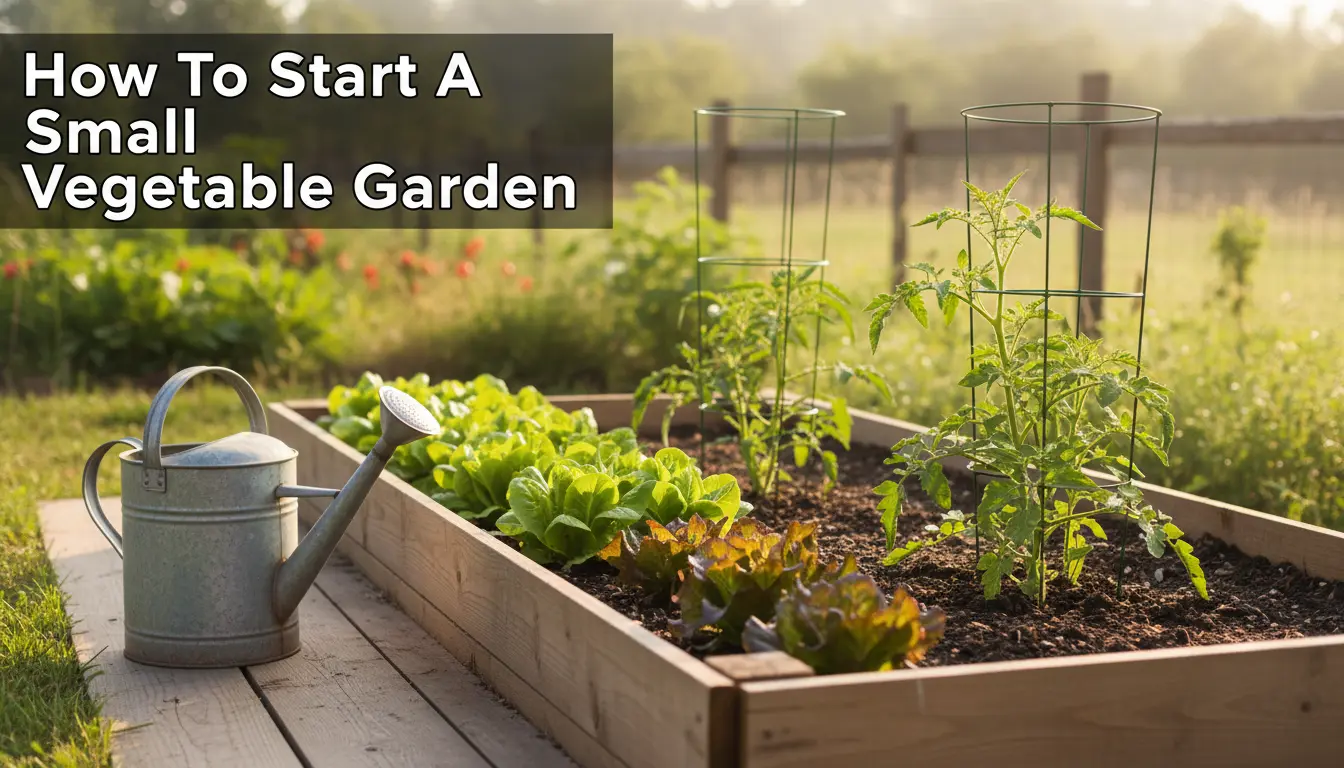
Getting started with a small vegetable garden
Starting a small vegetable garden is a manageable project you can complete in a weekend. This guide covers practical steps from site selection to harvesting so you get reliable results without guesswork.
How to Start a Small Vegetable Garden: Plan and prepare
Good planning reduces mistakes and saves time. Begin with a simple plan that fits your space, time, and goals.
Choose the right spot
Select a location that receives at least six hours of direct sunlight daily. Sun exposure is the single most important factor for many vegetables like tomatoes, peppers, and beans.
Consider proximity to a water source and how visible the plot will be for regular care. Avoid low spots that stay wet after rain.
Decide on containers or raised beds
For small spaces, raised beds or large containers work best. They offer better drainage, easier soil control, and less bending when you tend plants.
- Raised bed: 4×8 feet is a common, easy-to-manage size.
- Containers: Use 5–20 gallon pots for tomatoes and peppers; shallow trays for lettuces and herbs.
Soil and amendments for a small vegetable garden
Healthy soil is the foundation of a productive garden. Focus on texture, nutrients, and drainage when preparing soil.
Test and improve your soil
Use a basic soil test kit to check pH and nutrient levels. Most vegetables prefer pH 6.0–7.0.
Mix in compost, aged manure, or a balanced organic fertilizer to improve fertility and structure. A common ratio for raised beds is 60% topsoil, 30% compost, 10% potting mix or coarse sand for drainage.
Mulch and weed control
Apply 2–3 inches of organic mulch like straw or shredded bark around plants. Mulch conserves moisture, suppresses weeds, and moderates soil temperature.
What to plant first in a small vegetable garden
Choose easy, productive crops for beginners. Consider your climate, season, and how much time you can commit.
Beginner-friendly vegetables
- Lettuce and mixed salad greens — fast-growing and tolerant of partial shade.
- Radishes — very quick to harvest, good for small gaps between slower crops.
- Bush beans — compact and productive, require minimal care.
- Tomatoes (determinate varieties) — choose patio or bush types for small spaces.
- Zucchini — high yield, needs a bit more space but very forgiving.
Planting, watering, and feeding
Correct planting depth, consistent watering, and timely feeding keep plants productive. Small mistakes are fixable with steady observation.
Planting tips
Follow seed packet and plant tag instructions for spacing and depth. Overcrowding reduces airflow and increases disease risk.
Watering basics
Water deeply and less often to encourage deep root growth. Aim for the soil to be moist 1–2 inches below the surface, not waterlogged.
Use soaker hoses or drip irrigation for efficiency and to keep foliage dry.
Feeding schedule
Feed with a balanced fertilizer at planting and again during the main growing season. Organic options include compost tea, fish emulsion, or a slow-release granular fertilizer.
Maintenance and pest management
Regular, short maintenance sessions are best for small gardens. Inspect plants weekly and act quickly on pests and diseases.
Routine tasks
- Weed for the first few weeks to reduce competition.
- Stake or cage tomatoes and beans early to support growth.
- Remove yellowing or diseased leaves promptly.
Simple pest controls
Start with cultural controls: crop rotation, clean tools, and removing debris. For pests, use hand-picking or insecticidal soap as a first line.
Introduce beneficial insects like ladybugs for aphid control and encourage pollinators by planting flowers nearby.
Many common vegetables like lettuce, spinach, and radishes mature in under 30 days, letting you harvest early and replant for multiple crops in a season.
Harvesting and succession planting
Timely harvesting encourages more production. Harvest greens regularly and pick vegetables when they reach recommended sizes.
Practice succession planting by sowing a new row of seeds every two to three weeks for continuous harvests of lettuce and radishes.
Storage and use
Store root crops like carrots and beets in a cool place. Tomatoes and peppers are best used fresh or preserved by canning or freezing.
Small case study: One raised bed, big results
Case study: A 4×8 raised bed planted by a first-time gardener produced steady yields. The gardener filled the bed with a 60/30/10 mix, planted two determinate tomatoes, a row of bush beans, and staggered lettuces.
By following a simple watering schedule and mulching, the bed yielded weekly salad greens and 10–12 pounds of tomatoes over the season. Minimal pesticides were needed due to regular inspection and hand-picking.
Quick checklist to start your small vegetable garden
- Choose a sunny site near water.
- Decide on raised beds or containers.
- Test and amend soil; add compost.
- Start with easy crops: lettuce, radish, bush beans, tomatoes.
- Water deeply, mulch, and inspect weekly.
- Harvest promptly and practice succession planting.
With a small space and a simple plan, you can enjoy fresh vegetables all season. Start small, learn by doing, and expand as you gain confidence.