
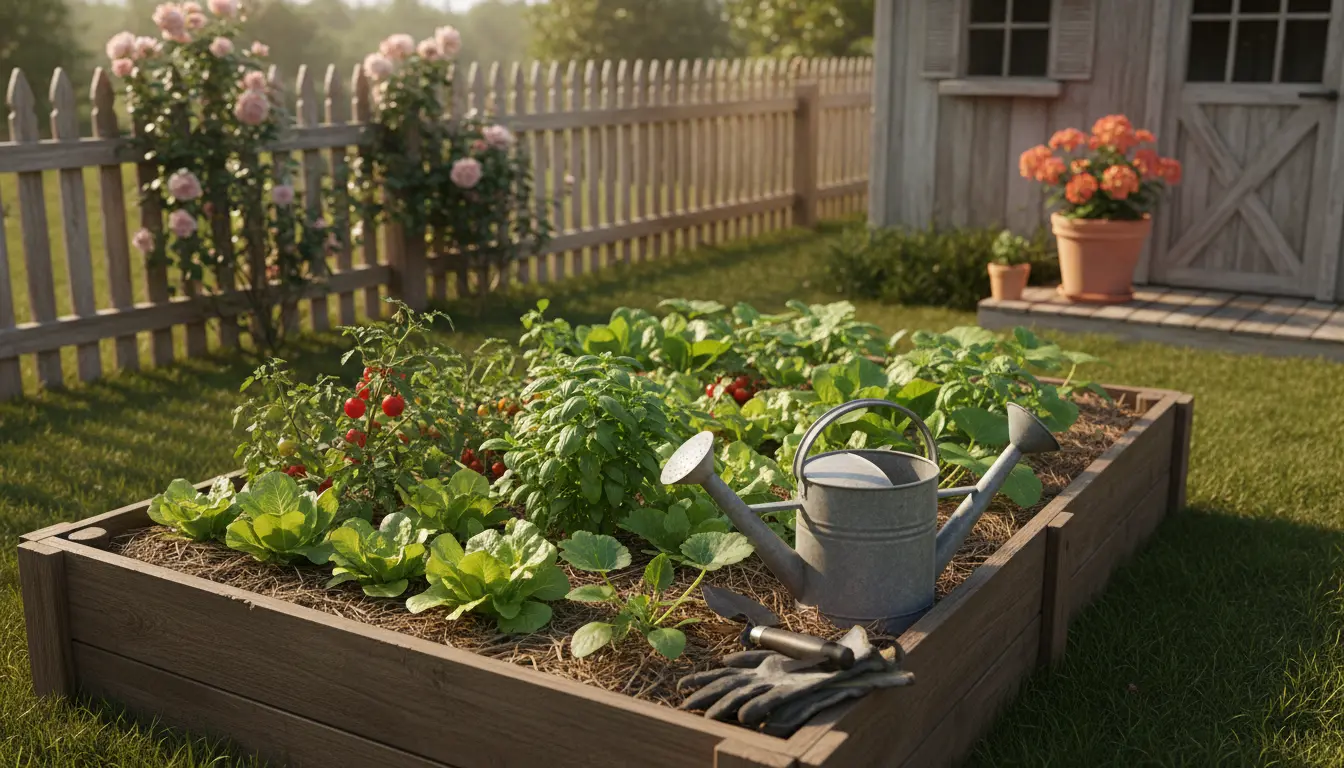
Plan Your Small Vegetable Garden
Decide where your garden will go before buying seeds or soil. Choose a spot with at least 6 hours of daily sunlight and easy access to water.
Measure the available space and pick a layout: raised beds, containers, or a small in-ground plot. Planning saves time and reduces waste later.
Choose the Right Site for a Small Vegetable Garden
Sunlight, drainage, and proximity to your home matter. South-facing spots usually get the most sun, which most vegetables need.
Avoid low spots that collect water. If drainage is poor, consider raised beds or containers instead of planting in the ground.
Prepare Soil and Containers
Good soil is a foundation for a healthy small vegetable garden. Aim for loose, well-draining soil rich in organic matter.
For containers, use a high-quality potting mix rather than garden soil. Potting mixes hold moisture and nutrients better in small volumes.
Soil Improvement Steps
- Test the soil pH if possible; most vegetables prefer pH 6.0–7.0.
- Add compost to improve structure and nutrients.
- Mix in well-rotted manure or a slow-release organic fertilizer for long-term fertility.
Select Plants for a Small Vegetable Garden
Pick vegetables suited to your climate and the space you have. Choose high-value, compact, or vertical varieties to maximize yield.
Good beginner plants include lettuce, radishes, cherry tomatoes, bush beans, and herbs like basil and parsley.
Use These Planting Strategies
- Succession planting: sow new seeds every few weeks to extend harvests.
- Companion planting: grow basil near tomatoes to help flavor and deter pests.
- Vertical gardening: trellis cucumbers and pole beans to save ground space.
Watering and Feeding Your Small Vegetable Garden
Consistent moisture is essential for productivity. Water deeply and less frequently to encourage strong root systems.
Use mulch to retain moisture and suppress weeds in both beds and containers. Organic mulches like straw or shredded leaves work well.
Watering Tips
- Water in the morning to reduce evaporation and disease risk.
- Soaker hoses or drip irrigation deliver water efficiently to roots.
- Check containers daily in hot weather; small pots dry out fastest.
Pest and Disease Management in a Small Vegetable Garden
Monitor plants weekly to catch problems early. Most small garden issues can be controlled with simple cultural steps.
Encourage beneficial insects like ladybugs and lacewings by planting flowers and avoiding broad-spectrum pesticides.
Simple Control Measures
- Remove diseased leaves promptly to stop spread.
- Handpick larger pests such as slugs or caterpillars.
- Use floating row covers to protect young plants from insects.
Seasonal Care and Harvesting
Adjust planting and care based on season. Cool-season crops like spinach and peas do well in spring and fall, while warm-season crops prefer summer.
Harvest frequently to encourage more production. Pick lettuce and herbs before they bolt for best flavor.
Record Keeping
Keep a simple garden journal with planting dates, varieties, and yields. This helps you improve choices each season.
Growing vegetables in containers can increase yields per square foot and lets you garden on patios, balconies, or small urban spaces.
Small Vegetable Garden Case Study
Maria converted a 6 x 4 foot patio area into a productive small vegetable garden using raised beds and containers. She planted cherry tomatoes, a row of bush beans, two lettuce succession beds, and a mixed herb pot.
By using compost, drip irrigation, and trellising, Maria harvested fresh salads and tomatoes all summer. Her initial investment in soil and containers paid off within one season in food value and reduced grocery trips.
Practical Checklist for Your Small Vegetable Garden
- Site: 6+ hours of sun and good drainage.
- Soil: mix in compost and test pH if possible.
- Plants: choose compact and season-appropriate varieties.
- Water: set up drip or soaker hoses; mulch heavily.
- Pests: monitor regularly and use row covers or hand removal.
- Harvest: pick often and keep a planting journal.
Conclusion
A small vegetable garden can deliver big rewards with modest space and effort. Focus on good soil, the right plants, and consistent care to see steady results.
Start small, learn each season, and expand gradually. With practical steps you can grow fresh, healthy vegetables close to home.