
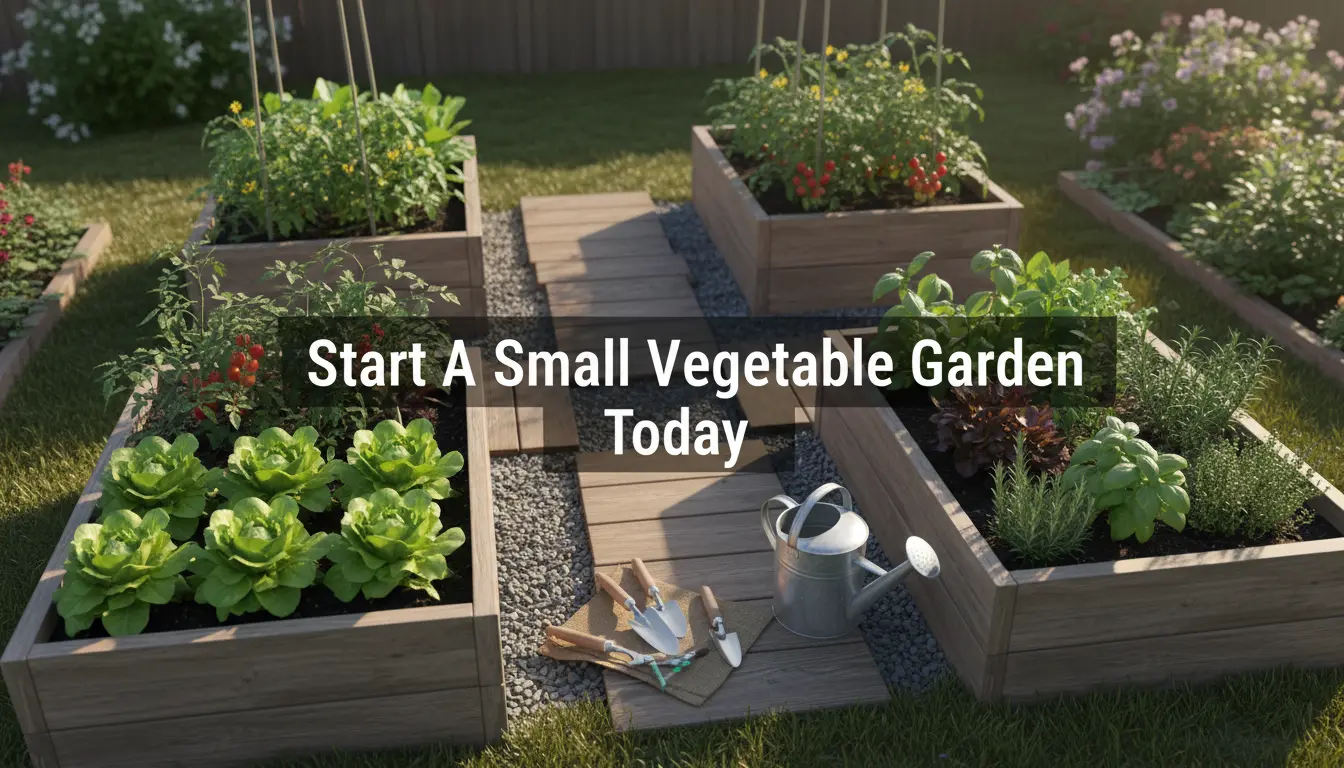
Why Start a Small Vegetable Garden
Growing a small vegetable garden is a low-cost way to get fresher produce, save money, and learn basic gardening skills. A small plot or a collection of containers can fit on a balcony, patio, or in a tiny backyard.
This guide gives practical, step-by-step instructions to plan, plant, and maintain a productive small vegetable garden.
Choose the Right Location for a Small Vegetable Garden
Location determines how much sun, wind, and access to water your plants get. Most vegetables need at least 6 hours of direct sunlight each day.
Check these factors before you pick a spot:
- Sun exposure: Aim for 6–8 hours of sun for tomatoes, peppers, and beans.
- Water access: Place beds or containers near a tap or hose.
- Drainage: Avoid low spots that collect water; good drainage prevents root rot.
- Convenience: A spot close to the kitchen increases the chance you’ll harvest regularly.
Decide Between Containers, Raised Beds, or In-Ground
Small gardens often use containers or raised beds because they control soil quality and reduce bending. Choose the method that fits your space and budget.
- Containers: Good for balconies and patios. Use pots at least 12 inches deep for vegetables.
- Raised beds: Faster to fill with good soil and easier to manage weeds.
- In-ground: Works when native soil is healthy and drainage is good.
Materials and Size Tips for a Small Vegetable Garden
For a simple start, one or two 4×4 ft raised beds or 4–6 large containers can feed a small household with herbs and salad greens.
- Soil mix: Use 50% topsoil, 30% compost, 20% coarse sand or perlite for raised beds.
- Container soil: Use a high-quality potting mix with compost and slow-release fertilizer.
- Path width: Keep 18–24 inches between beds for comfortable access.
Choose Vegetables for a Small Vegetable Garden
Pick plants that match your climate, season, and space. For small gardens, prioritize high-yield, space-efficient crops.
- Leafy greens: Lettuce, spinach, and kale—fast harvests and good for succession planting.
- Compact fruiting plants: Cherry tomatoes, bush beans, and peppers are space-efficient.
- Herbs: Basil, parsley, and cilantro add flavor and fit containers well.
- Vertical growers: Peas and pole beans save space when trained on trellises.
Planting and Early Care
Follow seed packet dates or nursery plant tags for timing. Start with healthy seedlings if you want faster results.
- Prepare beds: Loosen soil 8–10 inches and mix in compost.
- Plant at recommended spacing to avoid overcrowding.
- Water thoroughly after planting to settle soil around roots.
Watering Routine for a Small Vegetable Garden
Consistent moisture is critical. Water deeply once or twice a week depending on weather, rather than light daily sprinkling.
- Check soil moisture by sticking a finger 2 inches deep—if dry, water.
- Morning watering reduces evaporation and disease pressure.
- Mulch with straw or wood chips to conserve moisture and suppress weeds.
Planting marigolds near vegetables can reduce some insect pests. They attract beneficial insects and add color to small gardens.
Simple Pest and Disease Management
For small gardens, prevention and observation work best. Inspect plants weekly and remove damaged leaves promptly.
- Handpick larger pests such as slugs and caterpillars in early morning.
- Use row covers to protect seedlings from insect damage.
- Encourage beneficial insects by planting flowers and avoiding broad-spectrum pesticides.
When to Harvest in a Small Vegetable Garden
Harvest regularly to encourage more production. Pick leafy greens when young for tender flavor.
- Tomatoes: Harvest when fully colored and slightly soft to the touch.
- Lettuce: Cut outer leaves or harvest whole heads before flowering.
- Herbs: Snip stems regularly; avoid removing more than one-third at a time.
Maintenance Plan for Beginners
Keep a simple weekly routine to prevent small problems from growing. Consistency yields better results than intensive occasional work.
- Weekly: Check moisture, remove weeds, and inspect for pests.
- Monthly: Add a handful of compost or balanced organic fertilizer around plants.
- Seasonally: Rotate crops to different beds to reduce disease build-up.
Small Real-World Case Study
Case: A two-person household used two 4×4 ft raised beds on a sunny balcony. Over one growing season they grew cherry tomatoes, bush beans, basil, and mixed salad greens.
Result: They harvested salad greens weekly and tomatoes mid-summer, saving roughly $30–$50 per month on produce while using about 2 hours per week for garden care. Their success came from starting small, using quality potting mix, and consistent watering.
Quick Checklist to Start a Small Vegetable Garden
- Pick a sunny location (6+ hours sun).
- Choose containers or a 4×4 raised bed to begin.
- Buy quality potting mix and compost.
- Select 4–6 space-efficient crops to start.
- Create a weekly care routine: water, weed, inspect.
Starting a small vegetable garden is manageable with a simple plan and steady care. Begin with a compact layout, the right soil, and a few reliable crops to build confidence. Over time, you can expand and experiment with new vegetables and season extension techniques.