
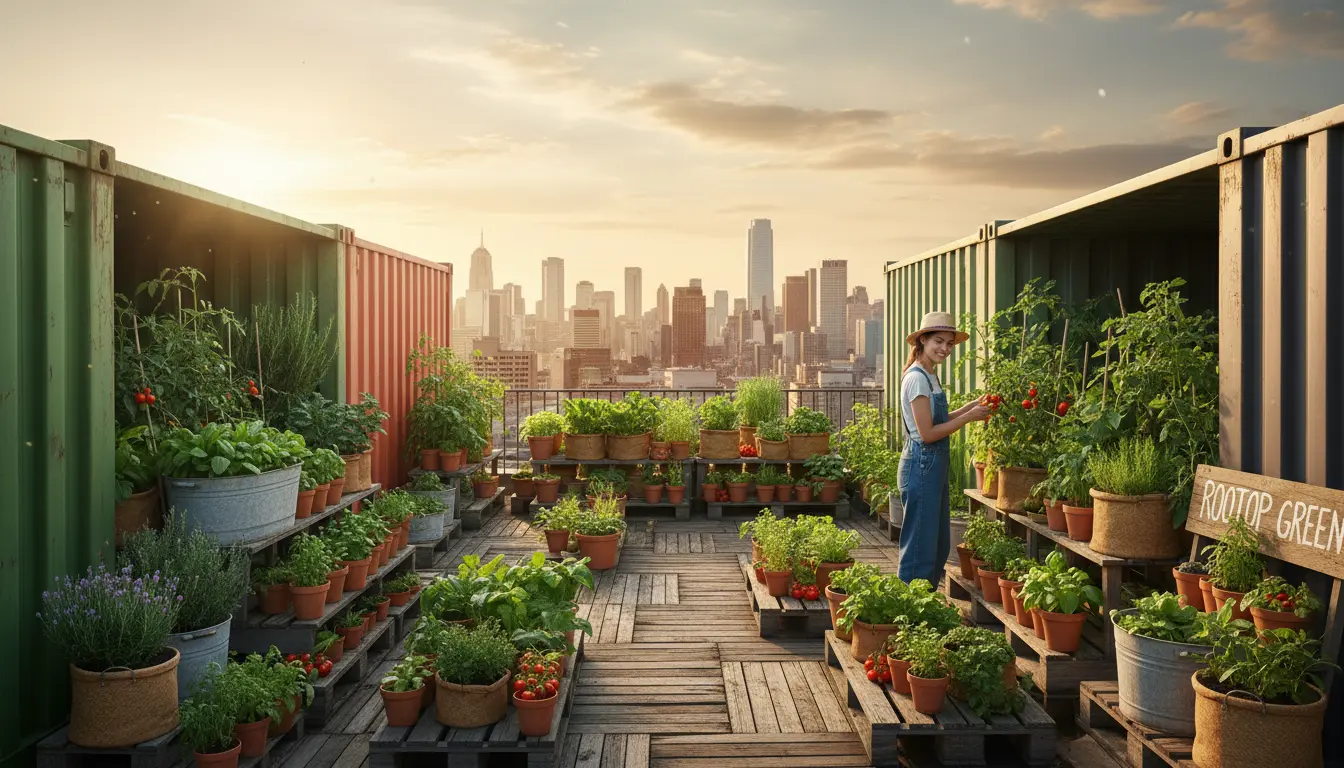
Starting a small vegetable garden is achievable for beginners and rewarding for experienced gardeners. This guide breaks the process into clear steps so you can plan, plant, and maintain a productive small vegetable garden with minimal fuss.
Plan Your Small Vegetable Garden
Decide where to place your small vegetable garden before buying seeds or soil. Observe sunlight, access to water, and foot traffic for at least a few days to pick the most practical spot.
Measure the area and choose a layout that fits your space: in-ground beds, raised beds, or containers. Each option affects soil depth, drainage, and plant choices.
Choose the Right Location for a Small Vegetable Garden
Most vegetables need 6–8 hours of direct sun. If full sun is not available, select crops that tolerate partial shade like leafy greens and root vegetables.
Consider proximity to the kitchen for quick harvesting and to water sources for easy irrigation.
Choose Plants for a Small Vegetable Garden
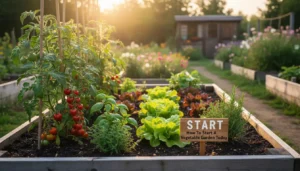
Pick vegetables that match your climate, season, and cooking habits. Focus on high-value, space-efficient crops to make the most of limited area.
Good choices for small vegetable gardens include:
- Leafy greens: lettuce, spinach, kale
- Compact fruiting plants: cherry tomatoes, dwarf peppers
- Root crops: radishes, carrots, beets
- Herbs: basil, parsley, chives
Use Vertical Space in a Small Vegetable Garden
Vertical supports let you grow vining crops without using ground area. Trellises, cages, and wall-mounted planters extend capacity and improve airflow.
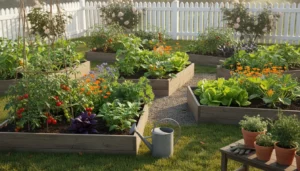
Examples: pole beans, peas, and indeterminate tomatoes climb vertical supports and save bed space.
Prepare Soil for a Small Vegetable Garden
Soil quality determines long-term success. Test soil pH and fertility if possible, and amend as needed with organic matter.
For raised beds and containers use a blend of topsoil, compost, and coarse sand or perlite for drainage. Aim for loose, crumbly soil that holds moisture but drains well.
Simple Soil Mix for Containers and Raised Beds
- 40% good quality topsoil
- 40% compost or well-rotted manure
- 20% coarse sand, perlite, or coconut coir
This mix balances nutrients, water retention, and aeration for most vegetables.
Planting and Spacing in a Small Vegetable Garden
Follow seed packet and plant label spacing recommendations, but use companion planting and successive sowing to maximize yield.
Plant smaller vegetables and fast-growing crops between slower, larger plants. For example, sow lettuce between tomato seedlings to harvest before tomato canopy expands.
Succession Planting Tips for a Small Vegetable Garden
- Sow quick crops like radishes every 2–3 weeks for continuous harvest.
- After harvesting early spring crops, replace with warm-season plants like peppers.
- Rotate families to reduce pest and disease buildup.
Watering and Feeding a Small Vegetable Garden
Consistent water is more important than frequent water. Aim for deep, infrequent watering to encourage strong roots.
Use soaker hoses or drip irrigation to conserve water and reduce foliage wetness, which lowers disease risk.
Fertilizing a Small Vegetable Garden
Top-dress with compost mid-season and use balanced organic fertilizers if growth is slow. Avoid excess nitrogen that can boost leaves over fruits.
Organic options: compost tea, fish emulsion, and well-balanced granular fertilizers formulated for vegetables.
Pest and Disease Management in a Small Vegetable Garden
Manage pests proactively with cultural controls first. Keep beds clean, rotate crops, and encourage beneficial insects.
Use floating row covers to protect young plants from insects and hand-pick larger pests like slugs or caterpillars when possible.
Low-Toxicity Controls for a Small Vegetable Garden
- Neem oil for soft-bodied pests
- Insecticidal soap for aphids
- Diatomaceous earth for crawling insects around soil edges
Companion planting—like planting basil near tomatoes—may improve flavor and help deter pests without chemicals.
Harvesting and Storing from a Small Vegetable Garden
Harvest regularly to encourage continued production. Pick leafy crops when young and tender, and harvest tomatoes when fully colored for best taste.
Proper storage extends freshness: refrigerate greens in a breathable bag and store root vegetables in a cool, dark place.
Small Vegetable Garden Case Study: Urban Balcony Success
Maria had a 6×3 foot balcony and wanted fresh produce. She used three deep containers and a wall trellis. In year one she grew cherry tomatoes, basil, lettuce, and bush beans.
Her approach: choose compact varieties, use a peat-free container mix with compost, and water with a drip emitter. She harvested continuously for four months and froze extra basil into oil cubes for winter use.
Outcome: a steady supply of fresh salads and a 30 percent reduction in grocery spending on produce during the summer months.
Common Mistakes to Avoid in a Small Vegetable Garden
- Overcrowding plants—leads to poor airflow and disease
- Ignoring soil health—results in low yields despite good care
- Inconsistent watering—causes blossom end rot and bitter flavors
Final Checklist for a Successful Small Vegetable Garden
- Site selected with adequate sun and water access
- Soil prepared or proper container mix used
- Plants chosen for space and season
- Watering and feeding plan in place
- Pest management and succession planting scheduled
Starting a small vegetable garden is a step-by-step process that pays off with fresh flavor and practical satisfaction. Use the planning and maintenance tips here to set realistic expectations and build success season by season.