
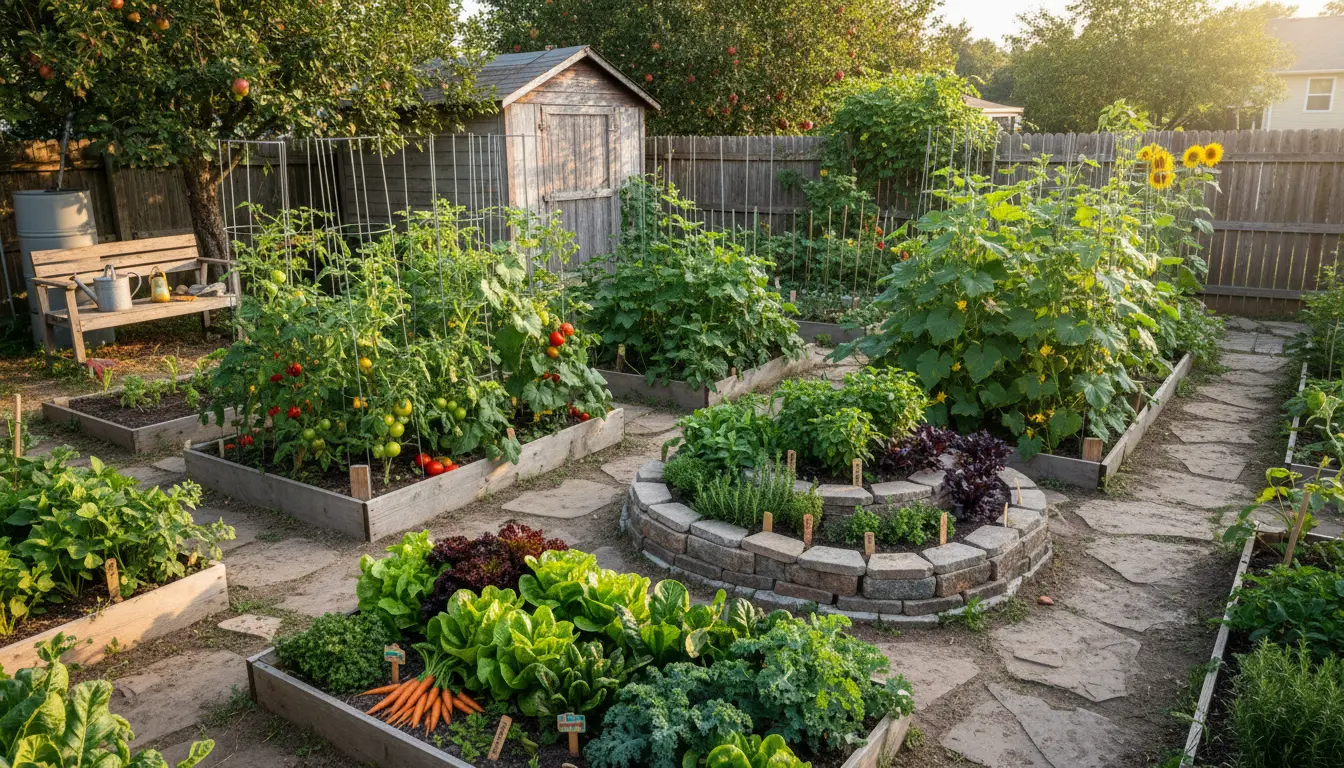
Starting a small vegetable garden is practical and rewarding. This guide explains clear, step-by-step actions you can take whether you have a backyard patch, balcony, or a small raised bed.
Why Start a Small Vegetable Garden
A small vegetable garden saves money, improves your diet, and connects you to the growing process. You can harvest fresh produce within weeks for many crops.
Gardening also reduces food miles and can be tailored to any space. Even a single sunny windowsill or a 3×3 foot bed can produce regular salad greens.
Planning Your Small Vegetable Garden
Good planning avoids waste and keeps the garden manageable. Start by choosing the site, deciding containers or beds, and selecting crops suited to your climate and space.
Choose the Right Spot
- Look for 6+ hours of direct sun for most vegetables.
- Ensure easy access to water and good drainage.
- Consider wind protection and shade from buildings.
Select Vegetables for Small Gardens
Pick crops that give high yields in small spaces and match your eating habits. Fast-growing and compact varieties work best.
- Leafy greens: lettuce, spinach, arugula
- Root crops: radishes, baby carrots
- Compact fruiting plants: bush tomatoes, peppers
- Climbers for vertical space: pole beans, peas
Prepare Soil and Containers

Soil quality determines much of your success. If using the ground, test and improve the soil. In containers, choose a good potting mix and ensure drainage.
Basic Soil Steps
- Test pH and nutrient levels with a kit or local extension service.
- Add compost to boost organic matter and drainage.
- Use raised beds or containers where soil is poor or compacted.
Planting and Spacing for a Small Vegetable Garden
Follow seed packet instructions for depth and spacing. In a small garden, intensive planting and succession sowing increase yield.
Succession Planting
Sow quick crops every 2–3 weeks to maintain continuous harvests. Replace harvested plants with new seedlings to maximize production.
Square Foot and Intensive Planting

Use square-foot methods or interplant slow and fast growers together. For example, plant radishes between slower-growing carrots.
Watering, Feeding, and Maintenance
Consistent care keeps plants productive. Small gardens need regular monitoring because containers dry out faster than beds.
- Water deeply but infrequently to encourage strong roots.
- Mulch to conserve moisture and suppress weeds.
- Feed with balanced organic fertilizer every 4–6 weeks during the season.
Pest and Disease Control
Use integrated pest management: monitor, use physical barriers, and encourage beneficial insects. Remove diseased leaves promptly.
- Netting or row covers protect young plants from pests.
- Handpick slugs and caterpillars or use organic baits where appropriate.
Leafy greens like lettuce and spinach can be harvested as cut-and-come-again, providing fresh salads from the same plants for weeks.
Harvesting and Saving Space
Harvest frequently to encourage more production. For many vegetables, earlier pickings mean better flavor and more harvests overall.
Preserve excess by freezing, pickling, or drying to make the most of your yields.
Real-World Example: Balcony Garden Case Study
Case: A two-person household used a 6-square-foot balcony. They planted three 10-inch deep containers and one tall planter for vertical beans.
In the first season they grew:
- Two containers of mixed lettuce, harvested weekly for three months.
- One container of bush tomatoes producing 20–25 medium tomatoes over the season.
- Vertical pole beans producing steady yields for six weeks.
Lessons learned: use deeper containers for tomatoes, rotate crops each season, and add a weekly feeding routine. The setup paid for itself in produce value within one season.
Common Mistakes and How to Avoid Them
- Planting too much: Start small and expand gradually.
- Overwatering: Check soil moisture before every watering.
- Ignoring sunlight: Monitor sun patterns through the day before placing beds.
Quick Checklist to Start a Small Vegetable Garden
- Pick a sunny spot and decide containers or beds.
- Choose 3–6 easy crops based on your space.
- Prepare soil or potting mix and add compost.
- Plant with proper spacing and start a watering schedule.
- Monitor pests, feed periodically, and harvest regularly.
Starting a small vegetable garden is manageable with simple planning and routine care. Focus on a few high-yield, space-efficient crops, and learn from one season to the next. Small steps produce fresh food, enjoyment, and useful gardening experience.