
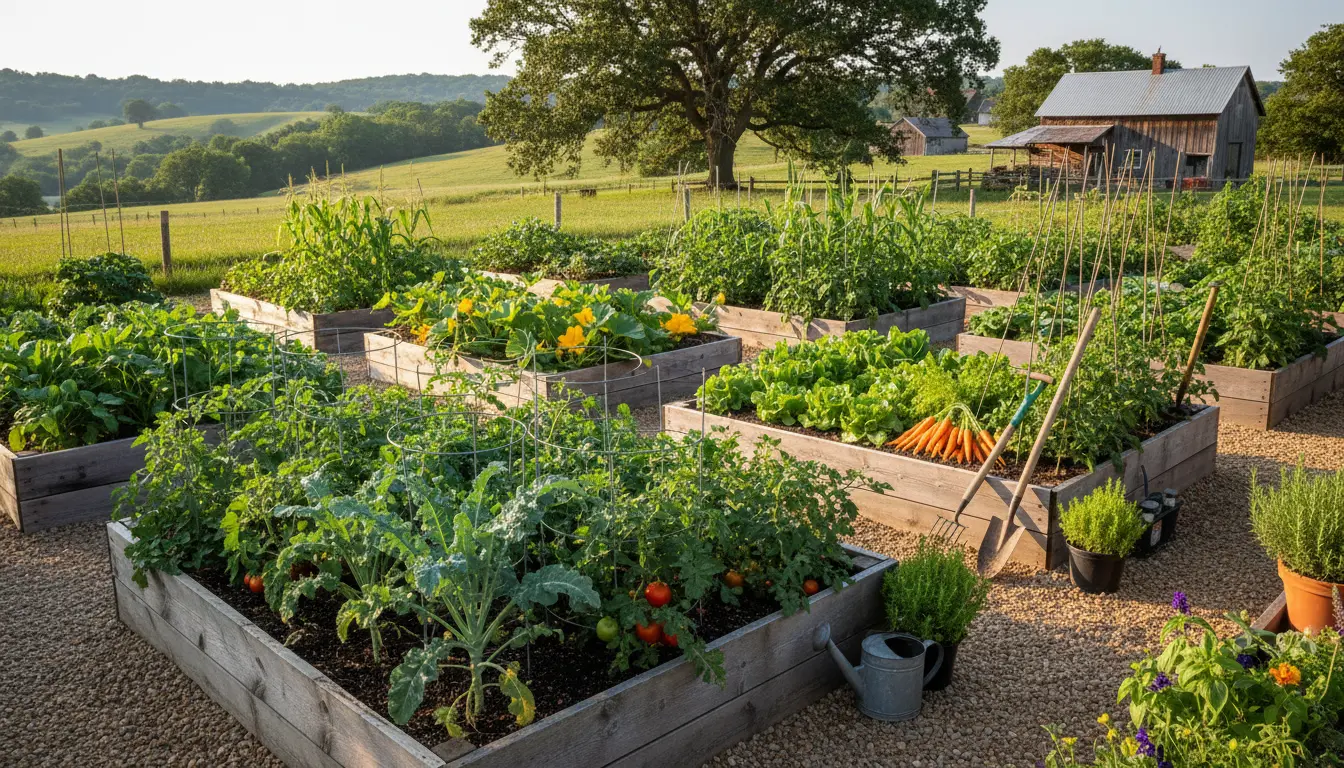
Plan Your Small Vegetable Garden
Starting a small vegetable garden begins with a clear plan. Decide your goals: fresh salad greens, tomatoes, herbs, or a mix of staples.
Identify the space you have and how many hours of sunlight it receives. Most vegetables need at least six hours of direct sun daily.
Choose a Site for Your Small Vegetable Garden
Pick a level area with good drainage and easy access to water. Consider proximity to the kitchen for frequent harvesting.
If ground space is limited, containers or raised beds work well and allow better soil control.
Soil and Beds for a Small Vegetable Garden
Good soil is the foundation of a productive garden. For a small vegetable garden, improving a little soil goes a long way.

Test the soil pH if possible. Most vegetables prefer a pH between 6.0 and 7.0.
Prepare Raised Beds or Containers
Use a mix of quality topsoil, compost, and a small amount of coarse sand or perlite for drainage in containers. A simple ratio is 50% topsoil, 40% compost, 10% drainage material.
Raised beds warm earlier in spring and reduce compaction. For small gardens, 4×4 or 4×8 beds are common and fit most yards and balconies.
Plant Selection for a Small Vegetable Garden
Choose vegetables that match your climate, season, and the space available. Focus on high-yield, space-efficient crops.
Good choices for small vegetable gardens include lettuce, spinach, radishes, bush beans, cherry tomatoes, peppers, and herbs.
Use Space-Saving Varieties
- Look for bush or dwarf varieties that do not need trellising.
- Succession planting keeps harvests steady; sow lettuce every two weeks for continuous greens.
- Interplant quick crops like radishes between slower ones like broccoli to maximize bed use.
Planting Schedule and Spacing for a Small Vegetable Garden
Follow seed packet or plant tag instructions for spacing and planting depth. Crowding reduces airflow and increases disease risk.
Create a simple calendar: cool-season crops in spring and fall, warm-season crops after the last frost date.
Example Planting Layout
- Row 1: Lettuce (succession sowing every 2 weeks)
- Row 2: Bush beans (space 6 to 8 inches apart)
- Row 3: Cherry tomatoes in containers with support
- Edge: Herbs like basil and parsley
Water and Maintenance for a Small Vegetable Garden
Consistent water is vital. Water deeply once or twice a week instead of shallow daily watering. Adjust for rain and temperature.
Apply 2-3 inches of organic mulch to retain moisture, suppress weeds, and regulate soil temperature.
Practical Care Tips
- Water at the base of plants to reduce leaf disease.
- Fertilize with a balanced organic fertilizer at planting and mid-season for heavy feeders.
- Stake or cage tomatoes early to avoid root disturbance later.
Pest and Disease Control in a Small Vegetable Garden
Preventive measures are most effective: crop rotation, clean tools, and healthy soil reduce problems.
Use physical controls like row covers for pests and handpick visible insects. Introduce beneficial insects by planting flowers such as marigold or alyssum nearby.
Safe Organic Options
- Neem oil or insecticidal soap for soft-bodied pests.
- Copper or sulfur treatments for common fungal issues, used according to label directions.
- Remove and compost diseased plants away from the garden to stop spread.
Harvesting and Rotation in a Small Vegetable Garden
Harvest regularly to encourage production; pick beans and peas when young and tender. For leafy greens, pick outer leaves first.
Rotate plant families each year to reduce buildup of soil pests and disease. For example, follow tomatoes (nightshade family) with legumes or leafy greens.
A single cherry tomato plant in a small container can produce 10 to 20 pounds of fruit in one season when well cared for.
Small Real-World Case Study
Case: A two-person household used a 4×8 raised bed and three 12-inch pots to start a small vegetable garden on a suburban patio.
They planted tomatoes, 8 lettuce heads in succession, bush beans, and herbs. In the first season they harvested about 30 pounds of produce worth an estimated $120, while spending roughly $80 on soil and plants.
Key wins were consistent watering, weekly weeding, and harvesting at peak ripeness. They doubled bed productivity by planting radishes between lettuce rows early in spring.
Quick Checklist to Start Your Small Vegetable Garden
- Assess sunlight and select a site or container
- Choose 2–6 vegetables that match your goals
- Prepare soil or mix for containers with compost
- Plan a simple planting calendar and spacing
- Water consistently and mulch to retain moisture
- Monitor pests and rotate crops annually
With a modest plan and regular care, a small vegetable garden can supply fresh produce through the growing season. Start small, track what works, and expand in future seasons based on experience.