
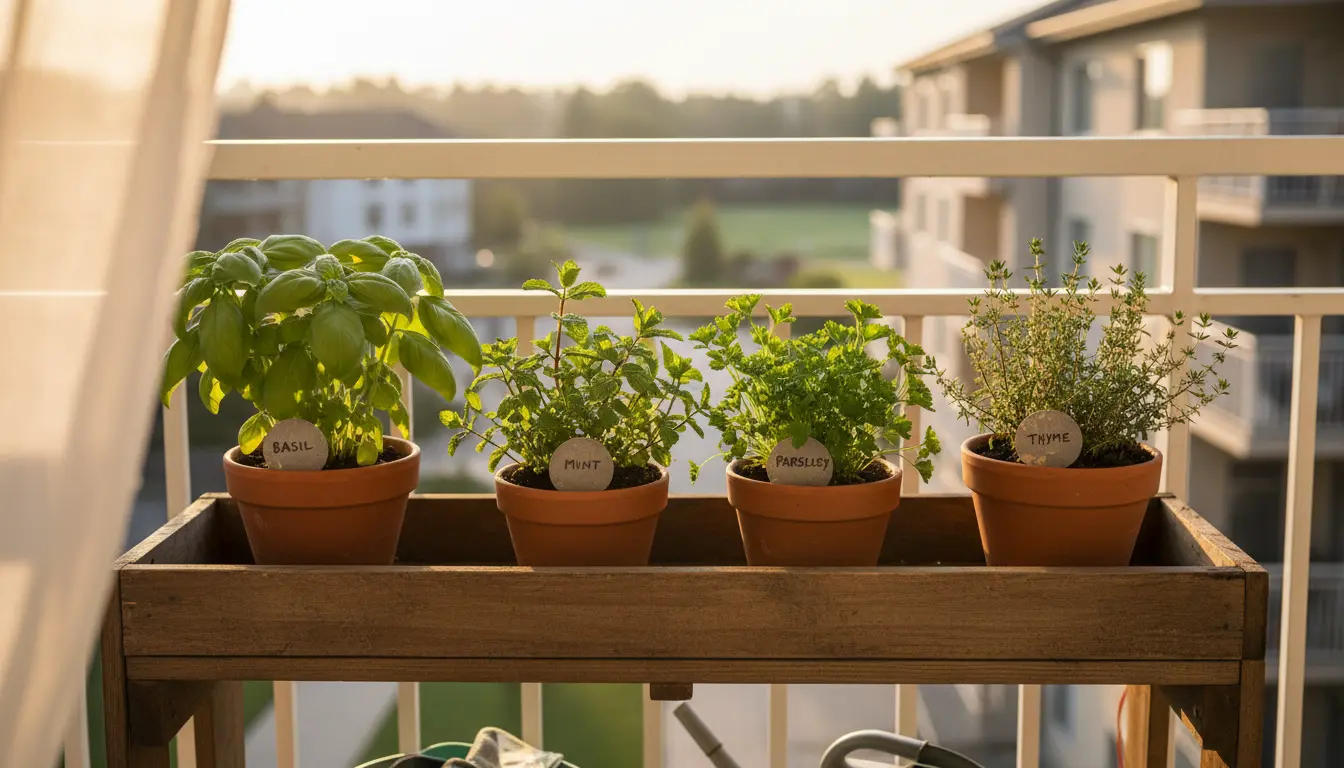
Starting a small herb garden is an easy way to add fresh flavor to meals and improve indoor air. This guide explains practical steps to plan, plant, and maintain a productive herb space whether you have a windowsill or a tiny balcony.
Planning Your Small Herb Garden
Decide where your small herb garden will live before you buy plants or pots. Light, space, and access to water are the main factors that determine success.

Assess these points first
- Light. Most culinary herbs need at least 4 to 6 hours of direct sunlight. South or west facing windows are ideal.
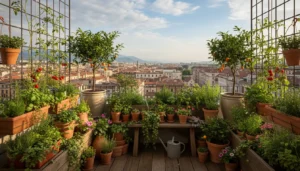
- Space. Think vertical shelves, rail planters, or a single long planter for a small balcony or windowsill.
- Water access. Place containers near a sink or where you can easily carry a watering can.
Choosing Plants for Your Small Herb Garden
Pick herbs that match your light conditions and cooking habits. A small herb garden should focus on a few reliable plants rather than many that struggle.
Best Herbs for a Small Herb Garden
- Basil. Fast growing and great for sunny spots. Harvest regularly to encourage new growth.
- Parsley. Tolerates partial shade and provides long-lasting leaves.
- Mint. Very hardy but invasive in ground beds. Use individual pots to contain growth.
- Thyme. Drought tolerant and compact, ideal for small containers.
- Chives. Good for partial shade and frequent snips for fresh flavor.
Avoid Overcrowding
Give each herb its own space based on mature size. Overcrowding reduces airflow and raises the risk of disease. Use separate small pots or one wide container with defined spacing.
Soil, Water, and Fertilizer for a Small Herb Garden
Use a well draining potting mix designed for containers. Herbs need roots that breathe and do not sit in waterlogged soil.
Watering basics
- Water when the top 1 to 2 inches of soil feels dry. Stick a finger in to check.
- Avoid daily shallow watering. Give a good soak then let soil dry slightly between waterings.
Fertilizer tips
- Use a balanced liquid fertilizer at half strength every 4 to 6 weeks during the growing season.
- Avoid over fertilizing, which can reduce essential oil concentration and flavor.
Planting and Maintenance Tips for a Small Herb Garden
Planting in containers is straightforward with the right steps. Follow a simple routine to keep the small herb garden productive.
- Choose containers with drainage holes and a saucer to catch excess water.
- Fill containers with fresh potting mix and plant at the same depth they were in their nursery pots.
- Space plants according to label recommendations to avoid crowding.
Routine maintenance
- Pinch or prune regularly to promote bushy growth and prevent flowering for herbs like basil.
- Remove yellow or damaged leaves to improve airflow and prevent pests.
- Rotate pots every week to ensure even light exposure and balanced growth.
Harvesting and Using Herbs from Your Small Herb Garden
Harvesting correctly keeps plants productive. Always cut above a leaf node to encourage new stems and multiple harvests.
Storage and preservation ideas
- Use fresh leaves within a few days in the refrigerator in a damp paper towel or herb keeper.
- Dry herbs like thyme and oregano on a rack or string for longer storage.
- Freeze basil in olive oil as small cubes for quick use in cooked dishes.
Case Study Small Herb Garden
Anna transformed a 2 meter balcony rail into a productive small herb garden. She used three medium pots for basil, parsley, and mint and a shallow tray for thyme and chives.
Within eight weeks Anna reported weekly harvests for cooking and a reduction in spent money on store herbs. Regular pruning kept plants compact and healthy in the limited space.
Key results
- One pot produced enough basil for two to three meals per week.
- Mint contained in a single pot avoided spreading and was used for drinks and salads.
Troubleshooting Common Problems in a Small Herb Garden
Problems in small herb gardens are usually light, water, or pest related. Quick diagnosis and small fixes restore plant health.
- Leggy stems. Move plants to brighter light and pinch back growth to encourage bushiness.
- Yellow leaves. Check for overwatering and improve drainage or reduce frequency.
- Pests like aphids. Rinse leaves with water or use insecticidal soap on affected plants.
Final Steps to Start Your Small Herb Garden Today
Begin with two to five herbs that you use most. Set them up in appropriate containers, place them where they will get the right light, and follow a simple watering and pruning routine.
A small herb garden is low cost and rewarding. With basic care you will have fresh herbs in weeks and a handy source of flavor for many meals.