
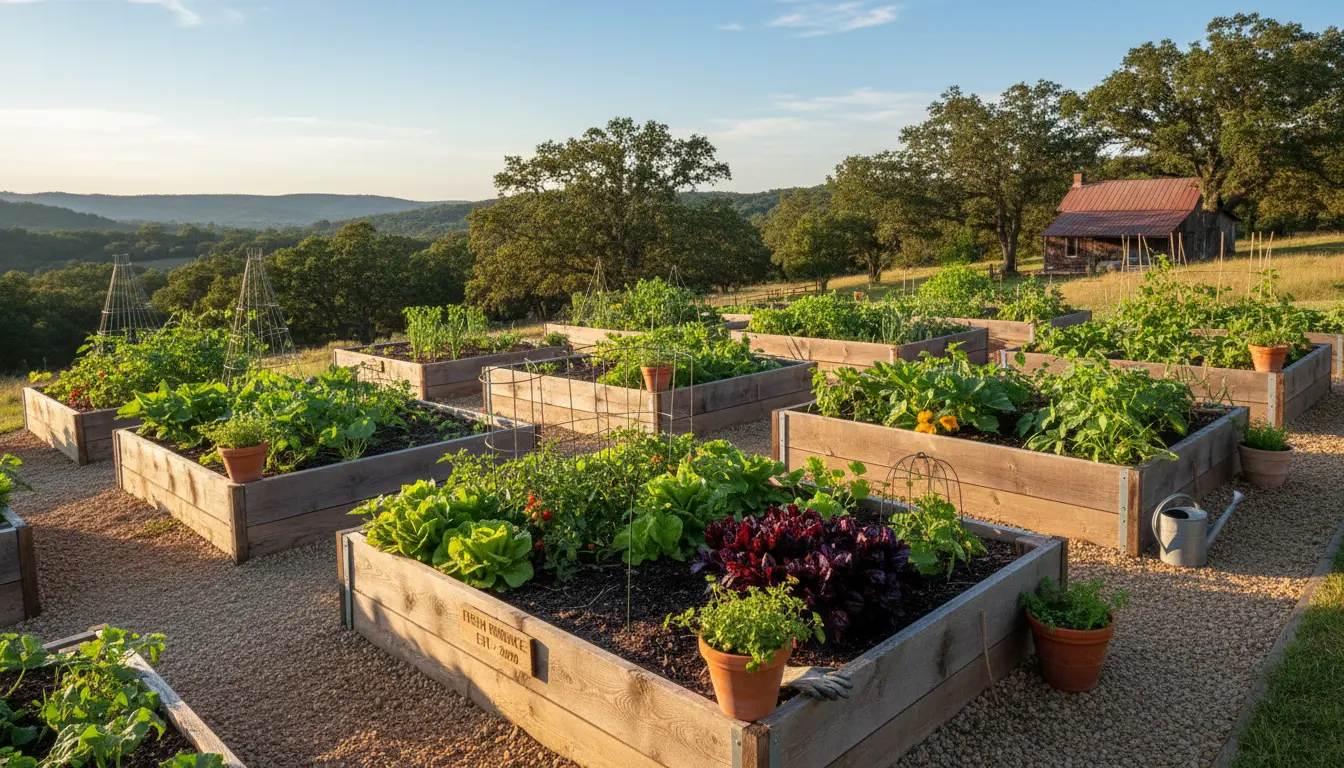
Start Growing: What is a raised bed vegetable garden?
A raised bed vegetable garden is a planting area built above the native soil, usually enclosed by wood, stone, or composite. These beds improve drainage, soil structure, and access while concentrating nutrients for vegetables.
Why choose a raised bed vegetable garden?
Raised beds warm earlier in spring and drain better than flat beds, giving you a longer growing season. They also reduce soil compaction because you avoid walking on planting areas.

Other benefits include easier weed control, better pest barriers, and the ability to tailor soil mix for top-performing vegetables.
Key advantages of a raised bed vegetable garden
- Better drainage and aeration for roots
- Easier access for planting and maintenance
- Custom soil mix for higher yields
- Neat, organized layout for small yards or patios
Planning your raised bed vegetable garden layout
Site selection matters. Choose a spot that receives at least 6 hours of direct sunlight for most vegetables. Check water access and slope; flat is best but slight grade is manageable.
Decide bed size for reach and maintenance. Common dimensions are 4 feet wide by 8 feet long and 12–18 inches deep. A 4-foot width lets you reach the center from both sides.
Layout tips for raised bed vegetable garden
- Orient beds north–south for even sun exposure.
- Leave 2–3 foot paths between beds for easy access.
- Plan crop rotation areas to prevent pest buildup.
- Group plants by water needs to simplify irrigation.
Soil and compost for raised bed vegetable garden
Fill raised beds with a loose, fertile soil mix. A reliable ratio is 50% topsoil or screened garden soil, 30% compost, and 20% coarse materials like coconut coir or aged sawdust for structure.
Test soil pH before planting. Most vegetables prefer slightly acidic to neutral soil (pH 6.0–7.0). Add lime or sulfur only based on test results.
Quick soil recipe example
- 4 parts screened topsoil
- 2 parts well-rotted compost
- 1 part coarse material (perlite, coarse sand, or coir)
- Add slow-release organic fertilizer per package directions
Step-by-step: How to start a raised bed vegetable garden
Follow these practical steps to build and plant a productive raised bed vegetable garden. Each step helps you avoid common mistakes and save time.
1. Build the bed
Use rot-resistant wood (cedar), concrete blocks, or recycled composite planks. Keep height between 12 and 18 inches for most needs. Ensure the frame is square and level.
2. Prepare the base
Remove grass or lay down cardboard to suppress weeds. If drainage is a concern, add a layer of coarse gravel or coarse wood chips at the bottom.
3. Fill with soil mix
Layer your soil recipe into the bed and lightly firm. Avoid compacting too much; roots need air space. Water the bed thoroughly to settle the soil.
4. Planting and crop selection for raised bed vegetable garden
Pick vegetables that match your climate and space. Use intensive planting (square foot or row spacing) to maximize yields in small beds.
Start with easy vegetables: lettuce, radishes, bush beans, tomatoes, and peppers. Succession plant to maintain steady harvests.
Maintenance and harvesting tips
Keep soil moist but not waterlogged. Drip irrigation or soaker hoses are efficient and reduce leaf wetting. Mulch with straw or leaf mulch to conserve moisture and suppress weeds.
Fertilize with compost tea or balanced organic fertilizer every 4–6 weeks during the season. Monitor pests and remove damaged leaves early to stop spread.
Common maintenance checklist
- Water 2–3 times weekly depending on weather
- Mulch after planting to retain moisture
- Stake tall plants to save space and improve airflow
- Rotate crops each year to reduce disease
Raised beds typically warm faster in spring, allowing earlier planting by up to 2–4 weeks compared with in-ground beds in many climates.
Small case study: One season from a 4×8 raised bed vegetable garden
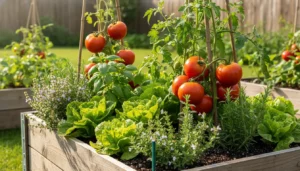
A homeowner set up a 4×8 bed with improved soil and tomato, lettuce, bush beans, and basil. With regular watering and compost top dressing, the bed produced continuous salad greens and 12–15 lbs of tomatoes between July and September.
This example shows that a single well-managed raised bed can supply a family with fresh salad greens and part of their summer tomato needs.
Quick checklist to start your raised bed vegetable garden
- Select sunny site and measure space
- Choose bed size (4×8 is a good standard)
- Build frame with safe materials
- Mix soil: topsoil, compost, structure
- Plant season-appropriate crops and mulch
- Water efficiently and monitor pests
Starting a raised bed vegetable garden is a straightforward way to grow more food in less space with fewer headaches. With basic planning, quality soil, and regular care you can get reliable, high-yield results in a compact footprint.