
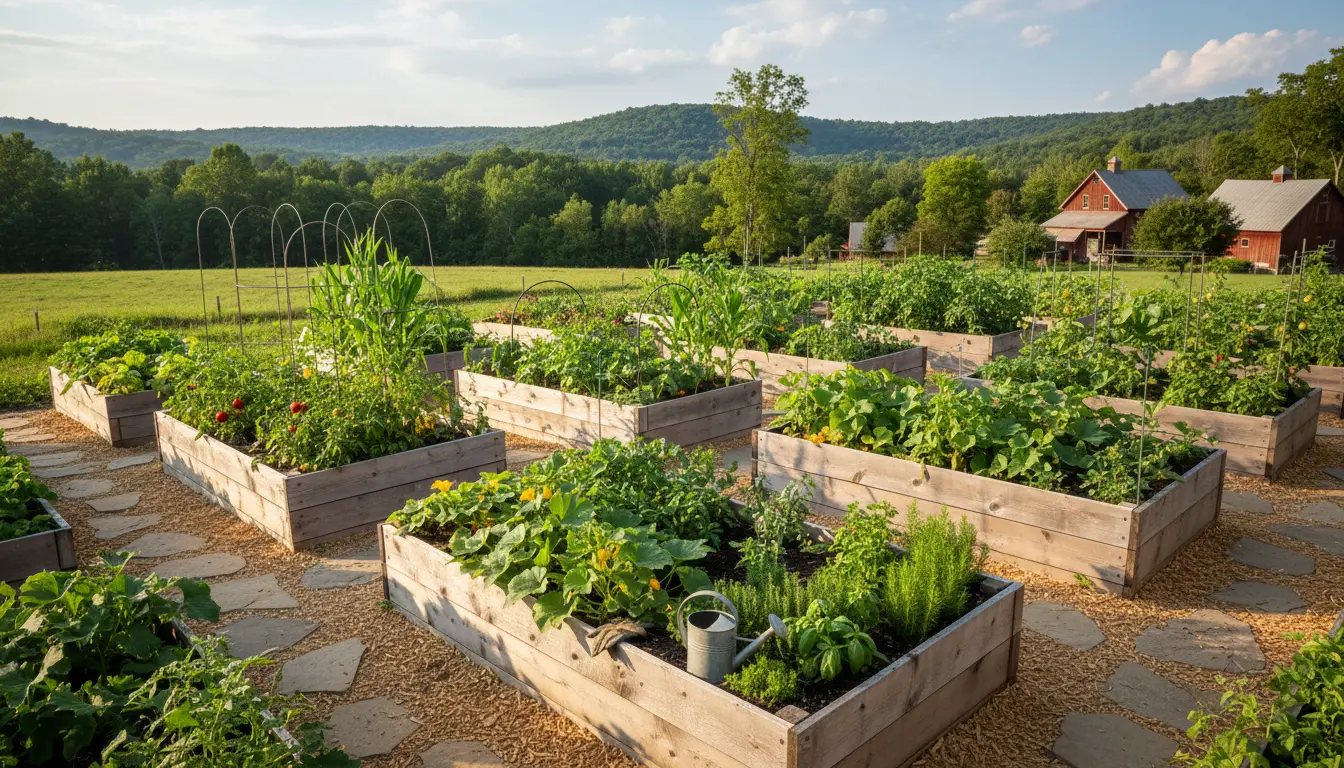
Overview of a raised bed vegetable garden
Raised bed vegetable gardens are compact, productive, and easier to manage than in-ground rows. They suit small yards, patios, and slopes, and let you control soil quality and drainage.
Planning your raised bed vegetable garden
Choose a location with at least six hours of sunlight per day for most vegetables. Level ground and proximity to a water source make daily care easier.

Decide bed size and number. Common starter size is 4 feet wide (easy to reach) and 8 feet long. Depth of 12–18 inches is usually sufficient for most vegetables.
Materials and layout for a raised bed vegetable garden
Common materials: untreated cedar, composite lumber, concrete blocks, or galvanized steel. Avoid treated wood that can leach chemicals into the soil.
Layout tips:
- Keep beds narrow (3–4 feet) for reachability.
- Leave paths 18–24 inches wide for access.
- Orient longer beds north–south for even sun exposure.
Soil mix for a raised bed vegetable garden
Good soil is the foundation of a productive raised bed vegetable garden. Use a mix that drains well but retains moisture and nutrients.
A reliable mix is: 40% topsoil, 40% compost, 20% coarse sand or perlite. Adjust with local topsoil availability and compost quality.
Soil preparation tips
Fill beds in layers and water each layer to settle the mix. Add a balanced organic fertilizer or a slow-release granular formula according to package directions.

Test pH if in doubt; most vegetables prefer pH 6.0–7.0. Add lime to raise pH or sulfur to lower it, applied based on test results.
Plant selection and spacing in a raised bed vegetable garden
Select vegetables suited to your climate and season. Cool-season crops include lettuce, spinach, and broccoli. Warm-season crops include tomatoes, peppers, and beans.
Use succession planting to maximize harvests. Sow quick crops (radishes, lettuce) between slower growers (tomatoes, peppers).
Basic spacing examples
- Tomatoes: 18–24 inches between plants
- Peppers: 12–18 inches between plants
- Lettuce: 6–10 inches between plants
- Carrots: thin to 2–3 inches apart
Watering and irrigation for a raised bed vegetable garden
Raised beds drain faster than ground soil and may need more frequent watering. Aim for consistent moisture rather than infrequent deep soaking.
Best options: soaker hoses, drip irrigation, or a watering wand. Use mulch to reduce evaporation and suppress weeds.
Watering schedule
- Young seedlings: keep soil evenly moist daily if needed.
- Established plants: water deeply 2–3 times per week, adjusting for heat and rainfall.
- Mulch 2–3 inches to retain moisture and regulate soil temperature.
Pest and disease management in a raised bed vegetable garden
Raised beds reduce some pest risks but do not eliminate them. Use integrated pest management (IPM) to minimize chemical use.
IPM steps include monitoring, hand removal of pests, row covers for young plants, and introducing beneficial insects like ladybugs and lacewings.
Common problems and fixes
- Aphids: spray with water or insecticidal soap.
- Slugs: use beer traps, diatomaceous earth, or hand removal at night.
- Blight or fungal disease: improve airflow, rotate crops, remove affected leaves.
Maintenance and seasonal tasks for a raised bed vegetable garden
Maintain soil fertility by adding compost each season and rotating plant families yearly. Remove spent crops promptly to reduce pests and disease carryover.
In fall, add a layer of compost and a winter mulch to protect soil life and structure.
Yearly checklist
- Spring: refresh soil, plant early crops, install irrigation.
- Summer: water, mulch, stake or trellis tall plants.
- Fall: harvest, compost plant debris, add organic matter.
Raised beds can warm faster in spring, allowing an earlier start to the growing season by up to two weeks compared with in-ground planting.
Small case study: A beginner raised bed vegetable garden
Case: Maria converted a 10 x 8 ft sunny corner into two 4 x 8 ft raised beds. She used untreated cedar and filled beds with a 40/40/20 mix of topsoil, compost, and sand.
Planting plan: tomatoes at the back, bush beans in the center, and lettuce plus radishes in front for succession. Maria installed a drip hose and mulched heavily.
Outcome: In the first season she harvested continuous lettuce and salad tomatoes through late summer. The raised beds simplified weeding and maintained healthier soil with fewer compaction issues.
Quick checklist to start your raised bed vegetable garden
- Pick a sunny spot and measure your beds.
- Choose safe materials and build 12–18 inch deep beds.
- Mix nutrient-rich, well-draining soil (compost + topsoil).
- Plan crops with spacing and succession in mind.
- Install irrigation, mulch, and monitor pests weekly.
Starting a raised bed vegetable garden is a practical way to produce fresh food in limited space. With basic planning and soil care, even beginners can grow reliable harvests over multiple seasons.