
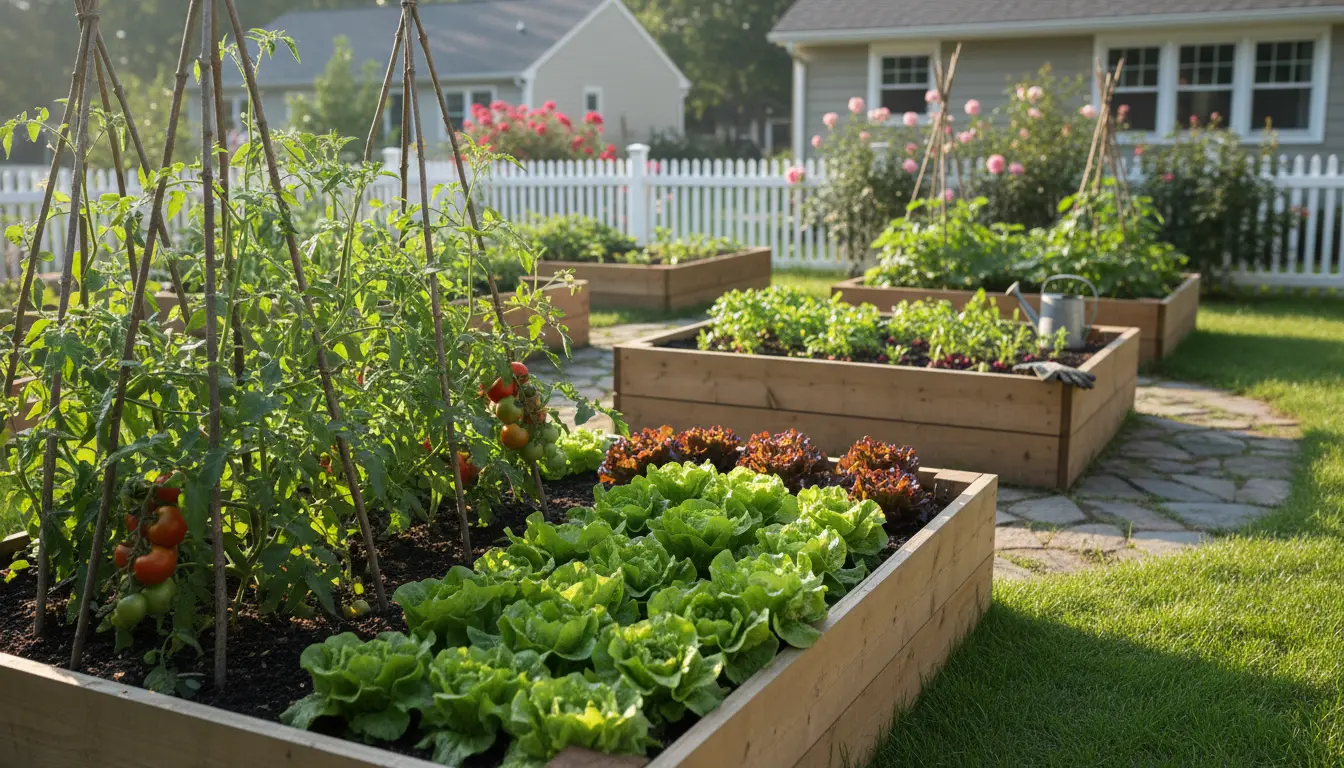
Why Choose a Raised Bed Vegetable Garden
Raised bed vegetable gardens give better soil control, improved drainage, and easier access for planting and harvesting. They suit small yards, urban lots, and anyone who wants higher yields from compact spaces.
These beds warm faster in spring and reduce compaction, which helps roots grow. The controlled environment also simplifies crop rotation and pest management.
How to Start a Raised Bed Vegetable Garden
Starting a raised bed vegetable garden follows clear steps: pick a site, build or buy beds, prepare a soil mix, plant correctly, and maintain regularly. This section walks through each step with practical tips.
Step 1: Site Selection for a Raised Bed Vegetable Garden
Choose a spot with at least 6 hours of direct sunlight for most vegetables. Good sun exposure supports fruiting crops like tomatoes, peppers, and beans.
Ensure the location has reasonable access to water and is level enough so beds remain stable. Avoid low, frost-prone pockets if possible.
Step 2: Bed Size and Materials
Common bed dimensions are 4 feet wide by 8 feet long and 12 to 18 inches deep. Four-foot widths let you reach the center from either side without stepping into the bed.
Materials include untreated cedar, composite lumber, concrete block, or galvanized metal. Avoid pressure-treated wood that can leach chemicals into the soil.
Step 3: Preparing the Soil Mix
Fill raised beds with a blend that balances drainage, fertility, and water retention. A reliable mix is 40% topsoil, 40% compost, and 20% coarse materials like coconut coir or perlite.
Buy quality screened topsoil and well-aged compost. For heavy clay areas, add more coarse materials to improve drainage.
Step 4: Planting and Crop Selection
Plan companion planting and crop rotation. Put deep-rooted crops like carrots and beets in deeper sections, and place sprawling crops such as squash on the bed edges or in containers.
Stagger plantings for continuous harvests. For example, sow lettuce every two weeks for a steady supply.
Watering and Fertilizing a Raised Bed Vegetable Garden
Raised beds often dry faster than in-ground gardens. Install a soaker hose or drip irrigation to deliver water directly to roots and reduce evaporation.
Monitor soil moisture by pressing your finger into the soil. If the top 1 to 2 inches are dry, it is time to water. Apply a balanced organic fertilizer at planting and side-dress with compost mid-season.
Pest and Weed Management in Raised Bed Vegetable Garden
Start with clean soil and quality compost to reduce pest pressure. Use floating row covers for early season insect control and physical barriers for slugs.
Keep weed pressure low by mulching with straw or shredded leaves. Hand-pull weeds when they are small to prevent seeds from setting.
Seasonal Care
In spring, add a thin layer of compost and check soil pH. In summer, mulch to conserve moisture. In fall, remove crop debris and add organic matter to rebuild the soil.
Cover beds with a winter mulch or row cover to protect the soil and extend the season for cold-hardy crops.
Tools and Supplies for a Raised Bed Vegetable Garden
- Quality shovel and hand trowel
- Soaker hose or drip irrigation kit
- pH test kit and basic soil thermometer
- Compost and organic fertilizer
- Mulch material such as straw or shredded leaves
Raised beds can increase vegetable yields by up to 25% compared to traditional in-ground planting due to better soil structure and drainage.
Small Case Study: A Backyard Raised Bed Vegetable Garden
Anna, a first-time gardener, built two 4×8 cedar beds and filled them with 30% compost, 50% screened topsoil, and 20% coconut coir. She planted tomatoes, lettuce, bush beans, and basil.
Using drip irrigation and a fortnightly compost side-dress, she harvested salad greens within four weeks and tomatoes by mid-summer. Her beds stayed productive for two seasons with annual top-ups of compost.
Common Mistakes to Avoid with Raised Bed Vegetable Garden
- Using poor-quality topsoil that compacts quickly.
- Building beds too wide to reach into for planting or weeding.
- Overwatering because raised beds drain faster—monitor moisture instead of following a fixed schedule.
Final Checklist Before You Start a Raised Bed Vegetable Garden
- Sun exposure: at least 6 hours
- Bed size: 4 ft wide recommended
- Soil mix prepared and tested
- Watering system planned
- Seeds or seedlings selected for the season
Starting a raised bed vegetable garden is practical and achievable. With simple planning and regular care, you can turn a small area into a productive source of fresh vegetables.