
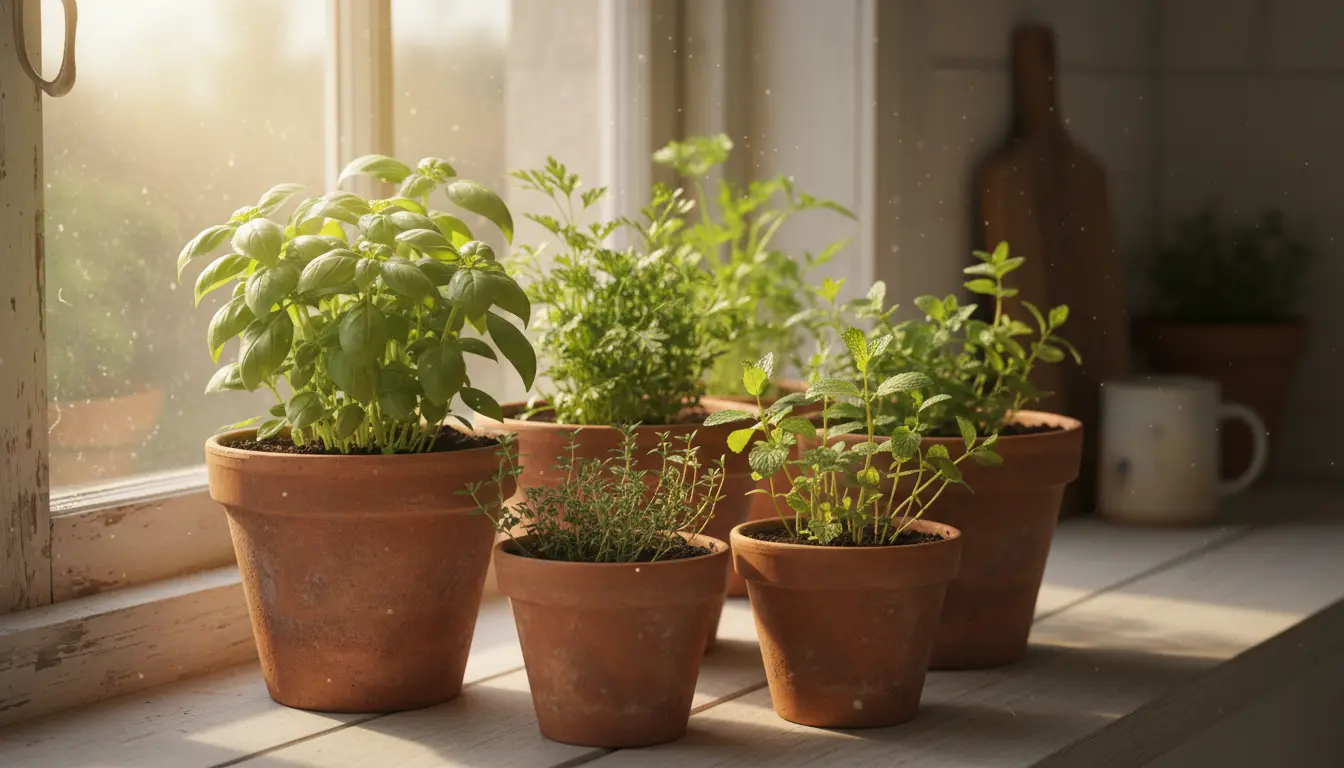
Why a Kitchen Herb Garden
Growing a kitchen herb garden saves money and adds fresh flavor to meals. It also brings greenery indoors and improves air quality in small spaces.
Choose the Right Herbs for a Kitchen Herb Garden
Select herbs that thrive indoors and suit your cooking habits. Start with easy, reliable varieties to build confidence and a steady supply.
Best herbs for beginners
- Basil – great for warm, sunny windowsills.
- Parsley – tolerates moderate light and regular harvesting.
- Thyme – drought-tolerant and compact.
- Chives – handle lower light and frequent snips.
- Mint – vigorous grower; best in its own container.
Pick Containers and Soil for a Kitchen Herb Garden
Choose containers with drainage holes to avoid waterlogged roots. Use a high-quality potting mix formulated for containers rather than garden soil.
Container tips
- Use terracotta or ceramic pots for breathability.
- Consider 6–8 inch pots for single herbs, larger for mixed plantings.
- Place a saucer under pots to protect surfaces from moisture.
Lighting Needs for a Kitchen Herb Garden
Light is the most important factor for indoor herbs. Most culinary herbs need 6–8 hours of bright light per day.
Dealing with limited light
If you lack a sunny window, use an LED grow light aimed at the plants. Position the light 6–12 inches above herbs and run it 12–14 hours daily for steady growth.
Planting and Spacing in a Kitchen Herb Garden
Plant herbs at the same depth they were in their nursery pots and firm soil gently around roots. Give each herb room to grow to prevent crowding and disease.
- Single herb pots: one plant per pot for easiest care.
- Mixed pots: group herbs with similar light and water needs.
- Label pots to avoid confusion when plants look similar.
Watering and Feeding Your Kitchen Herb Garden
Water when the top inch of soil feels dry; avoid a fixed schedule. Overwatering is a common cause of failure in indoor herb gardens.
Fertilizing tips
Feed herbs with a balanced liquid fertilizer at half strength every 4–6 weeks during active growth. Reduce feeding in winter or when growth slows.
Pruning and Harvesting for Healthy Herbs

Regular pruning encourages bushier growth and delays flowering, which can change flavor. Harvest by cutting stems above a leaf node to promote new shoots.
- Pinch basil regularly to keep plants compact.
- Snip chives frequently to maintain tender growth.
- Remove flowers from herbs if you want leaf production to continue.
Pest and Disease Management in a Kitchen Herb Garden
Indoor herbs are generally low-maintenance but watch for common pests like aphids and spider mites. Inspect plants weekly and wipe leaves or use insecticidal soap if needed.
Preventive steps
- Avoid overwatering to reduce root rot risk.
- Provide airflow around pots to limit fungal issues.
- Quarantine new plants for a week to observe pests before adding them to your collection.
Seasonal Care and Moving Plants
Adjust light, water, and temperature seasonally. In winter, move herbs closer to windows or supplement with grow lights to maintain growth.
Small Real-World Case Study: Sarah’s Window Herbs
Sarah, a city renter with a north-facing kitchen, started a small herb collection on a south-facing balcony in early spring. She moved pots indoors as temperatures dropped and added a small LED grow light.
Within two months, Sarah had steady basil for pesto, parsley for salads, and chives for eggs. She saved money on grocery herbs and reduced waste by harvesting only what she needed.
Simple Troubleshooting Guide for Your Kitchen Herb Garden
Yellow leaves often mean overwatering; cut back and let soil dry. Leggy, stretched plants usually need more light; move them or add a grow light.
- Slow growth: increase light or check fertilizer routine.
- Brittle leaves: check humidity and avoid very dry indoor air.
- Unpleasant smell: check for root rot; repot if needed.
Quick Checklist to Start Today
- Pick 3 easy herbs: basil, parsley, chives.
- Choose 6–8 inch pots with drainage.
- Buy quality potting mix and a small bag of slow-release fertilizer.
- Find the brightest spot or order a small LED grow light.
- Label pots and plan weekly watering and pruning time.
Final Tips for a Successful Kitchen Herb Garden
Start small and expand as you gain experience. Keep care consistent and treat your herb garden like a small kitchen appliance that needs attention to perform well.
With basic planning and weekly care, a kitchen herb garden will provide fresh flavors year-round and reward you with easy culinary convenience.