
Why Start a Kitchen Herb Garden?
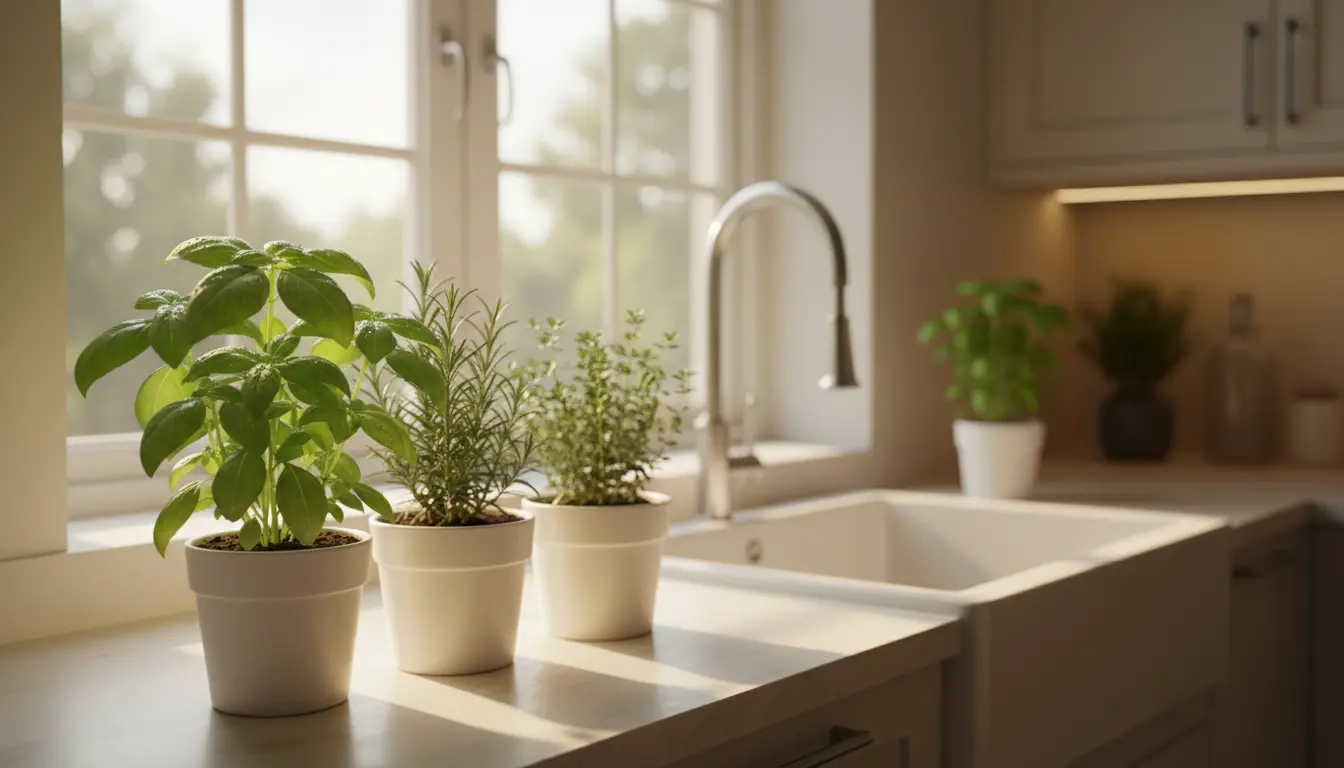
Growing herbs in your kitchen brings fresh flavor to meals and saves money on store-bought herbs. A small herb garden also improves air quality and adds greenery to limited spaces.
This guide explains how to start a kitchen herb garden with simple, practical steps you can follow today. It focuses on easy-care herbs, container choices, light, water, and a short case study to set realistic expectations.
Step-by-Step: How to Start a Kitchen Herb Garden
Pick the Right Location
Choose a sunny windowsill or a spot with at least 4–6 hours of direct or bright indirect light daily. West- or south-facing windows are ideal in most homes.
If natural light is limited, plan for a small grow light that delivers full-spectrum light for 8–12 hours per day. Position lights 6–12 inches above the plants to mimic sunlight.
Select Suitable Containers
Use containers with drainage holes to prevent root rot. You can repurpose small pots, wooden boxes, or purchase lightweight plastic or terracotta pots.
Recommended sizes are 4–6 inch pots for single herbs and 8–10 inch pots for small mixed groups. Group several pots on a tray to protect surfaces from water.
Choose Easy Starter Herbs
Begin with low-maintenance herbs that tolerate indoor conditions. Good starter herbs include:
- Basil — loves warmth and bright light
- Parsley — tolerates partial sun and regular watering
- Mint — vigorous and forgiving, keep in its own pot
- Chives — compact and hardy
- Thyme — prefers drier soil and bright light
These herbs provide frequent kitchen use and adapt well to container life.
Soil, Watering, and Feeding for a Kitchen Herb Garden
Use the Right Soil
Choose a light, well-draining potting mix formulated for containers. Avoid garden soil that compacts and holds too much moisture.
Mix in perlite or coarse sand if you need better drainage, especially for Mediterranean herbs like thyme and rosemary.
Watering Tips
Water when the top 1 inch of soil feels dry for most herbs. Overwatering is a common mistake that leads to yellow leaves and root issues.
Use pots with drainage and empty trays under pots after watering. Adjust frequency by season: less water in winter, more in warm months.
Feeding and Pruning
Feed herbs with a balanced liquid fertilizer every 4–6 weeks during the growing season. Dilute to half the recommended strength to avoid excess growth.
Prune regularly to encourage bushier growth and prevent flowering when you want leaves. Pinch back basil and harvest herbs often to keep them productive.
Maintenance Routine for a Kitchen Herb Garden
Set a simple maintenance routine: check light and soil twice a week, water as needed, and harvest small amounts regularly. Small daily checks prevent problems from growing unnoticed.
Watch for pests like aphids or fungus gnats. Treat early with a spray of water or a mild insecticidal soap suitable for edible plants.
Best Practices Summary
- Location: 4–6 hours of light or use a grow light
- Containers: drainage and appropriate size
- Soil: light, well-draining potting mix
- Water: top inch dry before watering
- Feed: light fertilizer every month during growth
- Harvest: frequent small cuts to encourage growth
Many kitchen herbs like basil and mint release fragrant oils that can improve mood and reduce stress indoors. Growing them by your cooking area also makes fresh harvesting easier.
Common Problems and Quick Fixes
Yellowing leaves often indicate overwatering or poor drainage. Move the plant to a pot with holes and reduce watering frequency.
Leggy growth means insufficient light. Move the herb nearer the window or supplement with a grow light and prune back to encourage bushiness.
Case Study: Windowsill Basil Success
Emma, a city renter, started a kitchen herb garden on a sunny south-facing windowsill. She chose basil and chives in two 6-inch pots and used a lightweight potting mix with good drainage.
Within six weeks, Emma harvested fresh basil for weekly pesto. She watered when the top inch of soil dried and pruned frequently. The result was steady growth and year-round fresh herbs for her kitchen.
Practical Examples and Uses
Try these quick use ideas once your kitchen herb garden is established. Snip basil for pasta and salads, add chives to eggs, and use mint in drinks and desserts.
For meal prep, harvest small amounts earlier in the day when leaves are most flavorful. Store larger cuttings in a glass of water on the counter if you want to extend freshness for a day.
Final Tips to Keep Your Kitchen Herb Garden Thriving
Start small and expand after you master one or two herbs. Consistency with light and watering is more important than perfect soil or pots.
Label your pots and track watering for the first month to learn what each herb prefers. With a little care, a kitchen herb garden will become a reliable source of fresh flavor.