
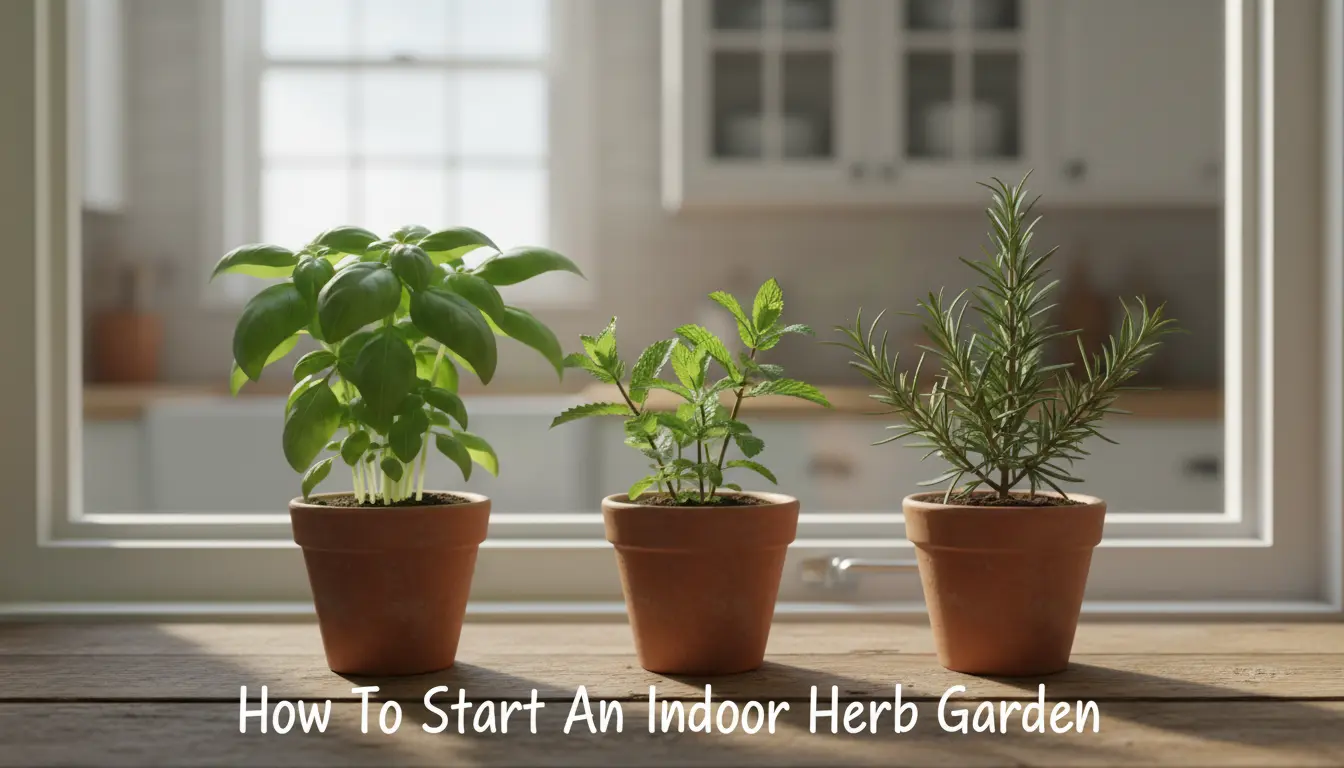
Why start an indoor herb garden
Growing herbs indoors gives you fresh flavor year-round. It saves money and reduces waste from store-bought herbs.
An indoor herb garden is also a simple way to bring green into small spaces. Follow these practical steps to get started.
Choose the right herbs for your indoor herb garden

Start with easy-to-grow herbs that adapt to indoor conditions. Some herbs tolerate lower light and smaller pots better than others.
- Basil — great for kitchens, needs bright light.
- Mint — forgiving, can spread quickly in pots.
- Parsley — moderate light, slow starter but steady.
- Chives — compact and tolerant of cooler windowsills.
- Rosemary — prefers bright light and drier soil.
Pick containers and soil for an indoor herb garden
Use pots with drainage holes to avoid root rot. If you must use a container without drainage, add at least 2 inches of stones or use a liner to keep roots above excess water.
Choose a light, well-draining potting mix labeled for herbs or vegetables. Avoid garden soil which compacts and drains poorly in pots.
How to place an indoor herb garden for best light

Most culinary herbs need 6 hours of bright light daily. A south- or west-facing window is ideal for an indoor herb garden.
If natural light is limited, use a full-spectrum LED grow light. Position the light 6–12 inches above the pots and run it 10–14 hours a day.
Light checklist for your indoor herb garden
- South-facing window: best for basil, rosemary, and parsley.
- East-facing window: good morning light for chives and mint.
- Grow light: reliable option for apartments or winter months.
Watering and feeding an indoor herb garden
Watering is the most common cause of problems in indoor herb gardens. Check soil moisture before watering.
Stick your finger 1 inch into the soil. Water only when the top inch feels dry for most herbs. Mint and parsley like slightly more consistent moisture.
- Use room-temperature water to avoid shocking roots.
- Fertilize lightly every 4–6 weeks with a balanced liquid fertilizer diluted to half strength.
Pruning and harvesting tips for healthy growth
Regular pruning encourages bushier growth and better flavor. Harvest from the top of stems rather than cutting large branches.
For basil and mint, pinch back growing tips when plants reach 6 inches. This promotes more side shoots and more leaves to harvest.
Harvesting rules for common herbs
- Basil: harvest before flowering for best flavor.
- Mint: trim often to prevent legginess.
- Parsley: cut outer stems first, leaving the inner growth.
- Rosemary: clip small sprigs; avoid removing more than one-third at a time.
Pest control and common problems in an indoor herb garden
Indoor herbs are less prone to pests than outdoor plants, but issues can still occur. Watch for aphids, spider mites, and whiteflies.
Use these steps if you find pests:
- Isolate the affected plant to avoid spread.
- Wash leaves with a gentle spray of water or soapy water solution.
- Use insecticidal soap or neem oil for persistent problems.
Many kitchen herbs release pleasant scents that can improve indoor air quality. Basil and mint also repel some common house pests.
Case study: A small kitchen windowsill turned productive
Sarah, a city renter, used a 3-foot windowsill to start her indoor herb garden. She chose basil, chives, and mint in three 6-inch pots.
Within six weeks she had enough basil for weekly pesto and fresh chives for breakfasts. She used a small clip-on LED light during winter months and followed the simple watering routine above.
Her key success steps were consistent light, drainage, and frequent pinching to keep plants bushy.
Quick-start checklist for your indoor herb garden
- Choose 2–4 easy herbs to begin.
- Use pots with drainage and a light potting mix.
- Place pots in bright light or use a grow light.
- Water when top inch of soil is dry.
- Prune regularly and fertilize lightly every 4–6 weeks.
Final tips for long-term success with an indoor herb garden
Rotate pots regularly so all sides receive light. Replace soil or repot every 12–18 months to refresh nutrients.
Start small and expand as you gain confidence. An indoor herb garden is low-cost and low-effort once you establish a routine.
If you follow these steps, you can enjoy fresh herbs from your indoor herb garden all year.