
What Is an Indoor Herb Garden and Why Start One?
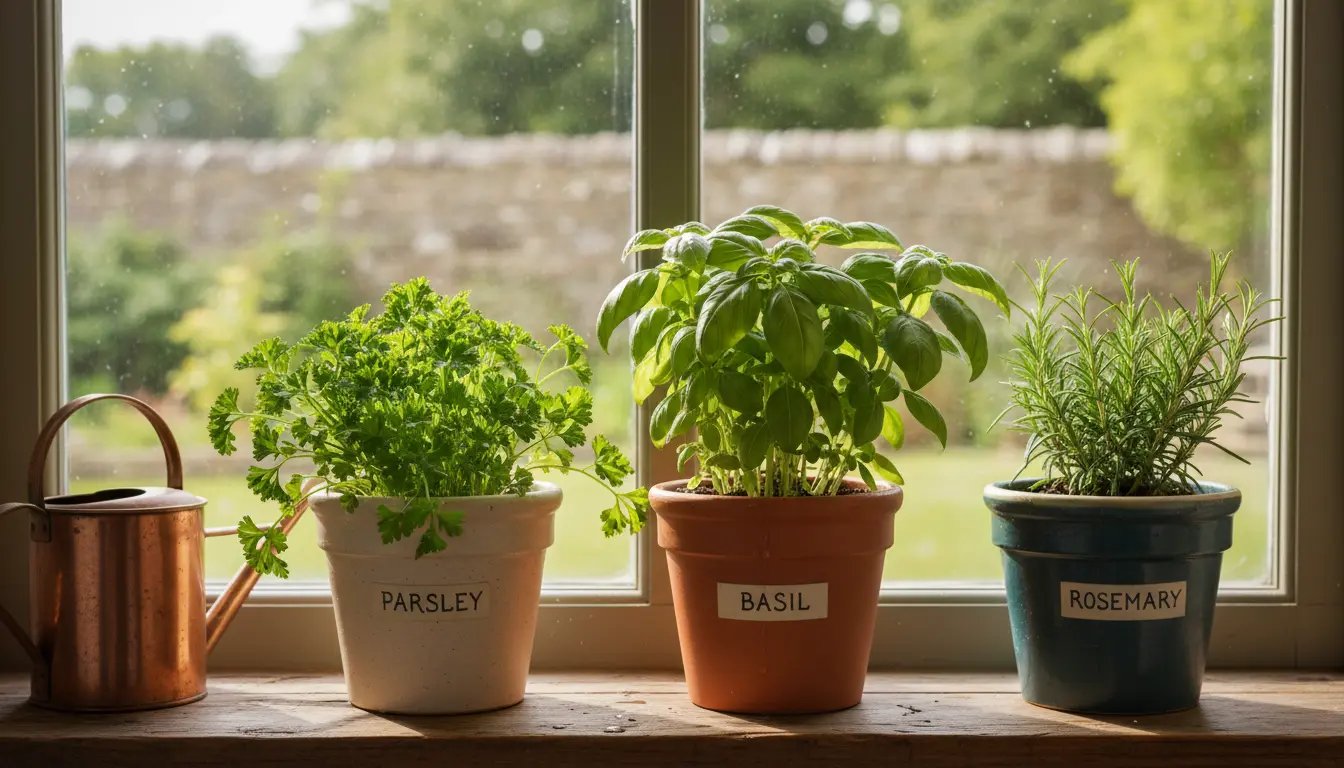
An indoor herb garden is a small collection of culinary or medicinal herbs grown inside your home. It brings fresh flavors to cooking and lets you harvest herbs year-round without a backyard.
Starting an indoor herb garden is low-cost and practical. Even a sunny windowsill or a single container can supply basil, parsley, or chives for weeks.
How to Start an Indoor Herb Garden: A Step-by-Step Guide
Follow these steps to set up a productive indoor herb garden. Each step is practical and suited for beginners.
1. Pick the Right Herbs for Indoor Growing
Choose herbs that tolerate indoor light and climate. Start with easy, reliable varieties.
- Basil — great for sunny spots and frequent harvests.
- Parsley — tolerates moderate light and grows steadily.
- Chives — compact and forgiving in small pots.
- Mint — vigorous grower; keep in its own container.
- Thyme and oregano — tolerant of drier soil and bright light.
2. Select Containers and Soil
Use containers with drainage holes to prevent root rot. Choose pots that fit available space and group similar needs together.
- Containers: 4–8 inch pots for single plants, larger pots for mixed plantings.
- Soil: Use a well-draining potting mix labeled for herbs or vegetables.
- Drainage: Add a layer of coarse grit or broken pottery if pots are shallow.
3. Provide Proper Light

Light is the most common limiting factor indoors. Most culinary herbs need 6–8 hours of bright light daily.
Place herbs on a south- or west-facing windowsill when possible. If natural light is limited, use a 6500K LED grow light set 6–12 inches above plants for 10–14 hours per day.
4. Watering and Feeding
Water deeply but infrequently. Let the top 1 inch of soil dry before the next watering for Mediterranean herbs like thyme and oregano.
- Frequency: Typically once a week for most herbs; adjust based on pot size, light, and season.
- Fertilizer: Use a balanced, water-soluble fertilizer once a month at half strength.
Maintenance: Pruning, Pest Control, and Rotating Crops
Regular maintenance keeps herbs productive and healthy. Small efforts prevent most problems.
Pruning and Harvesting
Pinch or cut back regularly to encourage bushier growth. Harvest no more than one-third of the plant at a time.
For basil, remove flower buds to extend leaf production. For parsley and cilantro, harvest the outer stems first.
Pest Control and Common Issues
Indoors, common pests include aphids, spider mites, and fungus gnats. Inspect leaves weekly and treat early.
- Control aphids with a spray of soapy water or neem oil.
- Reduce overwatering to prevent root rot and gnats.
- Improve air circulation to reduce fungal problems.
Rotating and Replacing Plants
Some herbs perform poorly after a few months indoors. Replace basil or cilantro seasonally and rotate plants to new pots after 6–12 months.
Small Space Ideas and Layouts for Indoor Herb Gardening
Even small kitchens can host productive herb gardens. Choose a layout that fits light and space constraints.
- Windowsill row: Line up 3–6 small pots on a sunny sill for easy access.
- Tiered shelf: Install a three-tier shelf with a grow light for multiple plants.
- Mixed planter: Plant herbs with similar water needs together in a larger container.
Many herbs, like basil and cilantro, release stronger flavors when harvested in the morning. Freshly harvested herbs also retain more volatile oils than dried ones.
Example Weekly Care Schedule for an Indoor Herb Garden
A simple schedule keeps plants healthy without daily effort.
- Monday: Inspect for pests and prune any yellowing leaves.
- Wednesday: Water if the top inch of soil is dry; mist if air is very dry.
- Saturday: Rotate pots for even light exposure and harvest as needed.
Real-World Case Study: A Small Cafe’s Herb Corner
Green Spoon Cafe began a three-pot herb garden on a north-facing prep table with supplemental LED light. They planted basil, chives, and mint in 6-inch pots and used a shelf light for 12 hours daily.
Within four weeks, the cafe reduced herb purchasing by 40 percent. Staff harvested basil in the morning and stored stems wrapped in a damp towel. The cafe credited consistent light and weekly pruning for continuous production.
Troubleshooting Quick Guide
Here are common issues and fast fixes to keep your indoor herb garden productive.
- Leggy growth: Move to brighter light and pinch back to encourage bushiness.
- Yellowing lower leaves: Check watering—likely overwatered or poor drainage.
- Pests: Isolate the plant and treat with insecticidal soap or neem oil.
Final Tips to Keep Herbs Thriving
Start small and learn one or two herbs before expanding. Match herbs by light and water needs when grouping plants.
With modest attention and the right placement, you can enjoy fresh herbs year-round from a compact indoor setup.