
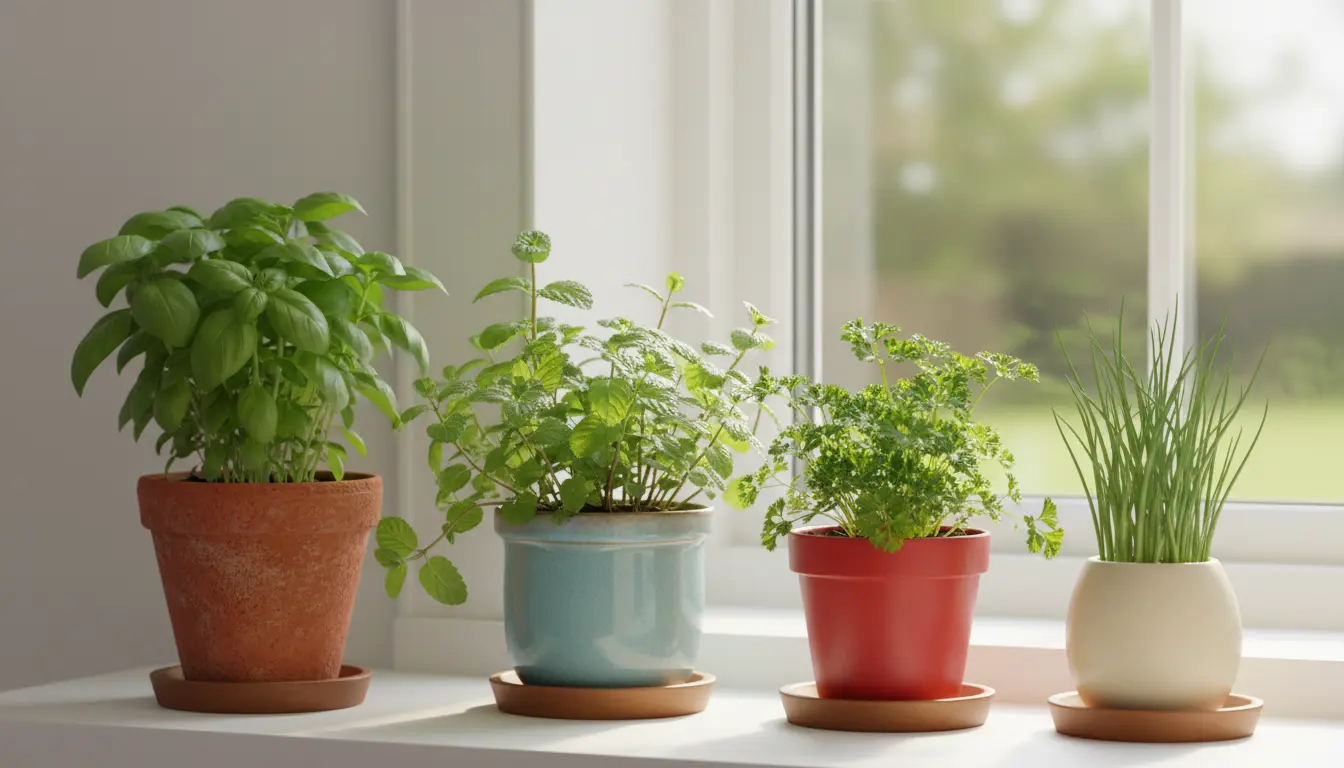
Why start an indoor herb garden
Growing herbs indoors provides fresh flavor, saves money, and improves air quality in small spaces. An indoor herb garden is suitable for apartments, kitchens, and anyone without outdoor space.
This guide explains plant selection, light, soil, watering, and common problems so you can set up a reliable indoor herb garden quickly.
Choosing plants for an indoor herb garden

Pick herbs that tolerate container life and moderate light. Start with easy varieties to build confidence and results.
- Basil – prefers warm, bright conditions.
- Parsley – tolerates lower light and slower growth.
- Mint – vigorous grower, use in its own pot to avoid spreading.
- Chives – compact and forgiving of variable light.
- Thyme and rosemary – need bright light and good drainage.
Choose 3–5 herbs for a first setup; this keeps care simple and harvests regular.
Selecting containers and soil for an indoor herb garden
Containers should have drainage holes and match the size of the plant. Small herbs like chives do well in 4–6 inch pots; larger herbs like basil prefer 8–10 inch pots.
Use a high-quality potting mix labeled for containers. Avoid garden soil, which compacts and drains poorly indoors.
- Tip: Add a thin layer of gravel under the soil only if you lack drainage—better to use pots with holes and a saucer.
- Use lightweight, porous pots (terracotta, ceramic) for herbs that prefer drier roots.
Light and placement for an indoor herb garden
Light is the most common limiting factor for indoor herbs. Most culinary herbs need 6–8 hours of bright light each day.
Place your indoor herb garden on a south- or west-facing windowsill when possible. East-facing windows also work if light is strong in the morning.
Supplemental lighting

If natural light is limited, use LED grow lights. Position the light 6–12 inches above the herbs and run it 12–14 hours daily for consistent growth.
Watering and feeding an indoor herb garden
Watering is about balance: keep soil evenly moist for basil and parsley, but allow thyme and rosemary to dry slightly between waterings.
- Check soil with your finger: water when the top 1 inch feels dry for most herbs.
- Use room-temperature water to avoid shocking roots.
- Fertilize lightly every 4–6 weeks with a balanced liquid fertilizer at half strength.
Pruning, harvesting, and maintenance for an indoor herb garden
Regular pruning keeps plants productive. Pinch or cut stems above a leaf node to encourage branching and fuller growth.
Harvest a few leaves daily for cooking. Never remove more than one-third of the plant at once to avoid stress.
- Remove yellow or crowded foliage to improve air circulation.
- Rotate pots weekly to ensure even light exposure and growth.
Common problems and troubleshooting for an indoor herb garden
Indoor herbs can face pests, leggy growth, or root issues. Identify problems early and use targeted fixes.
- Leggy plants: increase light or reduce stretch by pinching new growth.
- Pests (aphids, spider mites): rinse leaves, use insecticidal soap, or isolate affected pots.
- Yellow leaves: often from overwatering or poor drainage; allow soil to dry and repot if needed.
Case study: Small apartment indoor herb garden
Sarah, a city apartment resident, wanted fresh herbs for cooking but had only a narrow sill. She chose basil, chives, and parsley in three small terracotta pots.
Sarah placed the pots on an east-facing sill and added an 8-inch LED grow light for winter months. She used a standard potting mix and watered when the top inch of soil dried.
Within six weeks, all three herbs were regularly harvested and used in meals. Regular pinching prevented legginess, and she rotated pots weekly for even growth.
Many herbs release more aromatic oils when slightly sheltered from full sun; moderate indoor light can produce more flavorful leaves than intense outdoor sun.
Simple weekly routine for an indoor herb garden
Keep care manageable with a short weekly checklist. This prevents problems and keeps herbs productive.
- Inspect plants for pests and damage.
- Check soil moisture and water if the top inch is dry.
- Rotate pots for even light exposure.
- Pinch or harvest lightly to encourage growth.
- Fertilize lightly once every 4–6 weeks during active growth.
Final tips for a successful indoor herb garden
Start small, learn each herb’s needs, and adjust light and water as your plants respond. Most failures come from overwatering or insufficient light.
With a simple setup—pots with drainage, good potting mix, adequate light, and a weekly routine—you can enjoy fresh herbs year-round from a tiny indoor herb garden.