
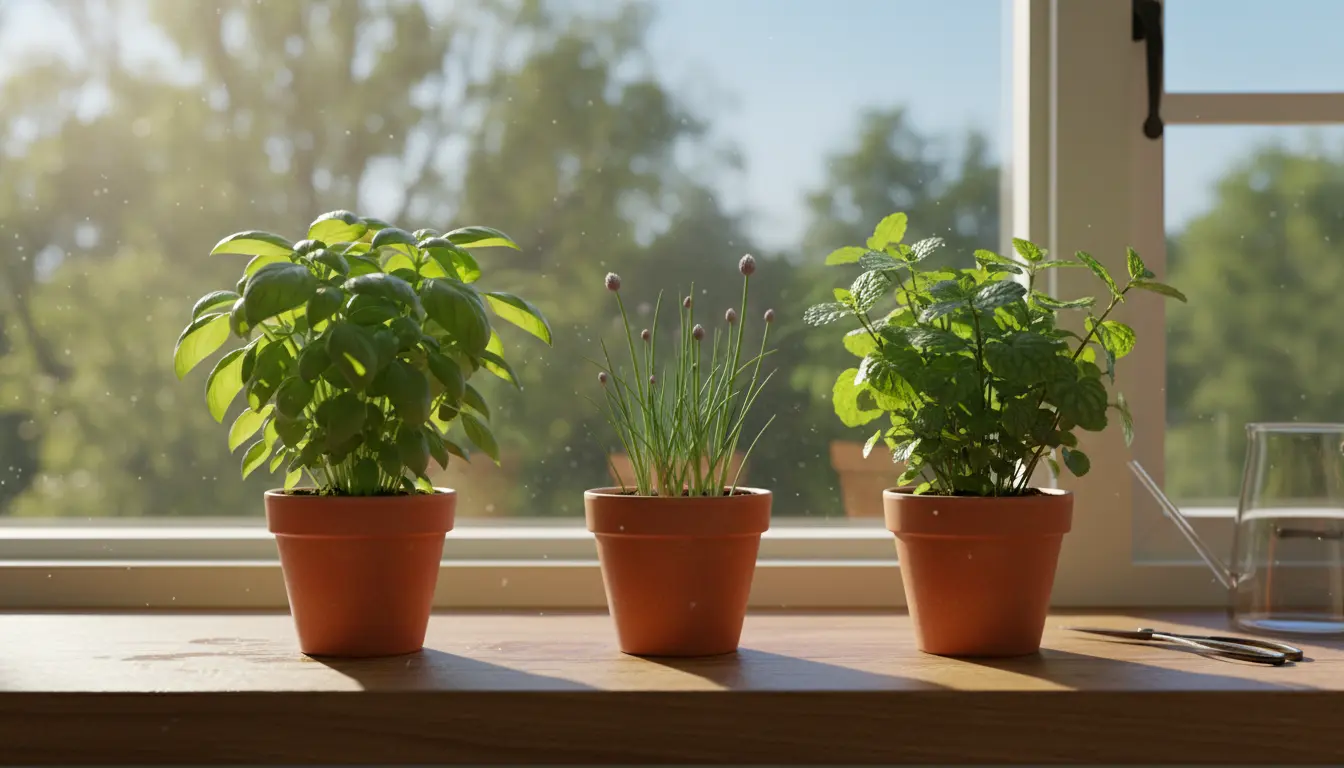
Growing herbs indoors is a practical way to have fresh flavors at hand and to add green life to small spaces. This guide covers the essentials you need to plan, plant, and maintain an indoor herb garden with predictable results.
Why Choose an Indoor Herb Garden
An indoor herb garden gives you year-round access to fresh herbs without a yard. Herbs are compact, forgiving, and useful in cooking, teas, and simple home remedies.
Starting small and following basic care reduces failures and builds confidence for bigger projects later.
Planning Your Indoor Herb Garden
Begin by choosing a location, selecting herbs, and deciding on containers. These three decisions determine light, watering needs, and maintenance requirements.
Choosing the Right Location for Your Indoor Herb Garden
Most culinary herbs need 6–8 hours of bright light. A south- or west-facing windowsill works well in many homes. If natural light is limited, use a grow light positioned 6–12 inches above the plants.
Space should be away from heat vents and cold drafts. Consistent temperatures between 65–75°F (18–24°C) are ideal.
Selecting Herbs for Beginners
Start with easy, fast-growing herbs that tolerate container life. Good beginner herbs include:
- Basil — fast growth, great for sunny spots
- Parsley — tolerant of partial sun and cooler temps
- Mint — vigorous and better in its own pot to avoid spreading
- Chives — hardy and compact, great in containers
- Thyme and oregano — drought-tolerant and low-maintenance
Soil, Pots, and Drainage for Indoor Herb Garden Success
Use a high-quality, well-draining potting mix designed for containers. Avoid garden soil that compacts and holds too much water.
Containers should have drainage holes. If a decorative pot lacks drainage, place the herb pot inside and remove it to water a small amount later.
Pot Size and Material
Choose pots sized for the mature root system; 4–6 inch pots work for most herbs. Terracotta pots dry faster and are useful when you want to avoid overwatering. Plastic pots retain moisture longer.
Watering and Fertilizing Your Indoor Herb Garden
Watering is the most common reason indoor herbs fail. Overwatering leads to root rot; underwatering causes wilting and slow growth.
Watering Routine
Allow the top 1 inch of soil to dry before watering again for most Mediterranean herbs like basil and thyme. Mint and parsley prefer slightly more consistent moisture.
Water thoroughly until excess drains from the bottom, then discard collected water. Reduce watering in lower light or cooler temperatures.
Fertilizer Tips
Use a balanced liquid fertilizer at half strength every 4–6 weeks during active growth. Too much nitrogen causes lush leaves but weak flavor, so follow label guidance and avoid daily feeding.
Light and Temperature for an Indoor Herb Garden
Light is the single most important factor for healthy herbs. Aim for bright, direct light when possible or 12–14 hours under a grow light for dense, flavorful growth.
Rotate pots weekly to prevent legginess and uneven growth. Maintain steady indoor temperatures and avoid placing herbs near ovens, radiators, or air conditioners.
Pruning, Harvesting, and Common Problems
Regular pruning keeps herbs productive. Pinch back tips to encourage branching and delay flowering, which reduces leaf quality in many herbs.
Routine Care Checklist
- Pinch or prune weekly to promote bushy growth.
- Remove yellow or diseased leaves promptly.
- Check for pests like spider mites or aphids; use insecticidal soap when needed.
- Repot when plants become root-bound, usually every 1–2 years.
Small Real-World Case Study
Sara, a city renter, started three 4-inch pots of basil, chives, and mint on her east windowsill. She used a lightweight potting mix and checked soil moisture daily.
Within six weeks, she harvested basil weekly for salads and pasta. She learned to cut no more than one-third of a plant at a time and to rotate pots for even light. Mint she kept in a separate pot to prevent it from overtaking the others.
This simple setup gave her steady yields and showed that consistent light, correct watering, and modest pruning are enough for a successful indoor herb garden.
Many herbs release stronger flavors when harvested in the morning after the dew has evaporated. Also, regular harvesting often increases overall plant productivity and delays flowering.
Troubleshooting Common Issues in an Indoor Herb Garden
If herbs are leggy, they need more light. If leaves yellow and drop, check for overwatering or poor drainage. Sticky residues or clustered insects usually indicate pests — treat early with a gentle soap spray.
For persistent problems, reduce water, increase light, and consider repotting into fresh soil to refresh nutrients and improve drainage.
Final Tips for a Sustainable Indoor Herb Garden
Start with a few pots and expand as you gain confidence. Label pots with planting dates and varieties to track growth and care needs.
Grow with purpose: plant herbs you use regularly to avoid waste. With simple attention to light, water, and pruning, an indoor herb garden will reward you with fresh flavor and year-round greenery.
Ready to start? Choose one sunny spot, select two to three herbs, and follow the steps above to build your first indoor herb garden.