
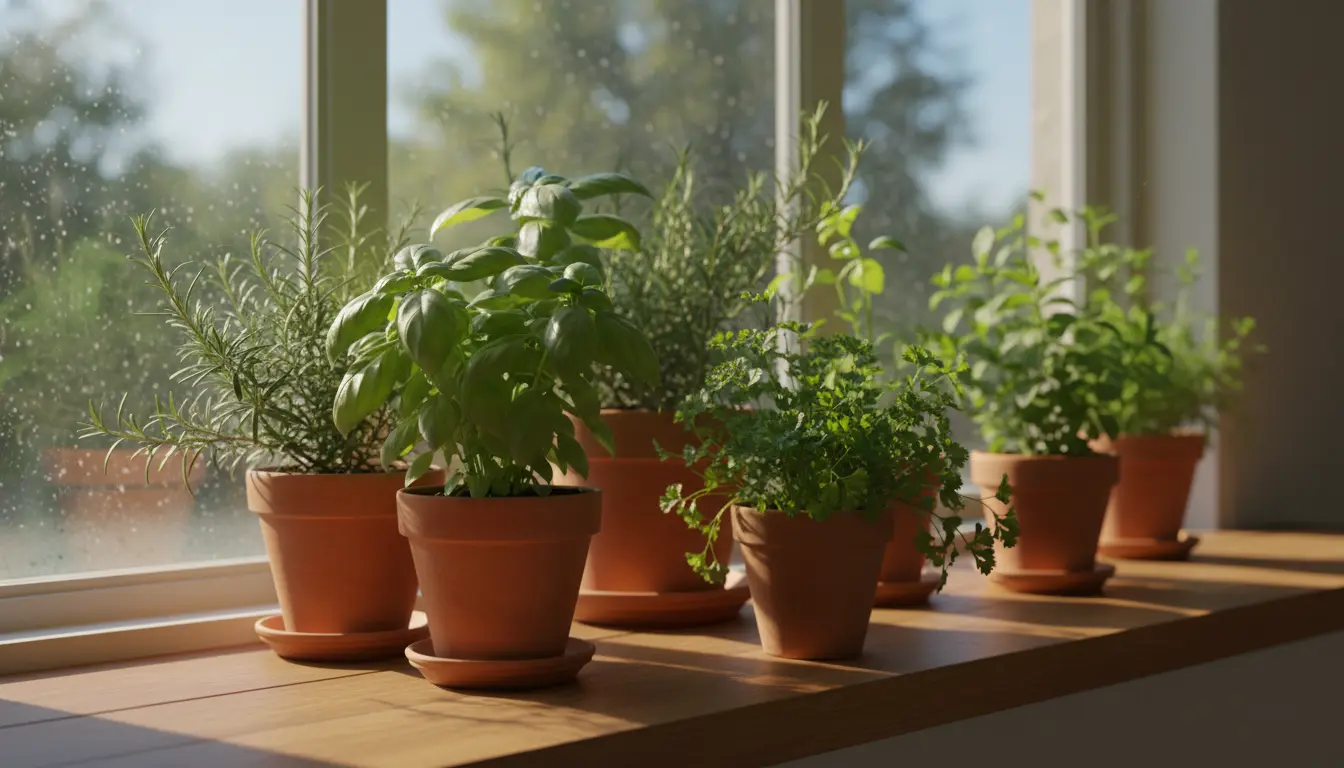
Why Choose an Indoor Herb Garden
Growing an indoor herb garden brings fresh flavors to your kitchen year-round. It saves money, reduces waste, and gives you quick access to aromatic herbs for cooking.
This guide shows practical, step-by-step methods to start and maintain a successful indoor herb garden in small spaces like apartments or condos.
Basic Requirements for an Indoor Herb Garden
Before you begin, understand the three essentials: light, soil, and water. These determine how healthy your herbs will be and how much maintenance they need.
Good airflow and suitable containers also help prevent disease and support root growth.
Light Needs for Your Indoor Herb Garden
Most culinary herbs prefer 6 to 8 hours of bright light daily. A south- or west-facing windowsill is ideal for many varieties.
If natural light is limited, use a full-spectrum LED grow light placed 6 to 12 inches above the plants for 10 to 12 hours a day.
Soil and Drainage for an Indoor Herb Garden
Use a well-draining potting mix formulated for containers. Avoid garden soil, which compacts and retains too much moisture indoors.
Pick pots with drainage holes and use saucers to catch excess water. Consider adding perlite or coarse sand to the mix for extra drainage.
Choosing Herbs for an Indoor Herb Garden
Start with easy, productive herbs that thrive indoors. Avoid heat- or light-demanding plants that struggle in low light.
- Basil — great for beginners but needs strong light and regular pruning.
- Parsley — tolerates moderate light and grows steadily.
- Chives — compact, low-maintenance, and reliable.
- Mint — vigorous grower; keep in a separate pot to avoid crowding.
- Thyme and oregano — hardy, drought-tolerant herbs ideal for containers.
How to Start an Indoor Herb Garden Step by Step
Follow these clear steps to set up your indoor herb garden without guesswork.
- Choose the location: a bright windowsill or under a grow light.
- Select containers with drainage and a potting mix for containers.
- Plant seedlings or start from cuttings for faster results.
- Water carefully: water thoroughly, then allow the top 1 inch of soil to dry before watering again.
- Fertilize lightly: use a balanced, water-soluble fertilizer every 4–6 weeks during active growth.
Planting Tips for an Indoor Herb Garden
Space herbs according to mature size. For mixed pots, combine herbs with similar light and water needs to avoid over- or under-watering.
Pinch back growth regularly to encourage bushy plants and prevent legginess under indoor light conditions.
Harvesting herbs regularly improves plant health and increases yield. Snipping up to one-third of a plant at a time encourages new growth.
Watering, Feeding, and Maintenance for an Indoor Herb Garden
Overwatering is the most common issue in indoor herb gardens. Check soil moisture with your finger and only water when the top inch is dry.
Feed with a diluted, balanced fertilizer during the growing season. Reduce feeding in winter when growth slows.
Pest and Disease Management for an Indoor Herb Garden
Indoors, pests are usually limited to aphids, spider mites, and fungus gnats. Treat aphids with a spray of water or insecticidal soap.
Prevent fungus gnats by allowing soil to dry between waterings and using sticky traps if needed.
Small Case Study: Windowsill Basil Success
Maria, an apartment cook, started three basil seedlings on her south-facing windowsill. She used 6-inch terracotta pots and a light potting mix with perlite.
After two months of weekly pruning and consistent light from the window plus a supplemental LED during cloudy days, she harvested basil weekly and used it fresh in pasta and salads.
Key outcomes: robust growth, no pests, and a continuous supply of leaves by rotating harvests and pinching tips.
Common Mistakes to Avoid with an Indoor Herb Garden
- Using garden soil: causes poor drainage and root problems.
- Overwatering: leads to root rot and yellowing leaves.
- Planting incompatible herbs together: different water and light needs can harm some plants.
- Ignoring pruning: plants become leggy and produce fewer leaves.
Quick Seasonal Care Guide for an Indoor Herb Garden
Spring and summer: increase watering and feed every 4 weeks. Rotate pots to ensure even light exposure.
Fall and winter: reduce watering, shorten feeding frequency, and consider supplemental lighting to maintain growth.
Conclusion: Keep It Simple and Enjoy Fresh Herbs
Starting an indoor herb garden is low-cost and high-reward. Focus on light, drainage, and regular harvesting to keep plants productive.
With basic care and a small dedicated spot, you can enjoy fresh herbs year-round and improve your cooking with minimal effort.