
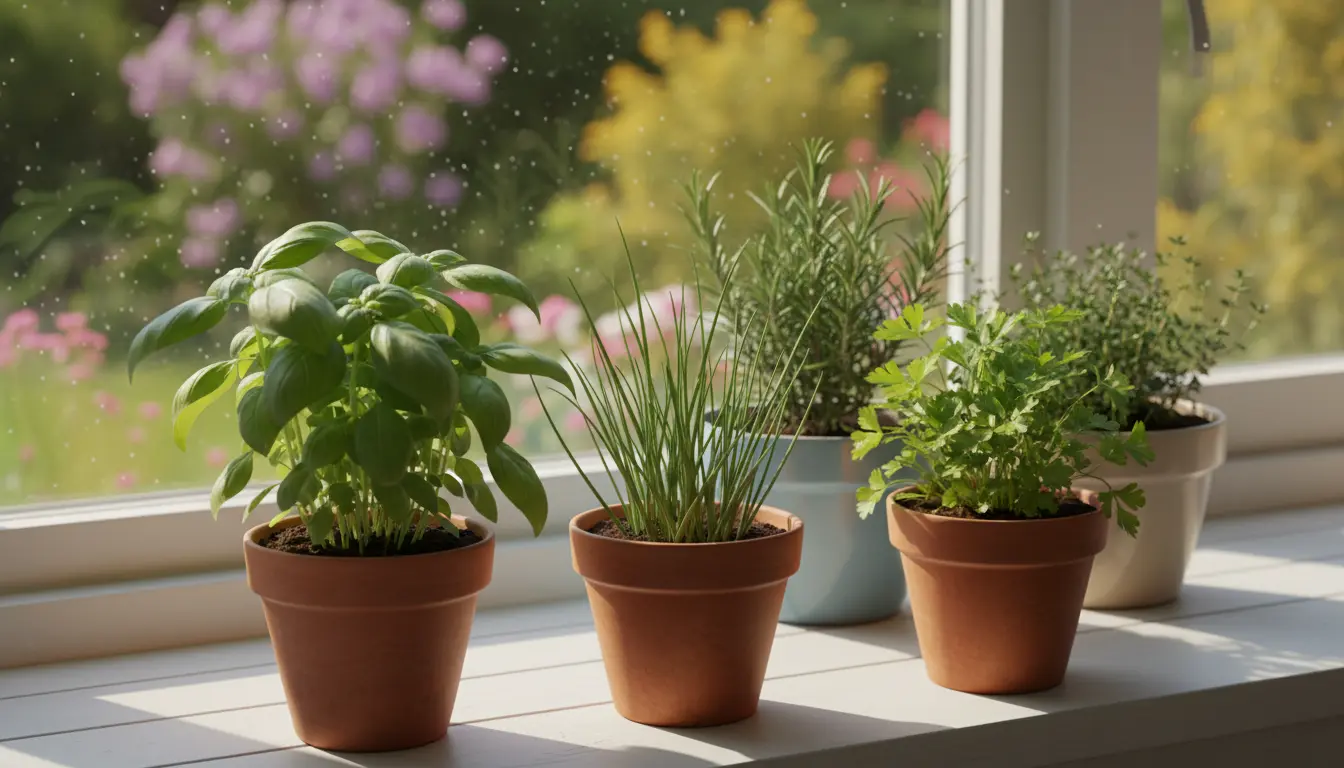
Why Start an Indoor Herb Garden
Growing an indoor herb garden saves money, adds fresh flavors to meals, and improves air quality. It also fits apartment living and small spaces where outdoor gardening is not possible.
This guide explains the steps to start an indoor herb garden and keep it productive year-round. Use the tips below to avoid common beginner mistakes.
Choose the Right Herbs for an Indoor Herb Garden
Select herbs that thrive indoors and match your cooking habits. Some herbs need more light while others tolerate low light.
- Basil: Needs bright light and warm temperatures.
- Parsley: Tolerates moderate light and grows steadily.
- Chives: Compact and tolerant of variable light.
- Thyme and Oregano: Prefer bright light and drier soil.
- Mint: Very forgiving but can be invasive in shared pots.
Pick Pots and Soil
Choose pots with drainage holes to prevent root rot. Terra cotta, ceramic, or plastic pots all work as long as they drain well.
Use a light potting mix designed for indoor plants or herbs. Avoid garden soil, which can compact and carry pests.
Pot Size and Grouping

Start with 4–6 inch pots for individual herbs or a larger container for mixed plantings. Group plants with similar water and light needs together.
Example grouping: basil and parsley together; thyme, oregano, and rosemary together.
Lighting Requirements for an Indoor Herb Garden
Most culinary herbs need 6–8 hours of bright light per day. Place herbs on a south- or west-facing windowsill when possible.
If natural light is insufficient, use full-spectrum LED grow lights. Position the lights 12–18 inches above the plants and run them 10–12 hours daily.
Signs of Poor Lighting
- Leggy stems and sparse leaves indicate insufficient light.
- Slow growth and pale color can mean too little sunlight or incorrect nutrients.
Watering and Feeding Your Indoor Herb Garden
Watering is the most common care mistake. Water when the top inch of soil feels dry to the touch, then water thoroughly until excess drains out.
Avoid keeping soil constantly soggy; many herbs prefer a slightly drier root zone between waterings.
Fertilizer Tips
Feed herbs with a balanced liquid fertilizer at half strength every 4–6 weeks during the growing season. Over-fertilizing causes weak, leafy growth and reduced flavor.
Pruning, Harvesting, and Pest Control
Regular harvesting encourages bushier growth. Pinch back tips and harvest no more than one-third of a plant at a time.
Inspect plants weekly for pests like aphids and spider mites. Wipe leaves, use insecticidal soap, or isolate affected plants to prevent spread.
Propagation and Replanting
Many herbs root easily from cuttings. Root basil or mint cuttings in water for 1–2 weeks, then pot in soil. Replant perennials like rosemary if they become rootbound.
Herbs harvested regularly are more productive and flavorful than herbs that are left to flower. Frequent harvesting diverts energy into new leaf growth.
Common Problems and Quick Fixes for an Indoor Herb Garden
Yellow leaves often mean overwatering or poor drainage. Move the plant to a pot with better drainage and reduce watering frequency.
Leggy growth signals low light; move plants closer to natural light or use a grow light. If leaves are small and pale, check fertilization and light levels.
Small Case Study: A Real Indoor Herb Garden Success
Sarah, a city renter, started an indoor herb garden on a 3-foot windowsill. She planted basil, chives, and parsley in separate 6-inch pots and used a small LED grow light two hours each morning.
Within six weeks, Sarah had regular basil harvests for pesto, and her chives provided weekly garnishes. She reported saving about $10–15 per month on herbs compared with store-bought fresh herbs.
Seasonal Care and Moving Forward with Your Indoor Herb Garden
Adjust light and watering in winter when daylight drops. Increase light hours with a grow light and reduce fertilizer frequency during slower growth periods.
Rotate pots every few weeks to promote even growth. Replace potting mix annually and repot herbs that outgrow their containers.
Quick Checklist to Start an Indoor Herb Garden
- Choose 3–5 herbs suited to your light conditions.
- Select pots with drainage and use light potting mix.
- Provide 6–8 hours of light or use a full-spectrum LED.
- Water when the top inch of soil is dry and feed lightly.
- Harvest regularly and check for pests weekly.
Starting an indoor herb garden is a low-cost way to add fresh flavors and green space to your home. With the right light, soil, and routine care, even beginners can enjoy a steady supply of fresh herbs year-round.