
Why Start a Home Vegetable Garden
Growing a home vegetable garden saves money, improves food quality, and gives reliable access to fresh produce. This guide covers practical steps for planning, planting, and maintaining a productive garden.
Plan Your Home Vegetable Garden
Good planning reduces mistakes and increases yield. Begin by evaluating space, sunlight, and time you can commit each week.
Choose the Right Location for a Home Vegetable Garden

Most vegetables need 6–8 hours of direct sunlight. Select a flat spot with good drainage and easy access to water. If yard space is limited, consider containers or a raised bed.
Decide Garden Size and Layout
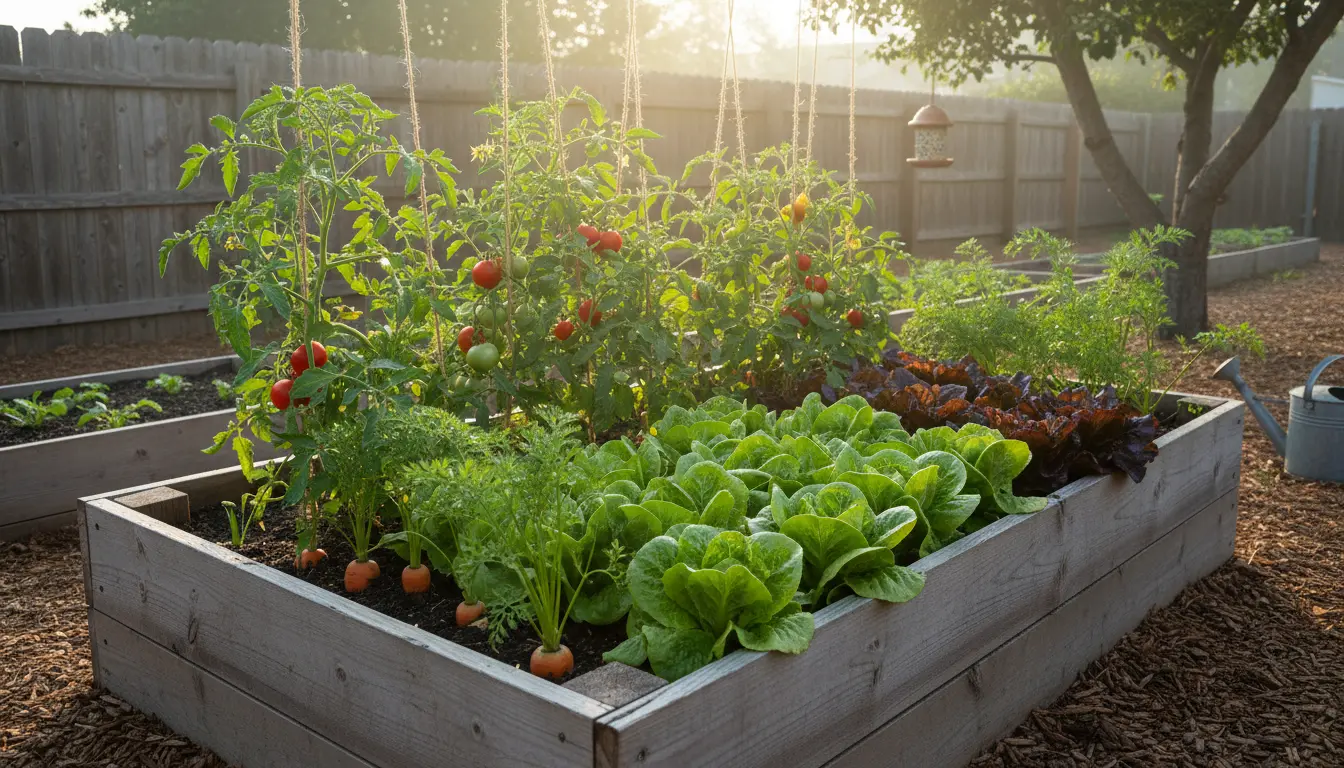
Start small: a 4×8 foot bed suits beginners. Smaller plots are easier to manage and still provide plenty of vegetables. Sketch a simple layout with paths to reach plants without compacting soil.
Prepare Soil for Your Home Vegetable Garden
Healthy soil is the foundation of a productive garden. Test and improve soil before planting for best results.
Test and Amend Soil
Obtain a basic soil test kit to check pH and nutrient levels. Most vegetables prefer pH 6.0–7.0. Add compost to boost organic matter and improve structure.
Build Raised Beds or Improve In-Ground Soil
Raised beds warm faster and drain better in cool climates. If planting in the ground, loosen the top 12 inches and mix in 2–3 inches of compost.
Choose Vegetables for a Home Vegetable Garden
Select crops based on seasonality, space, and your cooking preferences. Start with easy, high-reward vegetables.
Beginner-Friendly Vegetable Choices
- Leafy greens: lettuce, spinach, Swiss chard
- Root crops: carrots, radishes, beets
- Nightshades: cherry tomatoes and peppers (container-friendly)
- Beans and peas: good for vertical space and soil nitrogen
Consider Planting Schedule
Use succession planting to extend harvests. Plant fast crops like radishes every 2–3 weeks. For slow crops like tomatoes, start seeds indoors if your season is short.
Planting and Care in a Home Vegetable Garden
Correct planting depth, spacing, and early care determine long-term success. Follow seed packet or transplant guidelines closely.
Watering and Mulching
Water deeply and less often to encourage deep root growth. Apply 2–3 inches of mulch to retain moisture and suppress weeds.
Fertilizing and Feeding
Use balanced organic fertilizer or compost tea during the growing season. Avoid over-fertilizing leafy crops if you want better flavor.
Pest and Disease Basics
Inspect plants weekly for pests and disease. Use physical controls first: hand-pick pests, use row covers, and rotate crops each year to reduce disease buildup.
Planting marigolds near vegetables can help deter some common pests and attract beneficial insects that eat garden pests.
Harvesting and Troubleshooting Your Home Vegetable Garden
Harvest crops at peak maturity for best flavor and to encourage continued production. Keep notes on what worked and what did not.
When to Harvest
- Lettuce: pick outer leaves regularly for continuous growth
- Tomatoes: harvest when color and slight softness indicate ripeness
- Carrots: harvest when diameter reaches expected size for the variety
Common Problems and Simple Fixes
- Yellow leaves: check watering and soil nutrition
- Stunted growth: ensure adequate sunlight and loosen compacted soil
- Frequent pests: use sticky traps, row covers, and beneficial insects
Small Case Study: One-Bed Raised Garden
Maria in Portland started a 4×8 raised bed and filled it with a 50/50 mix of screened topsoil and homemade compost. She planted cherry tomatoes, basil, lettuce, and carrots.
In the first season she watered twice weekly and mulched to retain moisture. Her tomatoes produced a steady harvest from July to October, and she harvested lettuce every week by picking outer leaves. The raised bed reduced weed pressure and made care manageable for two evenings per week.
Tools and Supplies for a Home Vegetable Garden
Keep basic tools on hand to save time and reduce frustration. A few quality items make a big difference.
- Hand trowel and hand fork
- Garden hose with adjustable nozzle
- Pruning shears and gloves
- Soil test kit and compost or balanced fertilizer
Final Tips for a Successful Home Vegetable Garden
- Start small and expand after your first season.
- Keep a simple garden journal: planting dates, yields, pest notes.
- Learn from neighbors or a local extension service for climate-specific advice.
With planning and basic care, a home vegetable garden can supply fresh produce, reduce grocery bills, and provide satisfying outdoor work. Begin with a few reliable crops, build soil quality, and refine techniques each season.