
Why Start a Home Vegetable Garden
Growing your own vegetables saves money and improves food freshness. It also gives control over soil and pesticide choices.
This guide walks you through clear, actionable steps to start a home vegetable garden, suitable for small yards, balconies, and raised beds.
Planning to Start a Home Vegetable Garden
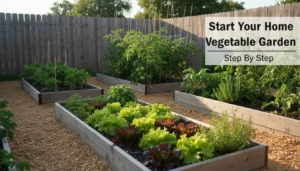
Planning reduces wasted time and resources. Begin by listing what you want to grow and how much space you have.
Consider climate, the season, and how much time you can commit to maintenance. Plan for easy, high-reward crops first.
Choose the Right Location
Pick a spot with at least 6 hours of direct sunlight for most vegetables. Watch sun patterns for several days before deciding.
Avoid low spots where water pools. Good drainage and access to a water source are important.
Select the Growing Method
Decide between in-ground beds, raised beds, containers, or vertical gardens. Each method suits different spaces and soil conditions.
- Raised beds: Easier soil control and better drainage.
- Containers: Ideal for balconies and patios.
- In-ground: Good if you have healthy native soil and space.
Soil and Bed Preparation
Healthy soil is the backbone of productive plants. Test soil pH and texture if possible to know what amendments are needed.
Mix organic matter such as compost into the top 6–12 inches of soil to improve fertility and structure.
How to Improve Poor Soil
If soil is heavy clay or sandy, amend it gradually with compost, aged manure, and organic matter. Avoid over-tilling, which can damage structure.
- Clay soil: Add compost and coarse sand sparingly to improve drainage.
- Sandy soil: Add compost and mulch to increase water retention.
- Compacted soil: Use raised beds or double-dig a small area to loosen the soil.
What to Plant First
Start with easy, quick-yield vegetables to boost confidence. Leafy greens and herbs are forgiving and fast.
Good starter crops include lettuce, spinach, radishes, bush beans, cherry tomatoes, and basil.
Consider Planting Schedules
Use frost dates to schedule planting. Cool-season crops can be planted early, while warm-season crops wait until the soil warms.
- Cool-season: Peas, lettuce, spinach, radishes.
- Warm-season: Tomatoes, peppers, cucumbers, basil.
Planting and Spacing
Follow seed packet or plant tag spacing to avoid overcrowding. Proper spacing reduces disease and increases yield per plant.
Plant in blocks rather than single rows for more efficient use of space and easier pest management.
Succession Planting
To maximize harvest, use succession planting: stagger sowing dates every two to three weeks for crops like lettuce and radishes.
This provides a continuous harvest instead of one large peak and reduces waste.
Watering and Mulching
Water deeply and infrequently to encourage strong root growth. Aim for consistent moisture but avoid waterlogging.
Mulch with straw, shredded leaves, or compost to retain moisture, suppress weeds, and moderate soil temperature.
Watering Tips
- Water early in the day to reduce evaporation and disease risk.
- Use a soaker hose or drip irrigation for consistent, efficient watering.
- Check soil moisture with a finger—if the top 1–2 inches are dry, water deeply.
Pest and Disease Management
Prevent problems with good cultural practices: crop rotation, proper spacing, and regular monitoring are key.
Use physical controls like row covers and hand-picking. Introduce beneficial insects and use organic sprays only when necessary.
Common Pests and Simple Controls
- Aphids: Blast with water or introduce ladybugs.
- Slugs: Use traps or copper barriers.
- Powdery mildew: Improve air circulation and remove infected leaves.
Harvesting and Maintenance
Harvest frequently to encourage more production, especially for crops like beans and zucchini. Pick leaves young for better flavor.
Keep beds tidy and replenish mulch each season. Collect seeds from healthy plants if you want to save varieties.
Small Case Study: A Starter Raised Bed
Maria, a new gardener with a 4×4 raised bed, chose lettuce, cherry tomatoes, and basil. She amended soil with two inches of compost before planting.
Using drip irrigation and mulch, she harvested salad greens within 6 weeks and had a steady supply through the season. Minimal pest issues were managed by hand-picking and companion planting.
Many vegetables are ready to harvest earlier than you might think. Baby greens and micro-greens can be harvested in 2–3 weeks, giving fast success for new gardeners.
Quick Checklist to Start a Home Vegetable Garden
- Choose a sunny site with good drainage.
- Select raised beds or containers if soil is poor.
- Amend soil with compost and test pH if possible.
- Start with easy crops: lettuce, radish, beans, tomatoes.
- Water deeply, mulch, and monitor for pests weekly.
Final Tips for Success
Start small and expand after your first season. Keep a gardening notebook to record planting dates and results.
Learn from local gardeners and adapt practices to your climate. The most important skill is observing and adjusting as the season progresses.