
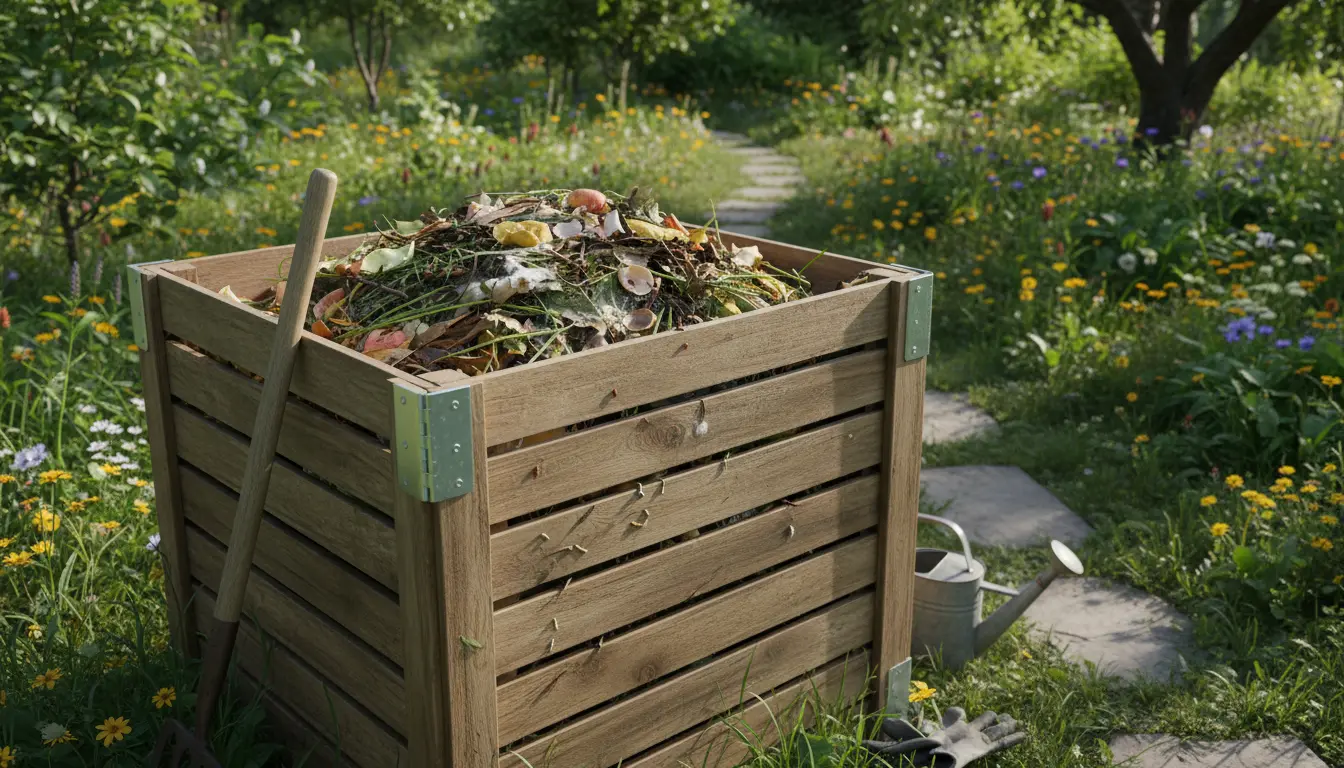
Why home composting matters
Home composting turns kitchen and yard waste into a useful soil amendment. It reduces landfill waste, lowers greenhouse gas emissions, and improves garden soil structure.
This guide gives clear, actionable steps for beginners to start and maintain a healthy compost system at home.
Basic principles of home composting
Compost is made by balancing carbon rich “brown” materials and nitrogen rich “green” materials. Microorganisms break down the mix when moisture, aeration, and temperature are right.
Key factors to monitor are the carbon to nitrogen ratio, moisture level, and airflow.
What to compost
Common acceptable materials include:
- Kitchen scraps: fruit and vegetable peels, coffee grounds, tea bags (paper-type).
- Yard waste: grass clippings, leaves, small twigs.
- Paper and cardboard: shredded, untreated materials.
Avoid meat, dairy, oily foods, and diseased plants unless using a hot compost system that reliably reaches high temperatures.
Balancing browns and greens
A practical target is about 25–30 parts carbon to 1 part nitrogen by weight, often achieved by roughly mixing two to three parts brown to one part green. If the pile smells, add more browns. If decomposition is slow, add more greens or moisture.
Step-by-step setup for home composting
Choose a method that fits your space and effort level. Options include a simple pile, a tumbling bin, or a stationary enclosed bin.
Follow these steps to build a reliable compost system.
1. Select a location
Pick a spot with good drainage and partial shade. It should be convenient to access from your kitchen and garden.
2. Prepare the container or pile
For bins, ensure there are ventilation holes. If using a pile, place it on soil rather than concrete to allow worms and microbes to enter.
3. Layer materials
Start with a coarse layer of twigs or straw for airflow. Alternate layers of greens and browns, chopping larger pieces to speed decomposition.
4. Maintain moisture and aeration
The pile should feel like a wrung-out sponge. Water during dry spells and turn the pile every 1–2 weeks for faster results. A slower, no-turn approach works too but takes longer.
Troubleshooting common home composting problems
Problems are usually fixable with simple adjustments to moisture, aeration, or material balance.
Problem: Bad smell
- Cause: Too much nitrogen or poor aeration.
- Fix: Add dry brown material, turn the pile, and check drainage.
Problem: Slow decomposition
- Cause: Pile too dry, too cold, or too coarse.
- Fix: Add water, mix in smaller pieces, and add nitrogen-rich greens or a starter like fresh compost.
Problem: Pests
- Cause: Food scraps like meat or dairy or an open bin.
- Fix: Avoid attracting foods, bury scraps in the center, or use a closed bin with a secure lid.
How to use finished compost
Finished compost looks dark, crumbly, and earthy. It should not smell of ammonia or rot.
Use compost as a soil amendment, mixed into garden beds, used as potting mix component, or as a top dressing for lawns and shrubs.
Small real-world example: Neighborhood garden success
A community garden started a shared 4-bin system using home-collected kitchen scraps. Each gardener alternated green and brown inputs and turned one bin weekly.
After six months, they produced rich compost used across 12 raised beds. Vegetable yields improved and the group reduced city waste pickup by nearly 30% for participating households.
Tips for busy households
- Keep a small counter caddy for kitchen scraps and empty it daily into an outdoor bin.
- Shred yard waste and cardboard before adding; smaller pieces speed decomposition.
- Try a compost tumbler for easier turning if mobility or space is limited.
When to consider advanced methods
If you want faster results or need to compost meat, dairy, or large volumes, consider hot composting techniques or an insulated bin that reaches sustained high temperatures.
Vermicomposting with worms is another option for apartment dwellers and produces rich worm castings but requires separate management and feeding routines.
Final checklist for successful home composting
- Choose a suitable bin or pile location with soil contact.
- Balance browns and greens and chop materials when possible.
- Maintain moisture like a wrung-out sponge and turn regularly if you want faster compost.
- Monitor for odor, pests, and slow breakdown and adjust accordingly.
Home composting is a low-cost, practical way to close the loop on organic waste. With basic tools and routine care, most households can produce valuable compost for healthier soil and plants.