
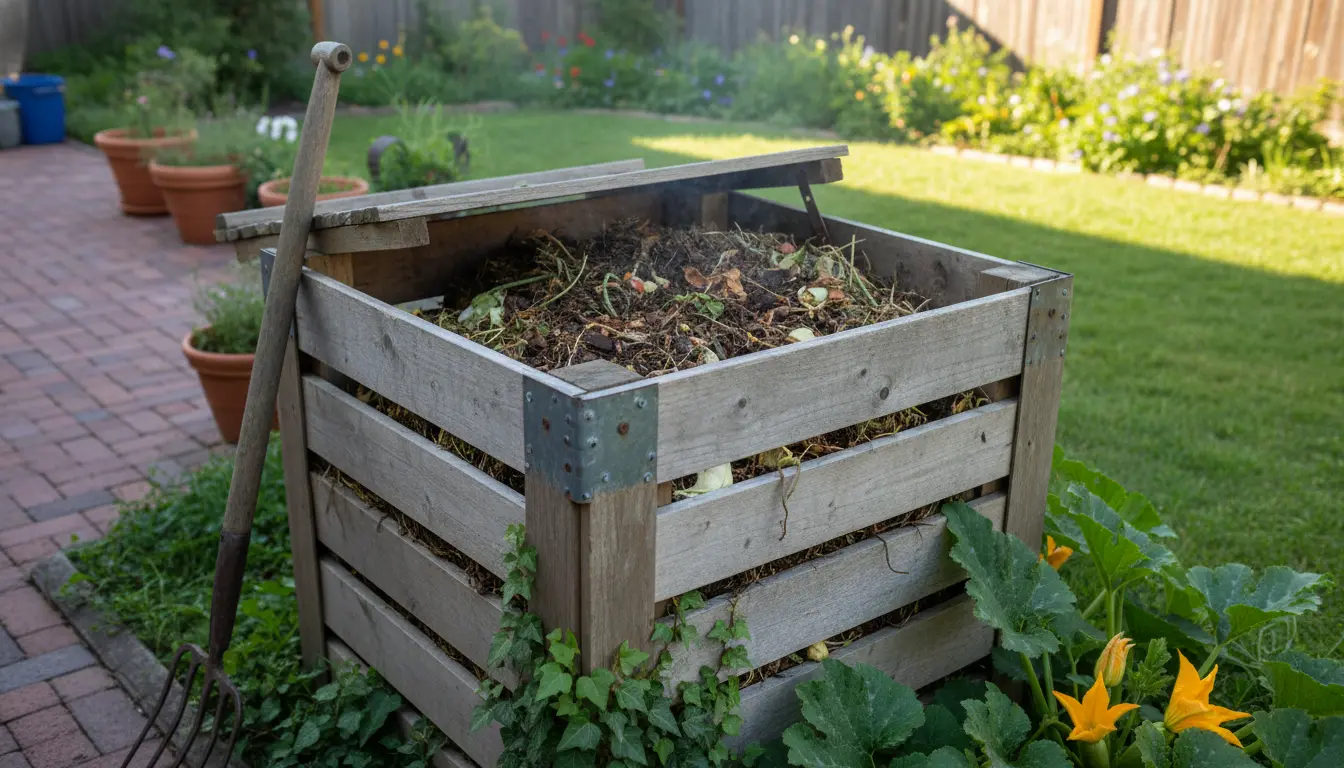
Why Home Composting Matters
Home composting turns food scraps and yard waste into a valuable soil amendment. It reduces household waste, lowers landfill methane, and improves garden soil structure and fertility.
Starting small is practical for any household. You do not need special skills or expensive equipment to get results.
What to Compost at Home
Knowing what belongs in your compost bin speeds decomposition and prevents problems. Materials fall into two groups: greens and browns.
- Greens – kitchen scraps, fruit and vegetable peels, fresh grass clippings; these add nitrogen.
- Browns – dried leaves, shredded paper, straw, cardboard; these add carbon and bulk.
Avoid meat, dairy, oils, diseased plants, and pet waste unless you use a specialized system. These items can attract pests or slow the process.
How to Start Home Composting
Follow a simple setup and maintenance routine to make composting efficient and low-effort. The key steps are choosing a bin, balancing materials, and maintaining moisture and aeration.
Choosing a Compost Bin for Home Composting

Bin choice depends on space, budget, and aesthetics. Common options include open piles, tumblers, and stationary kits.
- Open pile: Cheapest and flexible, needs a backyard space and basic turning.
- Tumbler: Easier to turn and less likely to attract pests; good for small yards.
- Stationary bin: Wooden or plastic units that are stable and discreet.
For balconies or apartments, consider a worm bin (vermicompost) or a sealed countertop bokashi system for pre-composting.
Layering and Maintenance
Start with a 4–6 inch base of coarse browns to aid drainage. Add alternating layers of greens and browns, aiming for a rough 2:1 ratio of browns to greens by volume.
- Keep the pile moist like a wrung-out sponge; water if it dries out.
- Turn or mix the pile every 1–2 weeks to add oxygen and speed up decomposition.
- Crush or shred large pieces to increase surface area and breakdown rate.
Troubleshooting Home Composting Problems
Common issues are odors, pests, and slow decomposition. Each has a simple fix.
- Bad smell: Add more browns and turn the pile to improve aeration.
- Pests: Bury food scraps under browns or use a closed bin; avoid meat and dairy.
- Slow breakdown: Chop materials smaller, add nitrogen-rich greens, and keep the pile moist.
Using Finished Compost
Compost is ready when it looks dark, crumbly, and earthy, usually after 2–12 months depending on conditions. Use finished compost to improve soil structure and feed plants.
- Top-dress potted plants with a thin layer of compost.
- Mix compost into garden beds at a ratio of about 1:4 compost to soil before planting.
- Use as mulch around shrubs and trees to retain moisture and suppress weeds.
Adding a thin layer of finished compost to your lawn once a year can improve soil health and reduce the need for chemical fertilizers.
Small Real-World Example
Case Study: A two-person household in a small town used a 50-gallon tumbler. They collected kitchen scraps and yard waste for six months. By following a 2:1 brown-to-green ratio, turning the tumbler weekly, and maintaining moisture, they produced about 30 liters of finished compost in four months.
They applied the compost to their vegetable beds and noted improved tomato yields the following season. This example shows a compact system can produce noticeable garden benefits quickly.
Tips to Speed Up Home Composting
If you want faster results, focus on increasing surface area, maintaining heat, and balancing materials.
- Shred or chop large items before adding them to the bin.
- Use a compost thermometer; aim for 120–140°F (50–60°C) for active decomposition in larger piles.
- Mix in finished compost or garden soil to introduce microbes that speed breakdown.
Final Checklist for Home Composting Success
- Choose a bin that fits your space and budget.
- Balance greens and browns and keep the pile moist and aerated.
- Avoid risky items like meat and pet waste unless you have a secure system.
- Use finished compost to improve garden soil and reduce fertilizer needs.
Home composting is a practical way to reduce waste and enhance your garden. Start with small, manageable steps and adjust as you learn what works best for your space and climate.