
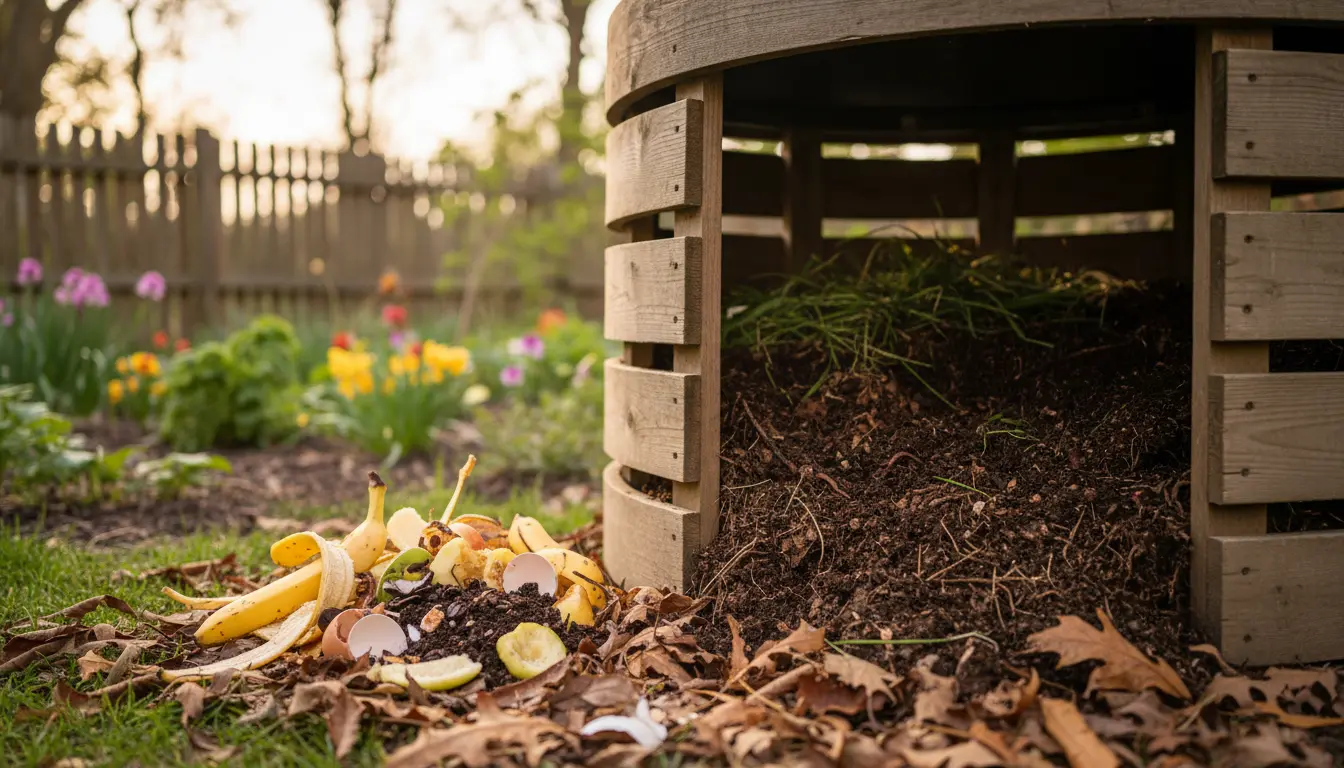
Composting at home turns kitchen and yard waste into rich soil for plants. This guide gives clear, practical steps to set up and maintain a home compost bin, even if you have limited space or time.
What Is a Home Compost Bin?
A home compost bin is a container or managed pile where organic waste breaks down into compost. The process combines carbon and nitrogen materials, oxygen, moisture, and time to create nutrient-rich humus.
Benefits of a Home Compost Bin
Composting reduces landfill waste and produces free soil amendment. It improves garden soil structure, helps retain moisture, and supports healthy plants.
- Cuts household waste volume
- Provides natural fertilizer
- Reduces need for chemical fertilizers
How to Start a Home Compost Bin
Starting a compost bin is mainly about choosing a system and managing simple inputs. Follow these steps to get started quickly.
1. Choose the Right Bin
Select a bin that fits your space, budget, and composting pace. Options include tumblers, plastic bins, wooden bins, or a simple pile.
- Compost tumbler — easy to turn, faster results, good for small yards.
- Stationary bin — low-cost, good for large volumes, needs manual turning.
- Bokashi or worm bin — suitable for small spaces or indoor composting.
2. Pick a Good Location
Place your home compost bin on bare soil if possible to allow worms and microbes to enter. Choose a spot with partial shade and easy access.
3. Add the Right Materials
Balance materials to keep the pile active and odor-free. Think in terms of “browns” (carbon) and “greens” (nitrogen).
- Greens (nitrogen): fruit and vegetable scraps, coffee grounds, fresh grass clippings.
- Browns (carbon): dry leaves, shredded paper, straw, cardboard.
Aim for roughly a 3:1 ratio of browns to greens by volume. Add small pieces to speed decomposition.
4. Keep the Right Conditions
Moisture, oxygen, and particle size affect breakdown speed. Keep the pile as damp as a wrung-out sponge and turn it every 1–2 weeks to add oxygen.
- Moisture: Add water during dry spells; avoid soaking the pile.
- Air: Turning prevents odors and supports beneficial microbes.
- Size: Aim for a pile at least 1x1x1 foot for heat retention, or use a tumbler for smaller batches.
5. Troubleshoot Common Problems
Problems are usually easy to fix if you check balance and airflow.
- Bad smell — add more browns and turn the pile to aerate.
- Pests — bury food scraps, use a closed bin, and avoid meat, bones, and oily foods.
- Too dry — add water and fresh greens.
- Slow breakdown — chop materials smaller and maintain heat by keeping pile insulated.
Composting can reduce household waste by up to 30 percent. Many cities offer compost pickup or discounts on compost bins to encourage home composting.
What to Compost and What to Avoid
Knowing which items to add helps keep your home compost bin healthy and effective.
Safe to Compost
- Vegetable and fruit scraps
- Coffee grounds and tea bags (remove staples)
- Eggshells, shredded paper, leaves, grass clippings
Avoid Composting
- Meat, fish, dairy, and greasy foods
- Diseased plants and invasive weeds
- Pet waste from carnivores
Small Case Study: Family-Scale Success
The Rivera family in Portland started a 60-liter tumbler in their backyard. They added kitchen scraps and shredded yard waste on alternating weeks. Within six months they produced enough compost to fill two raised beds.
They reported less trash, healthier tomato plants, and no persistent odors after learning to balance browns and greens. Their routine took 10 minutes per week.
Quick Tips to Speed Composting
- Chop or shred materials into smaller pieces.
- Layer greens and browns rather than dumping one type at a time.
- Use a garden fork or tumbler to turn the pile regularly.
- Cover the bin during heavy rain to maintain moisture balance.
Summary: Start Your Home Compost Bin Today
Starting a home compost bin is low-cost and high-impact. Choose a bin, balance materials, maintain moisture and air, and troubleshoot common issues quickly.
With a small weekly routine, you can reduce waste and produce nourishing compost for your garden. Begin with one manageable bin and grow your system as you learn what works best for your home.